
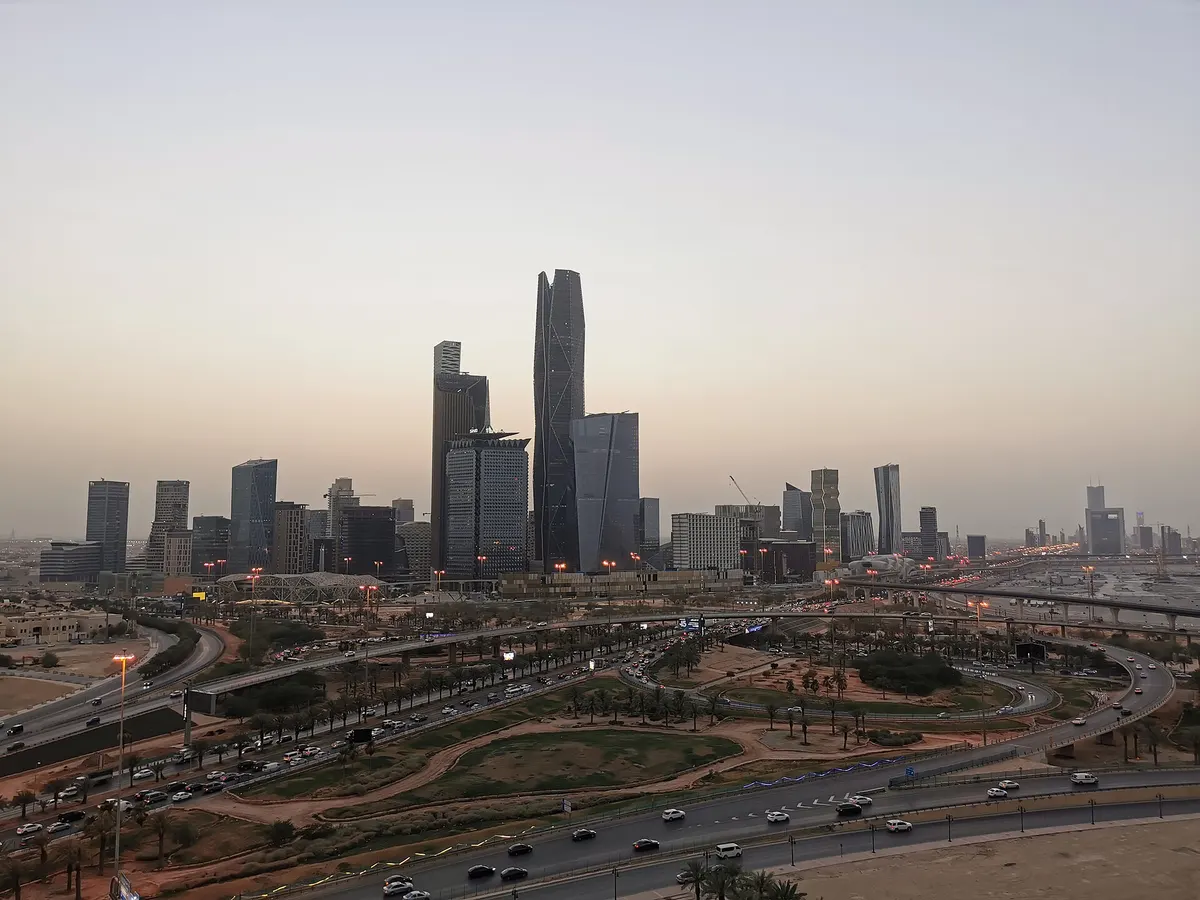
Yemen's Iran-backed Houthi movement struck the Public Investment Fund Tower in Riyadh on Tuesday, injuring 11 people from multiple nations. The attack is part of a wider escalation of strikes by Iran and its regional allies across the Gulf.
Oil prices have surged past $115 per barrel following the attacks on Saudi civilian and energy infrastructure. The renewed conflict is disrupting global supply concerns and driving up energy costs globally.
What happened
The civil defense directorate in Saudi Arabia confirmed the strike on the financial center in Riyadh, posting an image showing damage to the Public Investment Fund Tower. Eyewitness reports from Al Jazeera corroborated that the targeted building was indeed the tower in the Saudi capital. The 11 injured individuals included two Saudi citizens, two Indians, three Nepalis, and four Egyptians. Turki al-Maliki, a spokesperson for the Saudi-led coalition, condemned the incident as a cowardly terrorist attack and announced that authorities were conducting an on-site investigation. This marked the second strike by the group on the tower in six days, though the previous attack caused no casualties. Following the event, Houthi brigadier general Yahya Saree warned that the port of Jeddah and all Red Sea coast ports would become targets if Riyadh attacked the Yemeni port of Hodeidah.
Why it matters
The escalating attacks are rippling through global commodity markets, pushing benchmark Brent crude futures for December delivery to an intraday high of $115.14 per barrel, a near six-month high. West Texas Intermediate rose to $101.26 per barrel. These figures far exceed official projections, such as the Reserve Bank of India's estimate of $95 per barrel, intensifying concerns about persisting inflation and the cost of public support cushions. In India, the state's crude oil basket averaged $119.99 per barrel on Friday, and energy firms like Adani Total Gas have hiked compressed natural gas prices due to elevated global gas procurement costs and supply curtailments.
The background
The conflict stems from a long-running war in Yemen, where a Saudi-led international coalition has been trying to restore the internationally recognized government after it was forced to flee in 2015. The Houthis have steadily escalated missile and drone attacks against Saudi targets, including an oil refinery, airports such as King Khalid International Airport, and now financial infrastructure. This regional flare-up has also drawn in Bahrain, which reported that a civilian industrial facility was targeted over the weekend in a strike that injured two people, a Bahraini citizen and a Pakistani resident.
What happens next
Authorities in Saudi Arabia continue to investigate the physical damage at the Riyadh financial center. The threat of further strikes on Red Sea ports remains open as Houthi officials issue retaliatory warnings against maritime and coastal infrastructure. Meanwhile, global financial analysts are monitoring whether crude oil prices will sustain their elevated levels above $100 per barrel, which would require significant fiscal intervention to absorb inflationary shocks.
- An Iran-backed Houthi drone strike hit the Public Investment Fund Tower in Riyadh, injuring eleven people of various nationalities.
- Benchmark Brent crude futures scaled an intraday high of $115.14 per barrel following a wave of attacks on Saudi infrastructure.
- Adani Total Gas raised retail prices for compressed natural gas due to rising procurement costs driven by geopolitical developments.
- Bahrain reported a separate attack on a civilian industrial facility that injured two individuals over the weekend.