
A prominent hedge fund manager warns that the relentless rush into artificial intelligence could ultimately trigger a wider economic recession. The danger could stem either from a sudden collapse in tech investments or from mass unemployment as automation displaces human workers.
Speaking at a finance conference in Singapore, industry professionals detailed hidden risks in current market enthusiasm. While capital continues to pour into artificial intelligence infrastructure, analysts are drawing comparisons to historical market bubbles and warning of fragile investment portfolios.
What happened
During a panel discussion at the iConnections Global Alts Asia conference, DSC Meridian Capital founder and chief investment officer Sheru Chowdhry outlined the dual economic threats posed by the technology. He stated that if the industry does not experience an artificial intelligence-led investment recession in the coming years, it risks facing an unemployment-led contraction instead. If the technology advances at its current pace, Chowdhry warned, many workers will lose their jobs, creating severe ripple effects for the housing market and consumer discretionary spending.
Chowdhry compared the current capital cycle to the dot-com bubble and the telecommunications infrastructure buildout of the early 2000s, noting that while cycles differ, they tend to rhyme. He questioned whether semiconductor companies can sustain their lofty profit margins moving forward. Despite these valuation concerns, he remains bullish on computing power and identified data centers as the essential picks and shovels of the current cycle. Specifically, data centers that can secure environmental permits and electrical grid connections within the next two years represent major investment opportunities, as power access remains a severe bottleneck.
Away from pure technology plays, Chowdhry noted that investors can find attractive yields in U.S. credit markets, pointing to returns of around 8.5% on high-yield bonds and 9.5% on leveraged loans as an opportunity to get paid to wait.
Why it matters
Other experts on the panel warned that standard investment portfolios are far more fragile than they appear. Dan Gelernter, director of artificial intelligence at R.G. Niederhoffer Capital Management, noted that average monthly correlations across investable assets rose from roughly 5% between the 1960s and 1990s to about 11% or 12% by 2020. His own analysis suggests that figure has climbed further to between 15% and 16% in 2026. This means portfolios are more highly leveraged, less liquid, and more tightly correlated than investors realize, which amplifies danger during market moves. Within the semiconductor sector, AP3X Capital partner Joo Kian Ong offered specific positioning advice, suggesting Samsung Electronics as a strong long position while eyeing SK Hynix or Micron as potential shorts.
What to know
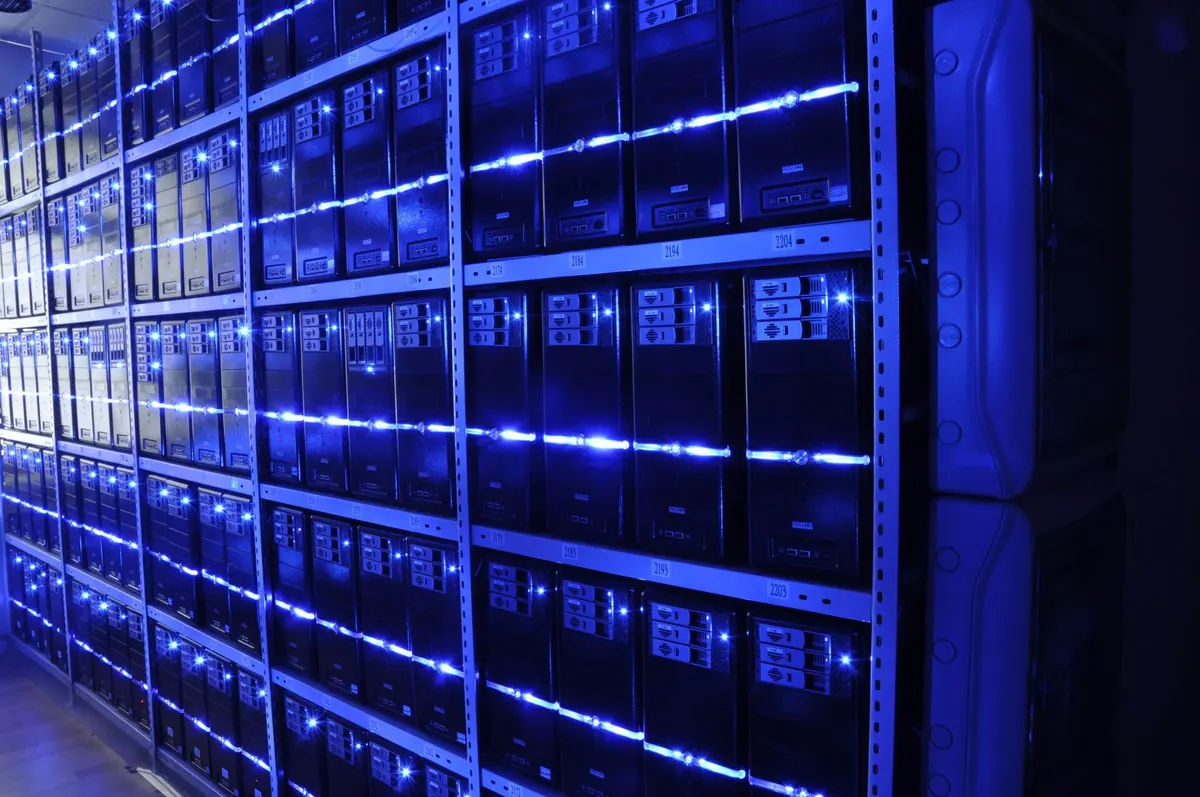
The dot-com bubble and early 2000s telecommunications buildout were historical periods defined by intense speculative investment in new technologies. Both eras saw massive capital poured into physical infrastructure before valuations outpaced actual economic returns, culminating in sharp market corrections. Modern artificial intelligence builds on a similarly massive physical footprint, requiring unprecedented amounts of electricity and dedicated data center capacity to train complex models.
Key takeaways
- Sheru Chowdhry warned that the artificial intelligence boom could trigger a recession through an investment collapse or widespread job losses.
- Average monthly asset correlations have climbed significantly over recent decades, leaving traditional investment portfolios more vulnerable to market volatility.
- Data centers capable of securing power access and permits within the next two years represent key investment opportunities amid infrastructure bottlenecks.
- U.S. high-yield bonds and leveraged loans offer yields of around 8.5% and 9.5% respectively, providing defensive income alternatives.