
The Secret UK Exile Deal That Ended in Tragedy

A map tracking Kishanth Peramalya's movements from his 2021 detention on Diego Garcia through his transfer to the Maldives and final resettlement in Eswatini.
The UK government secretly resettled a vulnerable Sri Lankan refugee with a criminal record in Eswatini under an undisclosed deal after he was excluded from moving to Britain from the military base of Diego Garcia. Months after his transfer, 35-year-old Kishanth Peramalya died by suicide, sparking intense scrutiny over secret international migration arrangements and the protection of vulnerable transferees. The case lays bare the complex legal and humanitarian dilemmas facing governments attempting to offload high-harm foreign nationals to third countries.
- Who decidesUK and Eswatini governments
- What changesSecret third-country resettlement of high-harm refugees unable to return home
- Who is affectedRefugees, foreign national offenders, UK and Eswatini publics
- StatusUnder international scrutiny following the refugee's death
Photos
2 photosWhat happened
The United Kingdom forcibly resettled a 35-year-old refugee in Eswatini, a southern African kingdom with which he had no prior connection, under a bilateral arrangement that was never disclosed to the UK Parliament or the local community. The man, Kishanth Peramalya, took his own life months after arriving in the country.
Migration experts have identified this as the first known instance of the UK government permanently and forcibly relocating a refugee to an overseas third country in this manner. The arrangement has drawn sharp criticism from human rights advocates, local activists, and the refugee's family, who were unaware of the transfer plans until after his death.
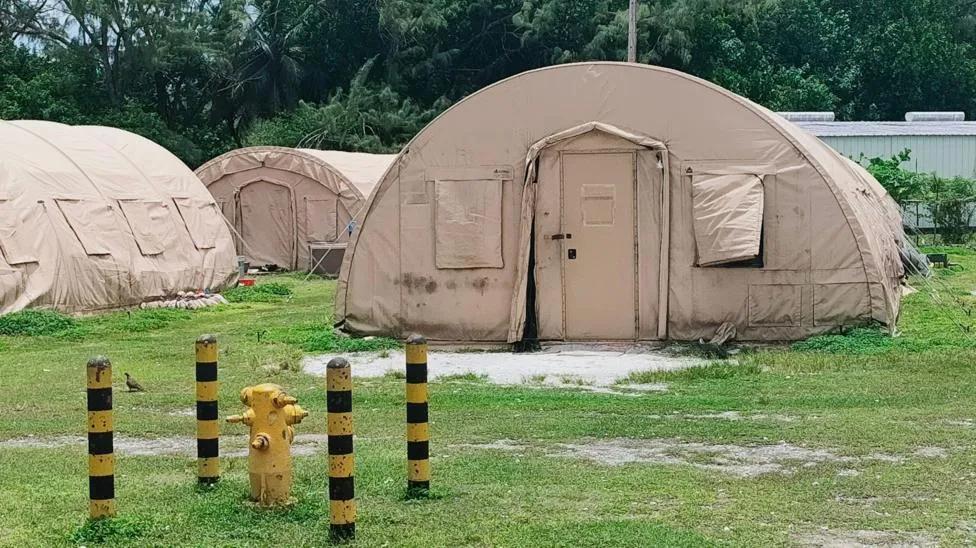
Tent accommodations at the detention camp on the remote military island of Diego Garcia.
How it unfolded
In 2021, the Royal Navy rescued Peramalya and dozens of other Sri Lankan asylum seekers in the Indian Ocean while they attempted to travel from India to Canada. The group was transferred to a detention camp on Diego Garcia, an island in the British Indian Ocean Territory operated as a joint UK-US military base. Although island authorities granted them refugee protections, the group remained trapped in the camp for three years while British officials debated their future, in detention later ruled unlawful by a court.
In December 2024, most of the refugees were permitted to enter the UK, but ministers barred Peramalya due to a series of crimes he committed on the island, including assault and sexual assault. Following unsuccessful attempts to secure an alternative host among more than 20 nations, and prompted by the US military's use of Diego Garcia in its war with Iran in February 2026, authorities transferred Peramalya to the Maldives for 30 days in late March before sending him on to Eswatini.
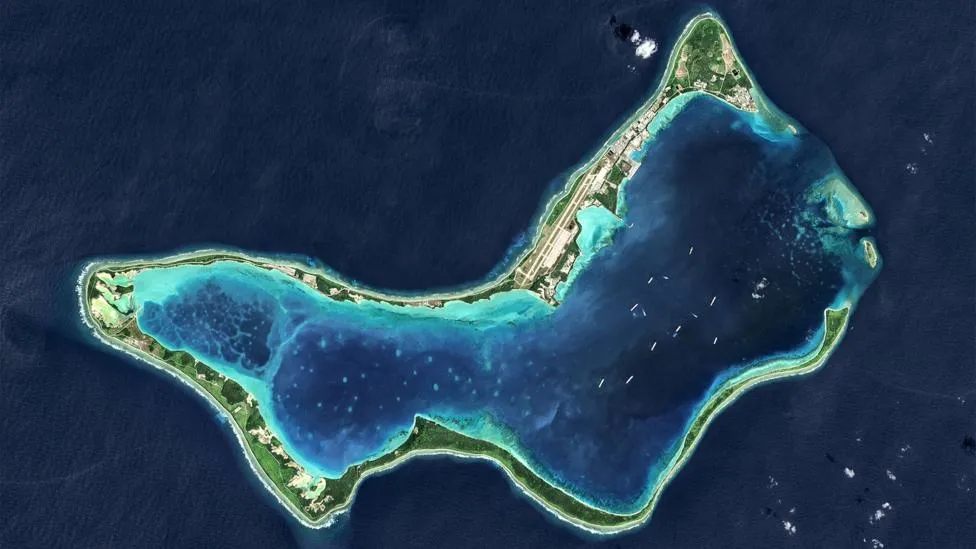
An aerial view of the strategic island territory of Diego Garcia in the Indian Ocean.
The people involved
Kishanth Peramalya was a Sri Lankan refugee with a history of severe mental illness, post-traumatic stress disorder resulting from torture and sexual abuse by the Sri Lankan military as a teenager, and repeated suicide attempts. During his detention on Diego Garcia, his mental health deteriorated significantly, leading to criminal convictions for assault, arson, and sexual assault during psychological crises.
Following his transfer to Eswatini, Peramalya was initially housed in an isolated guesthouse. His mental health continued to decline despite escalating psychiatric care and the introduction of a food preparation attendant. His family, speaking from India, expressed profound distress, noting that he was deeply lonely and desperately unhappy with the relocation.
Why it matters
The case exposes the ethical, legal, and operational risks of secret third-country migration deals. Civil society organizations in Eswatini have condemned the arrangement, arguing that transferring individuals with high support needs places undue strain on a fragile local healthcare and mental health infrastructure, and accusing Western nations of using the Global South as a dumping ground for unresolved problems.
Furthermore, the lack of transparency surrounding the pact has ignited a broader political debate regarding parliamentary oversight and governmental accountability. Critics point out that bypassing democratic channels shields migration agreements from human rights scrutiny, leaving both transferred individuals and host communities vulnerable.
The background
Diego Garcia is a remote coral atoll in the Indian Ocean serving as a strategic UK-US military installation. Asylum seekers arriving near the territory have historically faced protracted legal limbos regarding their status and resettlement options.
Eswatini, formerly known as Swaziland, has previously engaged in migration arrangements with foreign powers, including accepting US deportees under broader regional agreements. Meanwhile, the UK government has been exploring mechanisms to transfer failed asylum seekers and foreign national offenders to third countries when deportation to their home countries is legally or practically impossible.
Response and aftermath
The British government defended its actions by stating that protecting the public remains its primary priority and that it continues to collaborate with Eswatini authorities on the case. However, officials declined to answer specific media inquiries regarding the resettlement circumstances.
The United Nations High Commissioner for Refugees expressed deep sadness over Peramalya's death, emphasizing that any lawful third-country transfer must strictly incorporate robust safeguards and practical protections. Independent human rights experts and special rapporteurs have reiterated calls for total transparency and public oversight of all international migration arrangements.
What we still don't know
Exact details regarding the total financial cost of the Eswatini agreement and the precise criteria used by British officials to select Eswatini from among potential host nations remain undisclosed. Additionally, the internal mechanisms for monitoring Peramalya's risk management and psychological well-being under the draft bilateral pact have not been fully revealed to the public.
Want more on this story? Our research assistant searches the latest reports across the web and explains what it finds, so you get the fuller picture in one place.