
The Secret Faith: Life and Persecution for Christians in North Korea
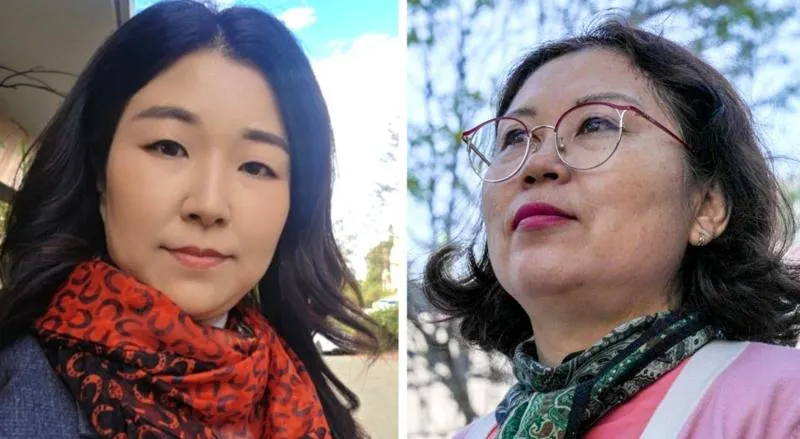
Kim Bo-bin (left) and Lee Young-joo (right), both North Korean escapees who now live in South Korea and have shared their experiences of religious persecution.
A new human rights report reveals the systematic surveillance and brutal treatment faced by Christians in North Korea, where any faith outside the state-mandated ideology is treated as a severe crime. Through the testimonies of escapees, the findings detail how the regime uses fear, indoctrination, and violence to suppress religious expression. Despite these risks, many citizens continue to practice in secret, finding solace in faith amidst extreme hardship.
- Report sourceKorea Future
- Scope of report570 interviews with North Korean escapees
- Primary state ideologyTen Principles of the ruling Kim family
- Key punishmentsImprisonment, hard labor, torture, and death for distributing religious materials
- Estimated secret Christian population200,000 to 400,000 (UN estimates)
Photos
7 photosWhat happened
A comprehensive report by the British human rights organization Korea Future has shed light on the systemic persecution of Christians in North Korea. Based on five years of research and 570 interviews with defectors, the report details a pervasive culture of fear where religious practice is treated as a grave threat to the state.
North Korean authorities employ a vast network of neighborhood spies and police surveillance to monitor citizens for signs of faith. Those caught, or even suspected of practicing Christianity, face severe consequences, including physical abuse, incarceration in labor camps, and in cases involving the distribution of religious materials, the death penalty.
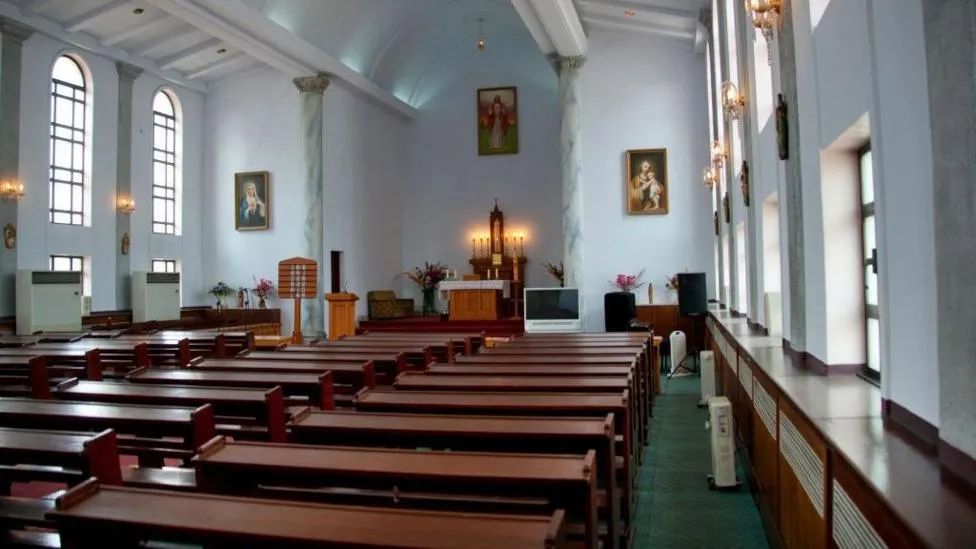
The interior of a state-controlled church in Pyongyang, which critics argue is used to project an illusion of religious liberty.
How it unfolded
For many North Koreans, religious indoctrination begins in childhood, with schools teaching that Christianity and other faiths are dangerous 'superstitions.' Citizens are required to memorize the Ten Principles, which demand absolute loyalty to the Kim family and forbid any competing authority.
Escapees describe ingenious methods to maintain their faith, such as praying with eyes open to avoid detection by guards or whispering hymns in private. The regime's crackdown has intensified under Kim Jong Un, particularly through the 2020 'Rejecting Reactionary Ideology and Culture' law, which explicitly targets foreign influence and religious materials.
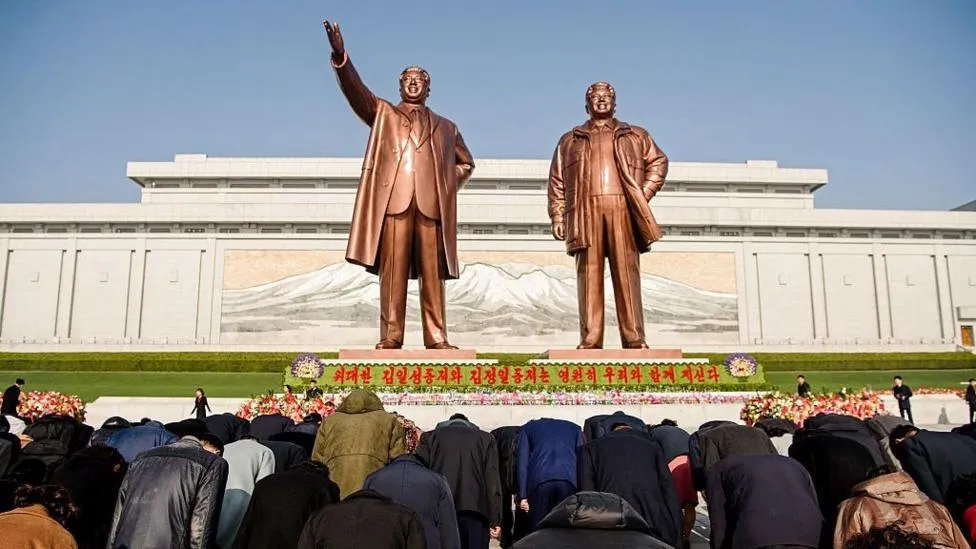
North Koreans bowing before statues of Kim Il Sung and Kim Jong Il, the foundational figures of the state ideology.
The people involved
Kim Bo-bin and Lee Young-joo are two of the many escapees whose stories feature in the report. Both women describe being interrogated and beaten by secret police after being deported from China, where they had first encountered Christianity. They recount the constant pressure to deny their faith, with interrogators specifically asking if they had ever worn a cross or possessed a Bible.
Today, both women reside in South Korea, where they are free to practice their religion openly. They continue to carry the trauma of their experiences, including the loss of family members and the fear of the harsh conditions they left behind in North Korea.
Why it matters
The report highlights the fundamental conflict between the North Korean regime's demand for god-like authority and the individual's right to freedom of belief. By criminalizing religion, the state effectively controls the private thoughts and social connections of its citizens from cradle to grave.
For the international community, the findings serve as a stark reminder of the human rights crisis inside North Korea. The systematic suppression of faith is not merely a matter of religious liberty but a core component of the regime's strategy to maintain absolute power and prevent any form of dissent.
The background
North Korea, once known as the 'Jerusalem of the East' due to its vibrant Christian history, has systematically dismantled religious institutions since the rise of the current regime. While the state maintains an illusion of religious freedom by operating state-controlled churches in Pyongyang, these are widely considered to be propaganda tools.
Many North Koreans turn to faith as a coping mechanism for the extreme poverty and instability they face, particularly following the famine of the 1990s. The regime classifies Christians as part of a 'hostile class,' often denying them access to higher education and career advancement, thereby ensuring they remain at the bottom of the social hierarchy.
What happens next
The documentation provided by the Korea Future report adds to a growing body of evidence submitted to international bodies, including the United Nations. While such reports increase international pressure on Pyongyang, the regime has historically ignored or denied these allegations.
In the absence of internal political change, the cycle of surveillance and persecution is expected to continue. Escapees like Kim and Lee remain vocal about their experiences in the hope that their testimonies will bring global attention to the conditions inside their home country.
What we still don't know
While the report provides significant insight into the experiences of escapees, there is limited information regarding the current conditions for those who remain in North Korea. The total number of Christians currently held in political prison camps is unknown, and the regime continues to refuse to provide information on foreign nationals, including missionaries, who have been detained on charges of espionage.
Want more on this story? Our research assistant searches the latest reports across the web and explains what it finds, so you get the fuller picture in one place.