
Senior Hamas Security Officials Killed in Successive Israeli Strikes in Gaza
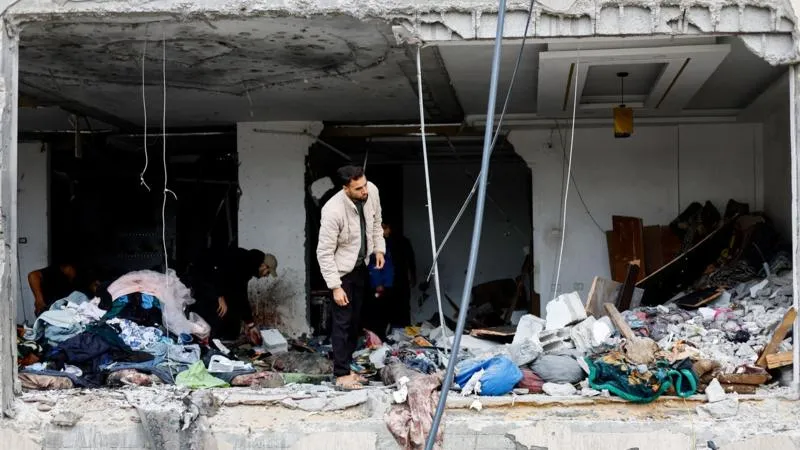
The interior of an apartment in the Shati refugee camp following an Israeli air strike that killed security official Mohammed Abu al-Ouf and three members of his family.
Successive Israeli air strikes in the Gaza Strip have killed two senior figures in Hamas's internal security apparatus, including its overall chief, Naim Abu Nahl, and northern commander Mohammed Abu al-Ouf. The attacks occurred amid continuing violence despite an October ceasefire agreement. Local health authorities and family members also reported civilian casualties, deepening tensions across the territory.
- WhenLate November
- WhereGaza City and Shati refugee camp, Gaza Strip
- WhoNaim Abu Nahl (overall internal security chief) and Mohammed Abu al-Ouf (northern commander)
- CasualtiesTwo senior security officials and three family members killed in the apartment strike; four others wounded in the street strike
- StatusOngoing military operations despite an October ceasefire
Photos
7 photosWhat happened
A series of targeted Israeli air strikes in the Gaza Strip resulted in the deaths of two high-ranking security officials within the Hamas administration. On Tuesday, a strike killed Brigadier General Naim Abu Nahl, who served as the overall director of the Internal Security Service across the Gaza territory. The following dawn, a separate bomb struck an apartment in the Shati refugee camp in Gaza City, killing Mohammed Abu al-Ouf, the head of internal security for northern Gaza, alongside three members of his immediate family.
The interior ministry operated by Hamas in Gaza confirmed both deaths, condemning the operations as heinous crimes and assassinations intended to sow chaos within Palestinian society. Conversely, the Israeli military and the Shin Bet domestic security service stated that the targeted commanders were significant security threats who actively worked to obstruct Israeli counter-terrorism operations.
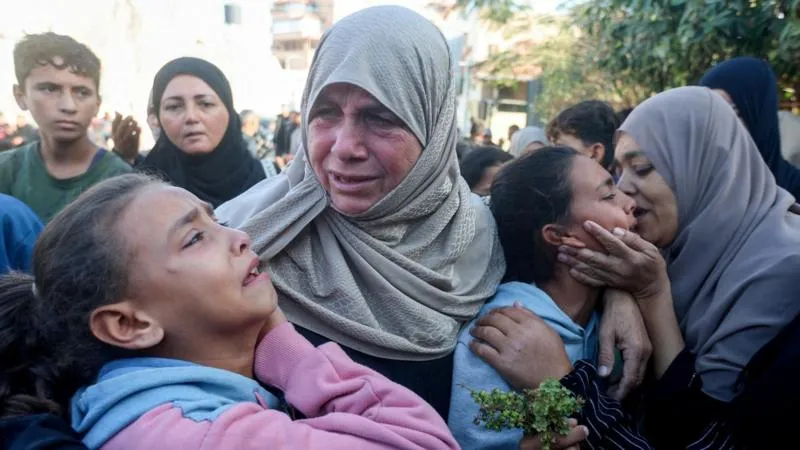
Family members and local residents mourn following the air strikes in Gaza.
How it unfolded
The escalation began on Tuesday when Naim Abu Nahl, aged 50, was killed during a strike in a crowded area of western Gaza City. While reports vary regarding whether he was walking in the street or targeted directly by a drone, the incident also wounded four other individuals, including a Palestinian woman, who were subsequently transported to al-Shifa Medical Complex for treatment.
Shortly after dawn on Wednesday, the violence shifted to the Shati refugee camp. An air strike targeted an apartment building, destroying exterior and interior walls and scattering rubble across the rooms. This second attack killed Mohammed Abu al-Ouf, 47, along with his 41-year-old wife Noura and their teenage daughters Yusra, 15, and Jana, 13.
What the reports confirm
Available reports uniformly confirm that two separate senior leaders of Hamas's internal security apparatus were eliminated in consecutive Israeli strikes. Sources from both local medical authorities and the Hamas-run interior ministry corroborate the identities of the deceased commanders, their roles, and the familial casualties in the Shati camp.
However, the accounts diverge on specific tactical details. Reports differ on whether Abu Nahl was killed while walking in the street or inside a vehicle, and various spellings of his name—ranging from Naim Abu Nahl to Naeem Abu Nahel—appear across different dispatches. Furthermore, Israeli public broadcaster Kan and official military statements offered overlapping but distinct confirmations regarding the chain of succession within the security service following previous detentions.
The people involved
Naim Abu Nahl held the rank of Brigadier General and served as the director-general of Hamas's internal security across the entire Gaza Strip. He had assumed the top post in September following the capture of his predecessor, Moein al-Arbeid, during a special Israeli military and Shin Bet raid in Gaza City.
Mohammed Abu al-Ouf served directly under this command structure as the head of internal security specifically for northern Gaza. His wife, Noura, and their two daughters, Yusra and Jana, were killed alongside him in their apartment during the dawn bombardment.
Why it matters
The Internal Security Service under Hamas is responsible for maintaining domestic discipline, protecting infrastructure, and identifying informants or collaborators working with the Israeli military. The successive elimination of its top two leaders represents a severe operational blow to Hamas's internal governance and security apparatus in the territory.
The strikes also underscore the fragility of the broader security environment in Gaza. Despite a ceasefire agreement reached in October of the previous year, daily air strikes and military operations have persisted, compounding civilian hardship and intensifying mutual accusations of agreement violations between the warring parties.
The background
The ongoing conflict in Gaza was triggered by a Hamas-led attack on southern Israel on October 7, 2023, which resulted in approximately 1,200 deaths and 251 hostages taken. Since that date, military operations and air strikes have resulted in over 74,740 fatalities in the Gaza territory, according to the Hamas-run health ministry—figures that the United Nations regards as reliable.
Despite an official ceasefire agreement signed in October of the prior year, violence has continued at a lower intensity. Local health officials note that at least 1,679 people have been killed in Gaza over the subsequent 13 months, while the Israeli military reports that six of its soldiers have died during the same timeframe.
Response and aftermath
Hamas officials issued strong condemnations following the targeted killings, characterizing the actions as war crimes designed to destabilize the internal front and undermine the civil police forces. The group called upon international guarantor states of the October ceasefire agreement to intervene immediately to halt Israeli military actions and enforce compliance with the pact.
In contrast, Israeli defense statements emphasized that the targeted commanders were essential figures orchestrating efforts to restrict counter-terrorism operations. Israeli authorities maintained that dismantling the leadership of Hamas's internal security apparatus degrades the group's overall operational capabilities.
What we still don't know
Details regarding the precise intelligence methods used to track and target the security officials have not been disclosed. Additionally, the broader impact of these leadership losses on the internal stability of Gaza's civil administration remains unmeasured, as does the potential for renewed diplomatic intervention by international guarantors to salvage the stalled ceasefire.
Want more on this story? Our research assistant searches the latest reports across the web and explains what it finds, so you get the fuller picture in one place.