
Satellite Study Reveals Rapid Land Sinking Threatens African Coastal Cities
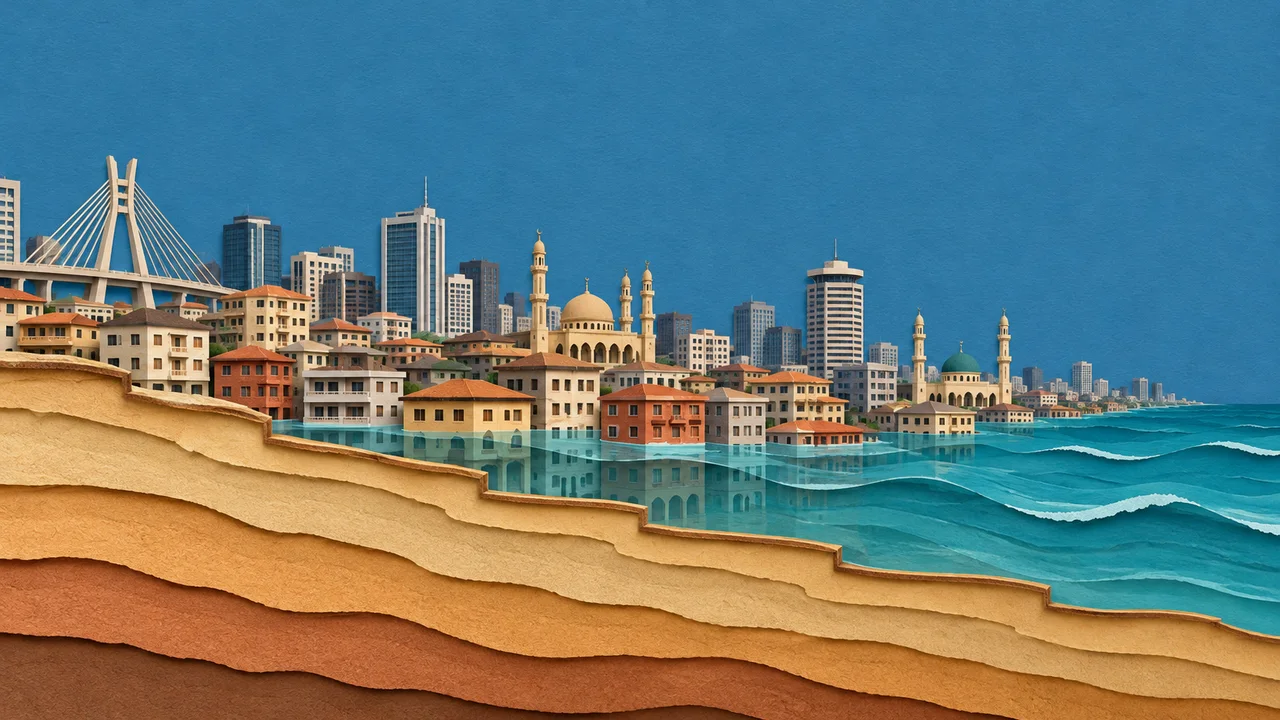
Illustration, not a photo of the event.
A new Virginia Tech study using European Space Agency satellite data reveals that major African coastal cities like Lagos and Alexandria are sinking faster than previously estimated by UN climate bodies. This land subsidence, driven heavily by human activities like groundwater extraction, threatens over seven million people and $180 billion in assets with severe flooding by 2050.
- Research TeamVirginia Tech geosciences researchers led by Oluwaseyi Dasho and Manoochehr Shirzaei
- Data SourceEuropean Space Agency's Sentinel-1 satellites
- Key Cities ExaminedLagos (Nigeria) and Alexandria (Egypt)
- Projected ImpactOver 7 million people, 1 million buildings, and $180bn in assets at flood risk by 2050
- PublicationScience Advances
What happened
Scientists have mapped land movement beneath 20 African coastal cities using high-resolution radar imagery from orbit. The study reveals that many of these urban centers are sinking—a process known as subsidence—significantly faster than previously estimated by international climate bodies.
Researchers from Virginia Tech utilized thousands of satellite radar observations from the European Space Agency's Sentinel-1 missions to detect vertical land motions as small as one millimeter per year. While global climate models have traditionally projected sea level rises, this new mapping demonstrates that localized sinking of the earth itself is compounding the threat of coastal flooding across the continent.
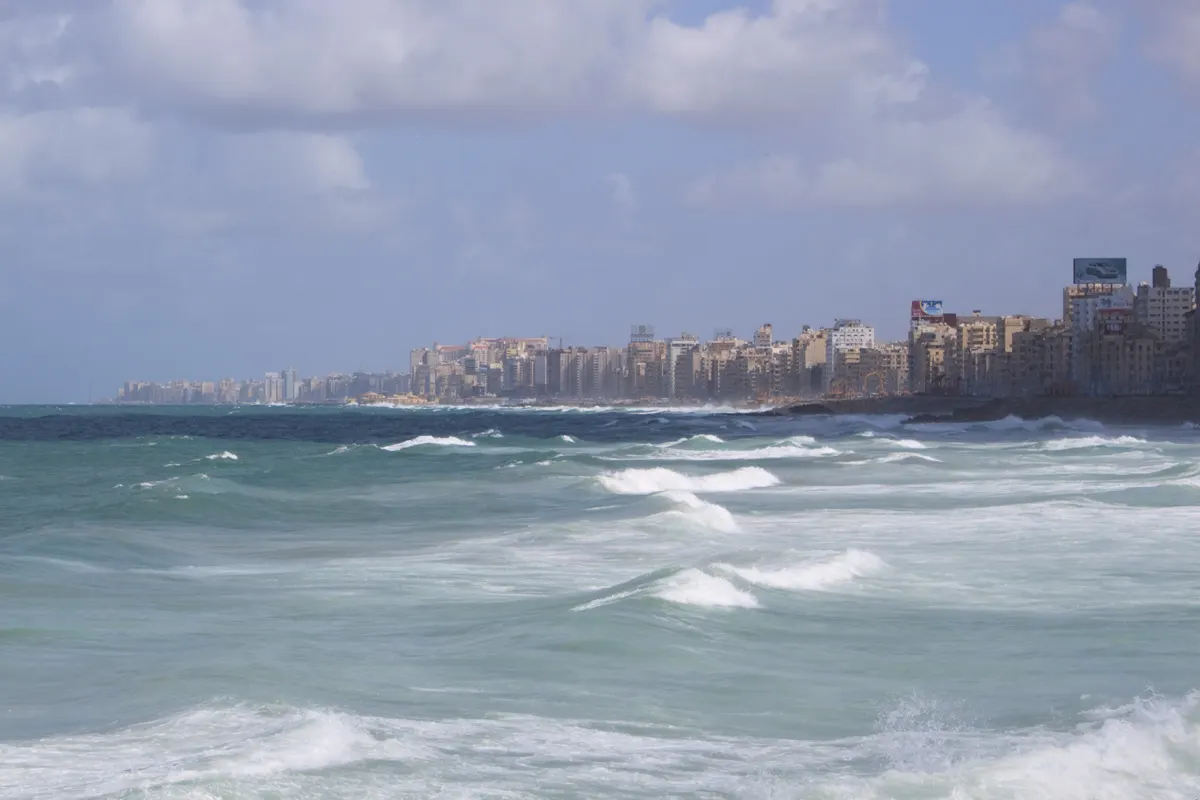
File photo: Alexandria Egypt coastline. Photo: MrSnooks, CC BY-SA 2.0 / Wikimedia Commons
How it unfolded
The research team combined satellite measurements with coastal water levels, elevation models, population estimates, and building footprints to project flood exposure through 2100. By analyzing data collected when Sentinel-1 satellites repeatedly flew over the same regions every six to 12 days, scientists tracked changes in radar signals bouncing back from the ground.
When the team compared these satellite findings with land-motion estimates from the United Nations Intergovernmental Panel on Climate Change Sixth Assessment Report, they discovered substantial discrepancies. For example, in Alexandria, satellite-observed land subsidence increases projected relative sea-level rise by approximately 36 percent by 2050 under an intermediate-emissions scenario.
What the reports confirm
All reports confirm that the study was led by researchers at Virginia Tech, published in Science Advances, and utilizes European Space Agency Sentinel-1 satellite data to evaluate 20 African coastal cities. They agree that over seven million people, one million buildings, and $180 billion (£137bn) of assets face potential flood risks by 2050.
Minor numerical variations appear across the texts regarding specific sinking speeds: Report A notes that Alexandria and Lagos sink an average of 6mm and 5mm per year respectively, while Report B cites rates of 6.3mm and 5.2mm per year. Additionally, Report C provides specific baseline figures for Lagos, estimating that 2.6 million residents lived in vulnerable coastal areas in 2020.
The people involved
Oluwaseyi Dasho served as the lead author of the study and a recent Ph.D. graduate of Virginia Tech's Department of Geosciences. Dasho noted that while subsidence effects are invisible in everyday life, they substantially increase flood exposure over decades due to a historical lack of local monitoring stations in Africa.
Manoochehr Shirzaei, a professor of geosciences at Virginia Tech and the senior author of the study, explained the mechanics of satellite radar interferometry. Shirzaei emphasized that identifying hyper-local drivers of subsidence allows urban planners to formulate targeted local policies to combat the risks.
Why it matters
Land subsidence lowers the ground relative to the ocean, accelerating the perils of climate-driven sea level rises. Rapid urbanization across Africa—with cities growing at an average rate of 3.5 percent annually—means that a rapidly expanding population is placing heavier demands on local resources.
If current sinking rates continue, megacities like Lagos and Alexandria will face catastrophic flooding that outpaces previous international projections. This threatens critical infrastructure, residential districts, and billions of dollars in economic assets, mirroring similar sinking crises observed in Asian megacities such as Jakarta, Manila, and Ho Chi Minh City.
The background
Subsidence is caused by a combination of natural geological processes and human-driven activities. In rapidly growing metropolitan areas, heavy extraction of groundwater causes underground soil to compact, pulling the surface downward.
Additional regional factors identified in the study include the Aswan Dam on the Nile trapping sediment upstream and preventing the natural replacement of sinking land in Alexandria. In Lagos, the practice of reclaiming land from the ocean to build artificial islands and constructing heavy buildings on loose ground further exacerbate the sinking.
Response and aftermath
Researchers suggest that because many drivers of subsidence are extremely local, municipal authorities can combat them through targeted resource management. Potential mitigation strategies include supplying alternative water sources, reducing water-intensive agriculture, and setting strict limits on groundwater extraction.
Where mitigation is impossible, adaptation measures such as constructing robust flood defenses or relocating critical infrastructure to higher ground will be necessary. Authors hope the findings will help African governments and planners allocate resources effectively and close the historical information gap in vulnerable developing regions.
What we still don't know
While the study covers 20 African coastal cities, the reports do not list every individual municipality evaluated in the research. Furthermore, the current analyses do not yet fully account for future coastal defenses that governments might construct or shifting population dynamics over the coming decades.
Want more on this story? Our research assistant searches the latest reports across the web and explains what it finds, so you get the fuller picture in one place.