
Medieval Armor Uncovered in 500-Year-Old Royal Shipwreck
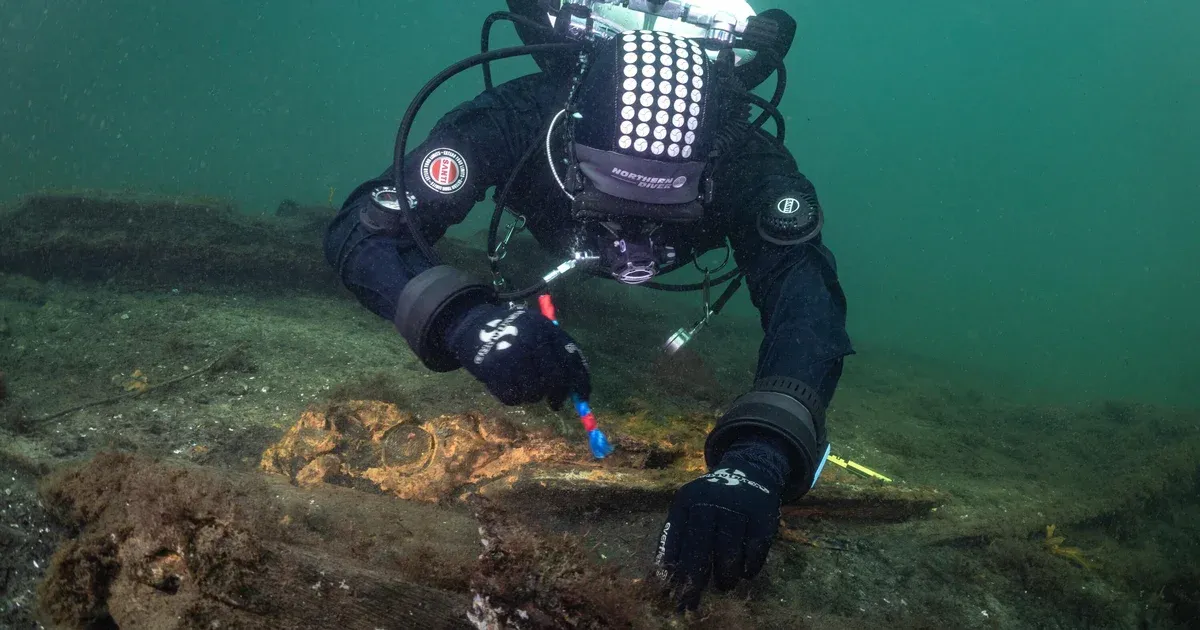
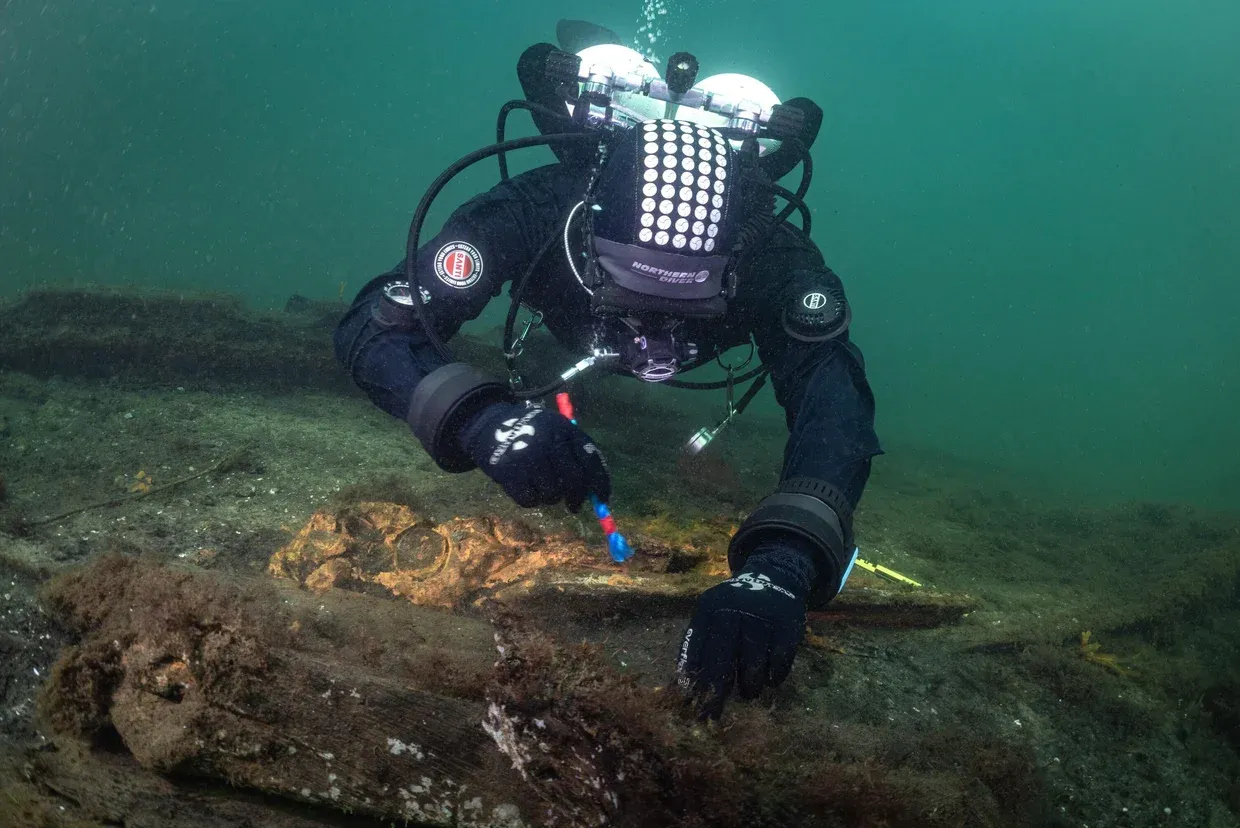
A diver uses specialized equipment to examine the wreckage of the 500-year-old Danish warship Griffin.
Maritime archaeologists exploring the 500-year-old wreckage of King Hans's warship Griffin have uncovered fragments of copper-alloy chain mail armor. The discovery was made near an ammunition-tool chest beneath the ship's forecastle using advanced robotic and 3-D imaging technology. Researchers believe the find offers valuable insight into military gear storage and naval combat tactics during the Early Modern Period.
- VesselGriffin (Gribshunden), warship of King Hans
- LocationNorth of Sweden's Stora Ekö Island
- Sunk1495 following an explosion and fire
- Key DiscoveryCopper-alloy chain mail armor fragments
- ResearchersUniversity of Southampton, Södertörn University, and Stockholm University
Photos
3 photosWhat happened
An international team of maritime archaeologists has recovered high-quality medieval armor fragments from the wreckage of a 500-year-old royal Danish warship. Known as the Griffin or Gribshunden, the vessel served as the flagship for Denmark's 15th-century leader, King Hans, and was frequently utilized for diplomatic expeditions.
The latest find consists of copper-alloy chain mail armor. Researchers stumbled upon the artifacts while documenting an ammunition-tool chest located just below the ship's forecastle, an elevated fighting platform positioned at the front of the vessel.
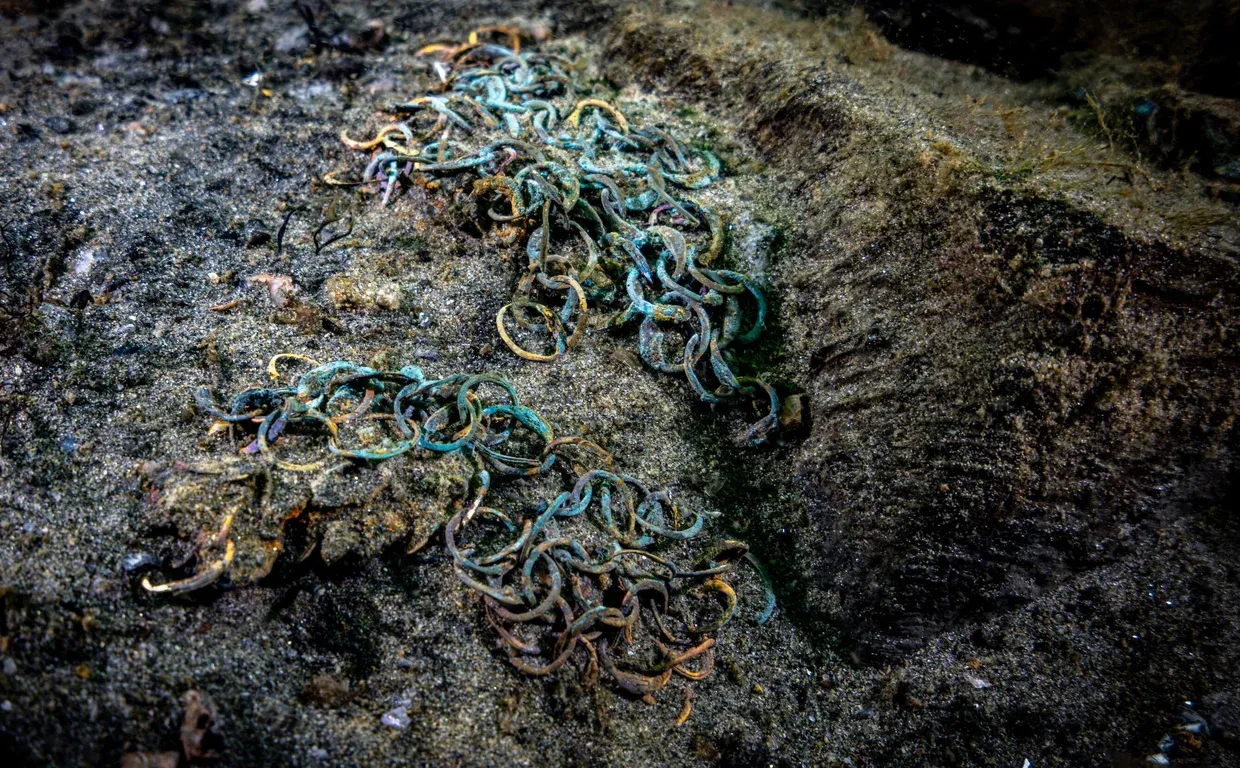
Fragments of copper-alloy chain mail armor resting on the seabed near the ship's wreckage.
How it unfolded
The Griffin met its end in 1495, when an explosion sparked a fire that caused the vessel to sink while anchored north of Sweden's Stora Ekö Island. Although the wreck was initially discovered in the 1970s, it has continued to yield historical insights through ongoing study.
Since 2019, joint expeditions conducted by researchers from the United Kingdom's University of Southampton alongside Swedish institutions Södertörn University and Stockholm University have focused on the site. During recent documentation work using advanced robotic survey technology and 3-D photogrammetric imaging, the team located the chain mail fragments.
The people involved
The research effort is led by an interdisciplinary team of archaeologists and hydrographic survey specialists from British and Swedish academic institutions. Dr. Rodrigo Pacheco-Ruiz, a visiting fellow at the University of Southampton's Centre for Maritime Archaeology, noted that German mercenaries known as Landsknechts were aboard the vessel when it sank, suggesting that military gear was stored in the forecastle area.
Rolf Fabricius Warming, a Southampton alumnus and current Ph.D. researcher at Stockholm University, pointed out that the armor pieces could have been used over extended periods through repairs or reuse by different soldiers, indicating they might represent older military equipment that remained active.
Why it matters
Shipwrecks from this era serve as crucial physical records of naval history. Researchers regard the Griffin as a key piece of the puzzle regarding the 'military revolution at sea' during the Early Modern Period, a time when naval tactics transitioned from hand-to-hand combat to heavy naval artillery fire.
By analyzing the structural elements of the forecastle, the composition of the armor, and other weaponry-related artifacts, scientists hope to better understand how military personnel lived, worked, and stored equipment aboard early warships.
The background
The Griffin sank in shallow waters north of Sweden's Stora Ekö Island in 1495. Because portions of the wreck are well-preserved, it offers a rare archaeological window into late-15th-century maritime technology.
Experts often compare the Griffin to other remarkably preserved historic wrecks, such as the Mars and the Vasa, the latter of which has been on display in Stockholm since being salvaged from the ocean floor in the 1960s.
What happens next
The newly discovered chain mail pieces, along with other weaponry-related artifacts sampled from the wreck, will undergo detailed laboratory analysis. Researchers intend to study the manufacturing techniques and material composition of the armor to trace its origins.
Additionally, scientists will continue analyzing lead objects recovered during earlier expeditions—items suspected to be related to ammunition manufacturing molds—alongside new material samples taken directly from the tool chest.
What we still don't know
While researchers have identified the presence of German mercenaries and recovered equipment from the forecastle, the exact sequence of events leading up to the 1495 explosion remains unelaborated in current reports.
Furthermore, the full extent of the surviving military equipment stored across other parts of the disintegrated hull has yet to be fully uncovered or analyzed.
Want more on this story? Our research assistant searches the latest reports across the web and explains what it finds, so you get the fuller picture in one place.