
Escalating Regional Tensions: Strikes Hit Saudi Capital and Yemeni Port
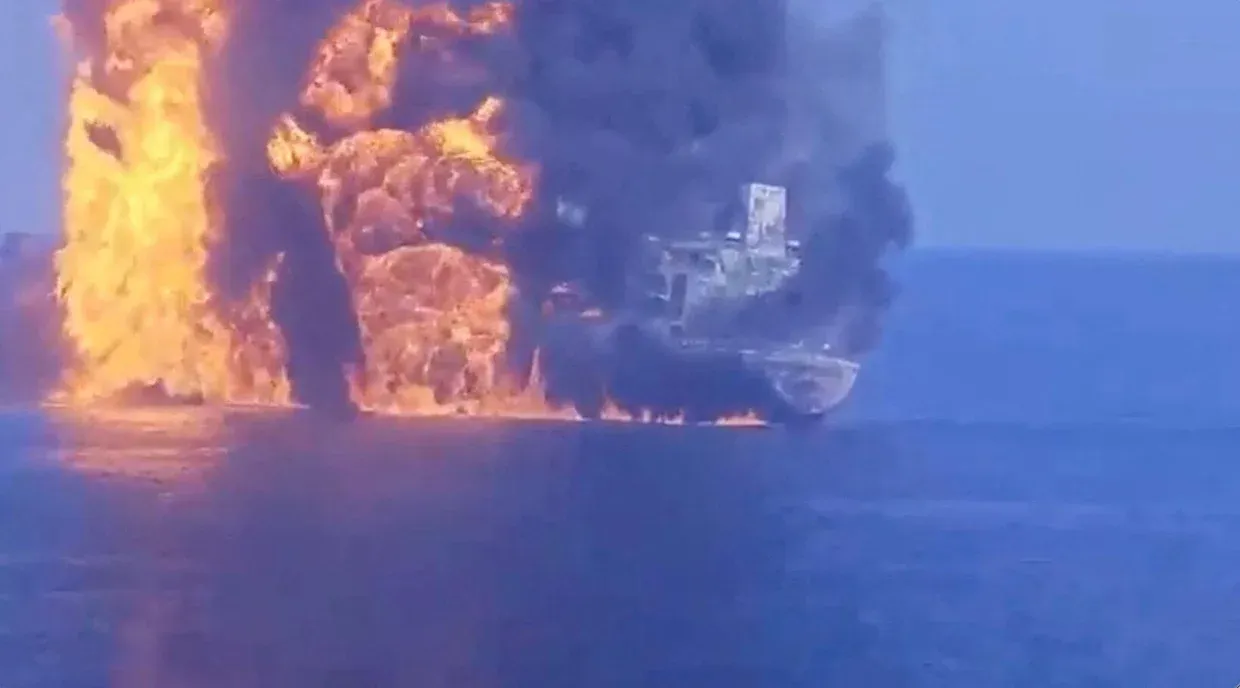
A tanker engulfed in flames, illustrating the ongoing risks to commercial shipping in the region.
A surge in hostilities has seen Houthi forces strike a building in Riyadh's financial district, while reports emerge of retaliatory attacks on the Yemeni port of Hodeida. These events occur amid ongoing instability in vital Red Sea and Persian Gulf shipping lanes. The situation underscores the widening regional conflict and its persistent threat to global energy infrastructure.
- LocationRiyadh, Saudi Arabia and Hodeida, Yemen
- Casualties11 injured in Riyadh financial district attack
- StatusOngoing military exchanges and maritime blockades
- Primary ActorsHouthi rebels, Saudi-led coalition, U.S. naval forces
Photos
1 photosWhat happened
A series of military escalations has gripped the Middle East, centered on attacks against Saudi infrastructure and maritime transit points. Houthi rebels, an Iran-backed militant group, targeted a building in Riyadh's financial district, resulting in 11 injuries. This follows a period of heightened threats from the group, which had previously warned investors and shipping companies to vacate Saudi territory.
Simultaneously, Houthi-affiliated media reported that Saudi-led coalition forces launched strikes against the port city of Hodeida in Yemen. The reports indicated that both the port and the area's international airport were targeted, though no casualties were immediately confirmed in those specific locations.
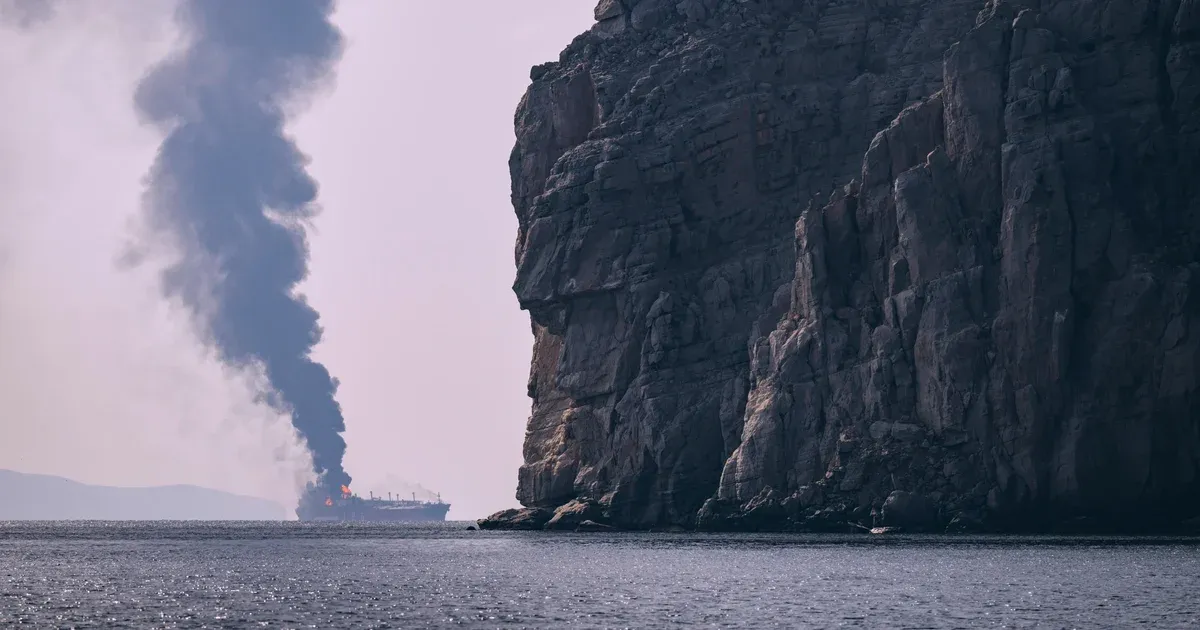
Smoke rises from a vessel near a rocky coastline, highlighting the dangers faced by tankers in the area.
How it unfolded
The violence in Riyadh followed a week of public warnings from Houthi military spokespeople, who explicitly stated that Saudi Arabia's financial centers and Red Sea ports were potential targets. The attack on the financial district prompted a response from the Saudi-led coalition, which is currently engaged in a broader conflict against the Houthis to support Yemen's internationally recognized government.
In the maritime domain, the Strait of Hormuz remains a focal point of tension. While U.S. officials report that the majority of commercial vessels continue to transit the waterway under protection, the frequency of attacks on tankers has reached record levels in recent months. Iranian officials have reiterated their intent to maintain control over the strait until specific conditions are met, further complicating the security environment.
Why it matters
The conflict directly threatens the stability of global energy supplies, as the Strait of Hormuz and the Bab Al-Mandeb are critical chokepoints for oil exports. Despite the volatility, U.S. Central Command maintains that substantial volumes of crude oil are still reaching international markets under naval escort.
For the civilian population in the region, the escalation signifies a deepening of the humanitarian and economic crisis. The targeting of financial districts and critical port infrastructure suggests a shift toward more direct, high-impact strikes that could have long-term consequences for regional investment and trade.
The background
The Houthis, who control significant portions of Yemen, have been in a protracted conflict with a Saudi-led coalition for years. This struggle is frequently viewed through the lens of regional power dynamics, with the Houthis receiving support from Iran, while the coalition is backed by various international allies, including the United States.
This latest round of violence occurs against a backdrop of broader regional instability, including ongoing tensions regarding Iran's nuclear and chemical capabilities, and the failure of various diplomatic efforts to secure the disarmament of groups like Hezbollah. The interplay between these localized conflicts and international shipping security remains a primary concern for global policymakers.
Response and aftermath
Diplomatic efforts to manage the crisis are ongoing, with high-level discussions occurring between U.S. and Saudi officials regarding the protection of energy infrastructure and the necessity of maintaining freedom of navigation. However, these efforts have yet to result in a de-escalation of the fighting.
Meanwhile, the U.S. continues to provide naval protection for commercial vessels, reporting that over 100 million barrels of crude oil were successfully shipped through the Strait of Hormuz in a single week. Despite these measures, the rhetoric from Iranian and Houthi leadership remains defiant, with threats of further retaliation against U.S. and Saudi interests.
What we still don't know
The full extent of the damage to the port of Hodeida remains unconfirmed, as does the long-term impact of the strike on Riyadh's financial district. Furthermore, the specific 'seven conditions' demanded by Iran for the reopening of the Strait of Hormuz have not been publicly detailed, leaving the path to a potential diplomatic resolution unclear.
Want more on this story? Our research assistant searches the latest reports across the web and explains what it finds, so you get the fuller picture in one place.