
Elon Musk Enraged as Reports Claim Iran Exploited Starlink for Military Attacks
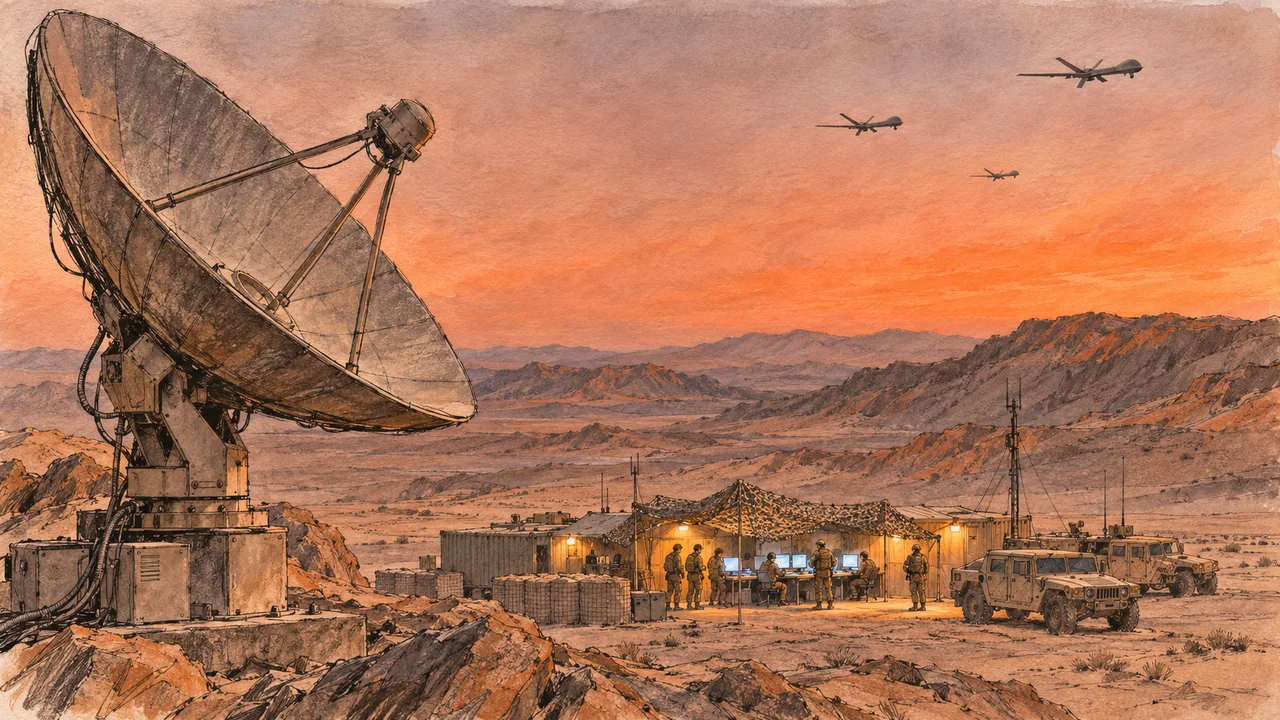
Illustration, not a photo of the event.
Reports have emerged alleging that Iran utilized Elon Musk's Starlink satellite internet service to coordinate military movements and operate attack drones against US forces in West Asia. The revelations reportedly sparked fury within SpaceX over unauthorized network usage, alongside tensions regarding the US military's subscription tier for the militarized Starshield platform. Meanwhile, Pentagon officials have stated they are unaware of any formal Central Command briefings detailing the alleged misuse.
- RegionWest Asia / Middle East
- Key FiguresElon Musk, US Defense Secretary Pete Hegseth
- OrganizationsSpaceX, US Department of Defense, Iranian Military
- StatusAllegations under review, Pentagon denies knowledge of specific briefing
What happened
According to investigative reports citing sources familiar with the matter, Iran allegedly used Elon Musk's Starlink satellite internet service to support military operations against US forces in West Asia. The reported usage included coordinating troop movements and overseeing one-way attack drones during a period of active conflict involving the United States, Israel, and Iran.
The revelations highlight vulnerabilities in private satellite networks, demonstrating how commercial technology distributed across international borders can be acquired and exploited by sanctioned state actors during wartime.

File photo: Elon Musk. Photo: jurvetson, CC BY 2.0 / flickr
How it unfolded
Following US and Israel airstrikes against Iran, Tehran retaliated with ballistic missile and drone strikes targeting US military bases across the region. As US forces worked to degrade traditional Iranian communication systems, Starlink reportedly provided an alternative channel for command and control.
During the first week of March, SpaceX Chief Executive Officer Elon Musk reportedly became enraged upon learning that his company's service was being utilized for unauthorized military campaigns against US forces. Concurrently, Musk was informed that the US military had been employing Starshield—the militarized variant of Starlink—to operate one-way attack drones under a cheaper subscription plan intended for ground operations.
What the reports confirm
All reviewed reports agree that investigative reporting by The Washington Post brought these details to light, citing multiple sources familiar with the operations and internal company discussions. The reports also confirm that a classified update prepared by US Central Command was reportedly presented to US Defense Secretary Pete Hegseth over the summer.
However, the accounts note a discrepancy regarding official acknowledgement: Pentagon spokeswoman Kingsley Wilson stated that the department was not aware of any Central Command report submitted to the defense secretary's office concerning this subject.
The people involved
Elon Musk, CEO of SpaceX, sits at the center of internal company friction regarding both Iran's unauthorized exploitation of Starlink and the Pentagon's usage tier for Starshield. US Defense Secretary Pete Hegseth received the classified briefing detailing the technological usage during the summer.
Other key figures include Pentagon spokeswoman Kingsley Wilson, who addressed the department's lack of awareness regarding the Central Command briefings, and former US Treasury Department lawyer Cari Stinebower, who commented on Iran's sophisticated sanctions-evasion and procurement networks.
Why it matters
The situation underscores the complex geopolitical challenges faced by private technology companies whose infrastructure spans conflict zones. While Starlink provides vital connectivity for civilian dissidents and populations enduring internet blackouts imposed by authoritarian governments, the wide distribution of physical terminals makes it exceptionally difficult to prevent adversaries from acquiring them.
For defense planners, reliance on commercial satellite systems introduces operational vulnerabilities and contractual questions regarding how militarized platforms are deployed and priced.
The background
Starlink is a satellite internet network operated by SpaceX using a constellation of low-Earth-orbit satellites designed to provide independent communication infrastructure. Although Starlink is not licensed to operate directly within Iran, the service has remained accessible via terminals smuggled into the country or acquired through third-party front companies and sanctions-evasion networks.
In January, public access to the internet was heavily restricted during nationwide protests and subsequent government crackdowns, leading outside entities to facilitate the movement of terminals into the country. Similar issues surrounding unauthorized military access to Starlink have previously surfaced during the conflict in Ukraine.
Response and aftermath
In response to growing security concerns, SpaceX has taken steps to tighten its distribution and verification systems. The company has paused its indirect reselling program, which previously permitted authorised distributors to supply terminals through sub-resellers, thereby reducing visibility over end customers.
SpaceX and the Iranian Foreign Ministry did not immediately respond to requests for comment from major news organizations regarding the specific allegations of military exploitation.
What happens next
SpaceX is expected to face mounting regulatory and industrial pressure to enhance its customer verification protocols and implement stricter geographic or whitelisting restrictions to curb illicit military use.
Governments utilizing commercial space infrastructure will likely seek more formalized agreements and clearer guidelines regarding how private satellite networks are accessed and managed during active armed conflicts.
What we still don't know
It remains unconfirmed whether Starlink directly enabled or caused any specific successful Iranian attack against US forces. Furthermore, the precise channels through which the Iranian military procured the terminals have not been publicly detailed by official government investigations.
The Pentagon has not released its formal findings regarding the specific attacks mentioned in the reports, leaving the allegations dependent on confidential sources rather than an officially published government assessment.
Want more on this story? Our research assistant searches the latest reports across the web and explains what it finds, so you get the fuller picture in one place.