
Diesel Tanker Partially Submerged Off Ibiza Set for Cartagena Tow
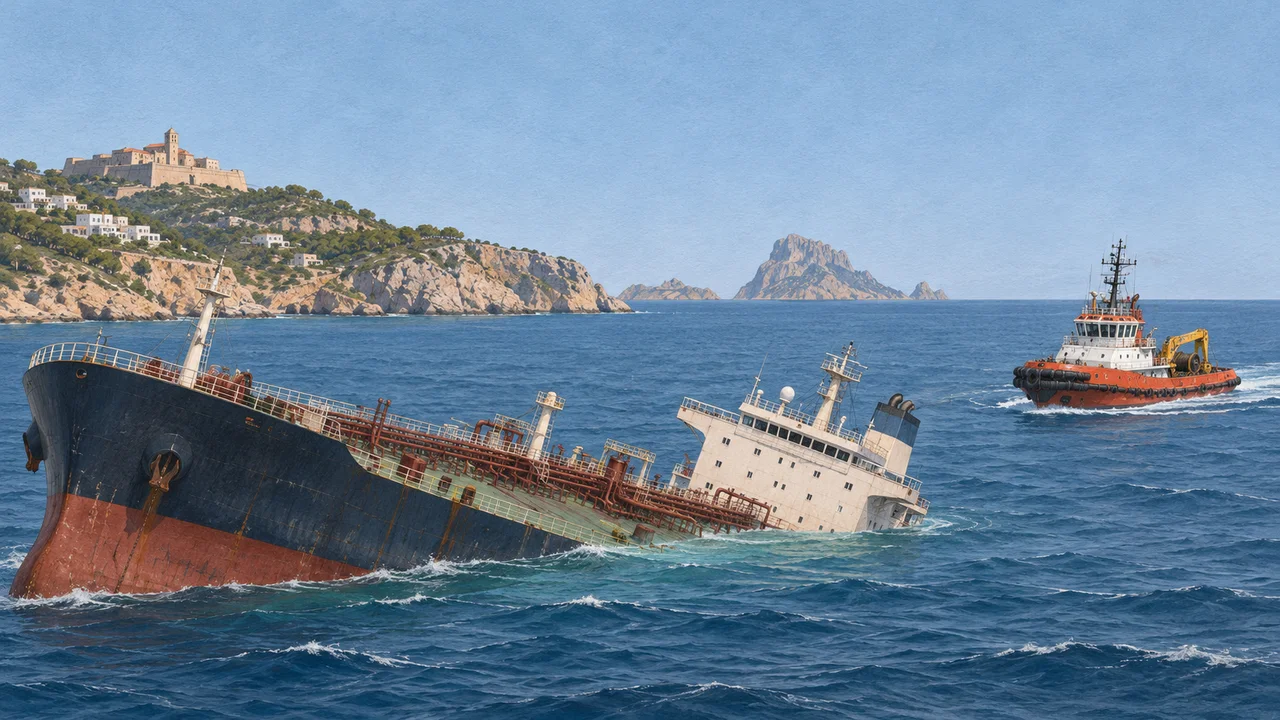
Illustration, not a photo of the event.
A Malta-registered oil tanker carrying thousands of tonnes of diesel capsized off the coast of Ibiza, prompting a major rescue operation for its 17 crew members. While one crew member tragically died in hospital, authorities confirmed that the ship's fuel tanks remained intact and a small initial slick had dissipated. The vessel is now scheduled to be towed to the Spanish port of Cartagena for cargo extraction and repairs.
- VesselMed Emre (Malta-registered)
- CargoUp to 7,000 tonnes of diesel
- Location25 nautical miles off Ibiza, Spain
- Casualties1 dead (chief engineer), 6 treated for minor injuries out of 17 crew
- StatusPartially submerged, stable, awaiting tow to Cartagena
Photos
6 photosWhat happened
A merchant tanker transporting up to 7,000 tonnes of diesel fuel ran into severe trouble in the western Mediterranean Sea, ending up capsized off the coast of the Spanish holiday island of Ibiza. Initial accounts suggested the vessel had completely gone under, but maritime authorities later clarified that the ship remained partially submerged at the surface.
The incident triggered immediate concern among environmental monitors and local officials due to the sheer volume of fuel on board and the ecological sensitivity of the surrounding waters. However, subsequent inspections by emergency teams revealed that the tanker's containment structures remained sealed, averting what could have been a catastrophic ecological emergency.
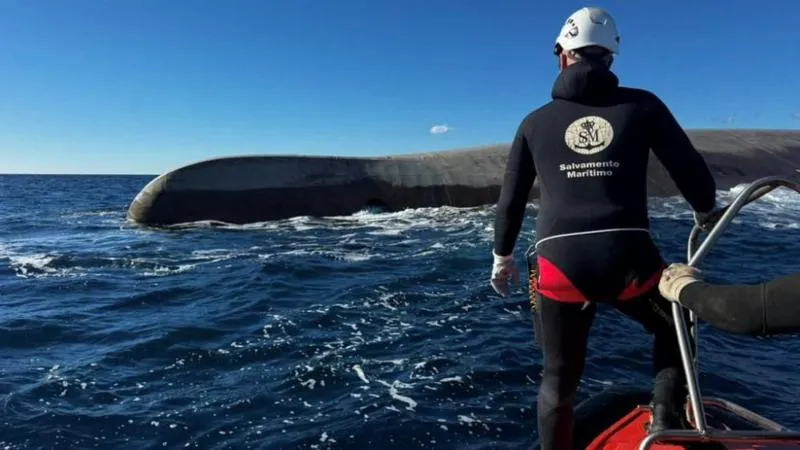
An emergency worker in a rescue suit inspects the partially submerged hull of the capsized tanker off the coast of Ibiza.
How it unfolded
The sequence began late on Wednesday when maritime rescuers in Valencia received an urgent distress signal. Shortly after the initial call, the ship transmitted an alert reporting an active leak and noting that the hull was tilting at a severe 90-degree angle. By the early hours of Thursday, the vessel had completely capsized.
A rapid response mobilization saved all 17 individuals aboard the Malta-registered craft. Emergency responders and specialized vessels, including a national maritime rescue service pollution control ship, rushed to the scene to monitor environmental conditions and assess structural stability, noting that a minor sheen of pollution near the wreck had quickly dissipated.
The people involved
The crew of 17 people aboard the stricken vessel faced perilous conditions during the capsizing event. While all individuals were successfully pulled from the water by rescue teams, the incident took a fatal toll when the ship's chief engineer later succumbed to injuries after being transported to a hospital.
In addition to the fatality, six other crew members required medical treatment for minor injuries. Spanish transport officials, regional emergency directors, and local maritime captains have coordinated the ongoing response and investigation into the accident.
Why it matters
The accident occurred near Ibiza, a region whose marine ecosystem holds international ecological significance and legal protection. The local waters contain vast expanses of ancient seagrass prairies unique to the Mediterranean basin, which are vital for supporting regional marine life and maintaining water clarity.
Beyond immediate safety concerns for the crew, any major petroleum spill in these waters would threaten delicate marine habitats and local industries reliant on a pristine coastal environment. The successful prevention of a leak has temporarily spared the region from a major environmental crisis.
The background
Spain carries a deeply cautious approach toward maritime petroleum transport due to historic ecological disasters. Most notably, in 2002, the nation suffered one of its worst environmental catastrophes when a large oil tanker encountered severe distress off the northwestern coastline of Galicia, spilling tens of thousands of tonnes of heavy fuel oil into the sea.
That historical trauma informs the swift, highly coordinated mobilization of air and sea monitoring resources currently deployed to oversee the secured wreckage of the disabled tanker.
Response and aftermath
Following the stabilization of the site, Spanish officials evaluated several ports to handle the damaged vessel. The transport ministry announced that the tanker would be towed to the port of Cartagena, identified as the sole facility equipped with the necessary technical infrastructure to safely conduct cargo extraction and structural repairs.
The long journey to Cartagena is expected to take several days, with authorities monitoring the stability of the wreck throughout the operation. Prime Minister Pedro Sánchez expressed confidence in ongoing public updates, while air patrols and rescue vessels continue to verify that no leaks develop during the tow.
What happens next
The disabled tanker is scheduled to arrive at the port of Cartagena, where specialized engineering teams will undertake the complex task of removing thousands of tonnes of diesel fuel from the partially submerged hull.
Simultaneously, maritime safety investigators will attempt to determine the exact sequence of mechanical or operational failures that caused the vessel to list and capsize in the open sea.
What we still don't know
Publicly available reports have not yet disclosed the underlying cause of the accident or the specific technical methods authorities will employ to extract the diesel fuel once the ship reaches Cartagena.
Furthermore, details regarding the nationality of the crew members and the immediate environmental conditions at the moment the vessel began taking on water have not been released.
Want more on this story? Our research assistant searches the latest reports across the web and explains what it finds, so you get the fuller picture in one place.