
As Ukraine Expands Strikes to Neutral Waters and International Seas, European Allies Grow Uneasy
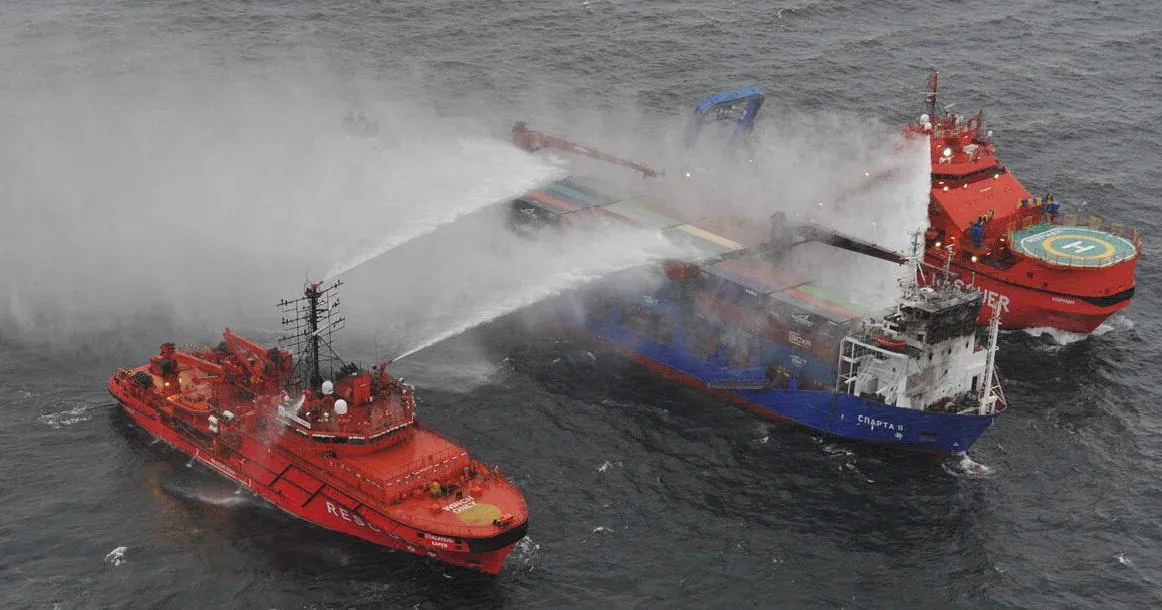
Emergency and rescue vessels respond in open waters, reflecting the hazardous maritime environment where international shipping and military assets intersect.
Hostilities in the nearly five-year war between Russia and Ukraine are spilling beyond their immediate borders, marked by Ukrainian maritime drone strikes on Russian vessels in the Gulf of Finland and off the coast of Libya, alongside airspace violations in Poland and border closures in Estonia. While Ukrainian leadership frames these actions as legitimate self-defense to degrade Russia's war machine, the expanding theatre is prompting mounting anxiety and diplomatic friction among European and NATO partners.
- WhenLate November (ongoing)
- WherePoland, Estonia, Gulf of Finland, and off the coast of Libya
- WhoUkraine, Russia, Poland, Estonia, Norway, Italy, and NATO allies
- StatusActive cross-border hostilities and diplomatic tensions
What happened
Hostilities stemming from Russia's full-scale invasion of Ukraine have increasingly spilled past regional borders, drawing heightened anxiety from several North Atlantic Treaty Organization member states. Over recent days, Polish authorities accused Moscow of a deliberate provocation after a surveillance drone briefly crossed into Polish airspace before turning back into Ukraine, following an incident late last week where three Russian missiles landed on Polish soil.
Simultaneously, maritime strikes attributed to Ukrainian forces have targeted Russian shipping assets far from traditional front lines. Ukrainian President Volodymyr Zelenskyy acknowledged that Ukrainian forces used seven domestically produced naval drones to strike the Sparta II, a U.S.-sanctioned Russian cargo vessel operating in international waters in the Gulf of Finland. Another operation off the Mediterranean coast of Libya sank the Russian corvette Merkury and damaged another U.S.-sanctioned cargo ship, the MV Angara.
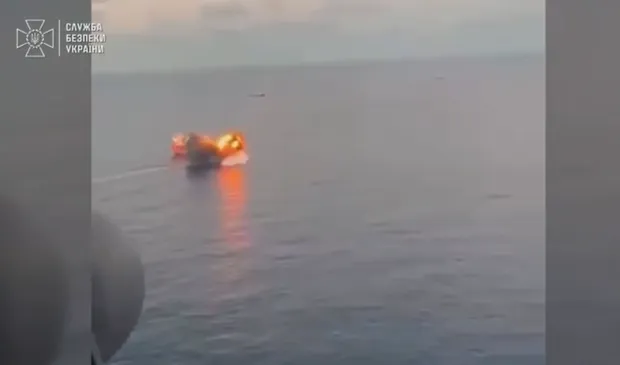
An aerial view captures a vessel engulfed in flames at sea following a reported strike.
How it unfolded
The sequence of cross-border incidents accelerated when Polish Deputy Minister of Defense Paweł Zalewski stated on Tuesday that a Russian drone had crossed the nation's airspace for a very short duration. Although monitored from the start by the Operational Command of the Armed Forces, officials decided against shooting it down to prevent civilian casualties or ground damage.
In northern Europe, Norwegian Defense Minister Tore Sandvik noted discussions with Ukrainian officials regarding regional stability following the strike on the Sparta II, which was subsequently towed back to a Russian port. Further south, Italian Foreign Minister Antonio Tajani conferred with his Ukrainian counterpart, Andriy Sybiha, expressing concern over the Mediterranean strike near a Russian naval base in Libya. Concurrently, Estonia announced the closure of its land border with Russia starting December 1, following allegations of a domestic sabotage plot against a defense company, prompting the Russian Foreign Ministry to accuse Tallinn of pushing toward open war.
The people involved
Ukrainian President Volodymyr Zelenskyy defended the maritime operations as legitimate defensive measures against ongoing Russian bombardment from land, sea, and air. On the European diplomatic front, officials such as Polish Deputy Defense Minister Paweł Zalewski, Norwegian Defense Minister Tore Sandvik, Italian Foreign Minister Antonio Tajani, and Estonian Foreign Minister Margus Tsahkna voiced varying degrees of strategic concern and firm resolve regarding border security.
Military and national security analysts have also weighed in on the shifting dynamics. Ben Hodges, a former top commander of the U.S. Army in Europe, argued that Ukraine's actions successfully disrupt Russian oil and gas exports and challenge Moscow's sanctions-evading shadow fleet. Meanwhile, CBS News national security analyst Aaron MacLean observed that while Ukraine's expansion of the war map creates friction with partners who feel threatened, Kyiv feels justified in imposing costs on Russia on behalf of eastern NATO members, particularly given shifts in Washington's support.
Why it matters
The widening geography of the conflict directly impacts regional security and international trade routes. By targeting Russian vessels in neutral waters such as the Gulf of Finland and the Mediterranean, Ukraine aims to degrade the financial resources powering Russia's war machine, particularly the hundreds of dubiously registered tankers comprising Moscow's shadow fleet.
However, these operations risk provoking direct retaliatory measures from Moscow against civilian infrastructure and economic targets, while simultaneously testing the cohesion of the U.S.-led NATO alliance. Eastern European nations face immediate proximity threats, balancing solidarity with Ukraine against the escalating danger of spillover hostilities entering their own sovereign territories.
The background
The current friction unfolds against the backdrop of a nearly five-year war sparked by Russia's full-scale invasion of Ukraine. Over the course of the conflict, Russia has consistently utilized land, sea, and air strikes against Ukrainian infrastructure while relying on a network of international shipping assets to bypass economic sanctions.
In response, Ukraine has increasingly invested in domestic weapons development, including naval drones, to counter Russian naval dominance in the Black Sea and extend its operational reach into international waters where Russian logistical and military supply lines operate.
Response and aftermath
Governments across Europe have responded with a mix of diplomatic engagement and defensive postures. Italy's Foreign Ministry emphasized the urgency of preventing the conflict from taking root in the Mediterranean, while Norway engaged in bilateral talks to secure stability in northern waters.
In the Baltic region, Estonia's decision to seal its land border with Russia represents a direct economic and physical cutoff, following accusations that Russian intelligence agencies attempted to infiltrate domestic defense contractor Threod Systems. This mirrors earlier security measures enacted along the Polish-Russian border to thwart potential sabotage operations.
What happens next
As Estonia's December 1 border closure approaches, regional security measures along NATO's eastern flank remain heightened. Analysts suggest that Ukraine will likely continue its campaign to disrupt Russian international supply lines and economic exports, anticipating potential Russian retaliation against Ukrainian infrastructure.
European nations will continue diplomatic dialogues to manage the friction arising from extended military operations near alliance borders, while monitoring airspace integrity and maritime traffic for further provocations.
What we still don't know
Specific details regarding potential human casualties resulting from the maritime drone strikes or the airspace violations have not been reported. Additionally, the full scope of the alleged sabotage plots against Estonian defense infrastructure and the precise operational details of the Polish border security sweeps remain undisclosed.
Want more on this story? Our research assistant searches the latest reports across the web and explains what it finds, so you get the fuller picture in one place.