
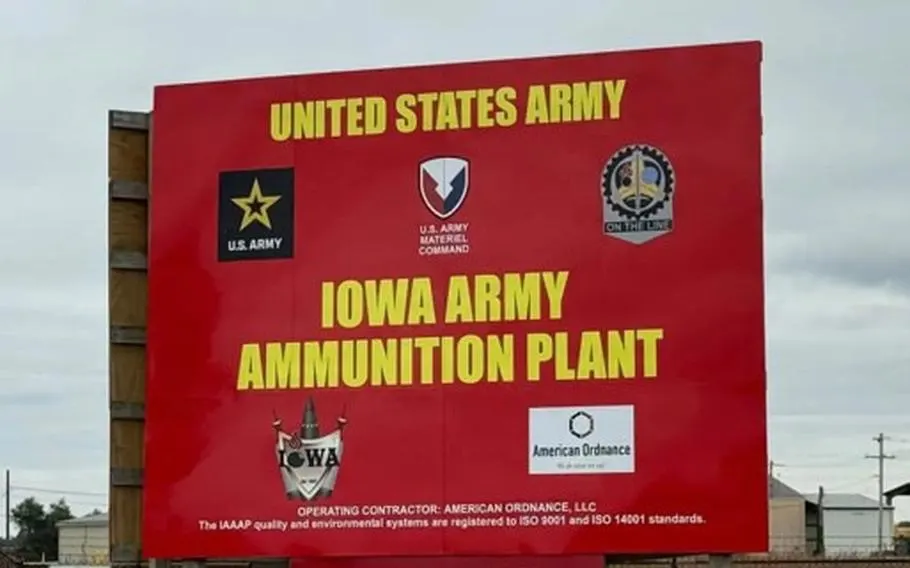
The US Army has blown up the nation’s entire stockpile of lead azide, a highly sensitive chemical used to make explosives, during a controlled operation at a military facility in Iowa. Officials reported that initial air monitoring detected no toxic dust spreading to nearby homes and farms following the blasts.
The operation took place at the Iowa Army Ammunition Plant in Middletown. Government agencies and independent researchers are continuing extensive environmental testing to verify that no hazardous heavy metals leaked into surrounding areas.
What happened
The controlled detonation destroyed two bunkers containing a total of five tons, or 4,500 kilograms, of lead azide spread across 68 barrels. To protect the surrounding community, the military erected earthen barriers and poured foam and water onto the bunkers to absorb the blast and suppress dust. Officials scheduled the operation for a Wednesday when winds were blowing south-west, away from populated areas such as Burlington, a city of nearly 25,000 residents along the Mississippi River.
The blasts occurred around 9 am local time, producing two loud booms and a pair of white plumes that quickly dissipated. Bystanders watching from nearby roads described the explosion as surprisingly small, with one resident noting it sounded more like a small noisemaker than a major military detonation. Following the operation, the Federal Emergency Management Agency and the US Environmental Protection Agency issued all-clear alerts after air monitors detected no lead in the area.
Why it matters
Lead azide is a heavy metal compound that poses severe health risks, particularly to children and pregnant women. Ahead of the detonation, local residents and environmental groups expressed deep concern regarding potential health hazards, lack of clear information, and the safety of local water supplies and livestock. Schools in the area canceled classes, local businesses closed, and some residents sealed doors and windows or evacuated as a precaution.
The background
Lead azide is an extremely sensitive primary explosive used to detonate larger secondary explosives. The US Army decided to execute an immediate controlled detonation because the aging stockpile was degrading and faced an increased risk of exploding spontaneously as colder weather approached. The military had delayed the operation over the preceding two weeks while addressing public concerns and coordinating safety protocols.
What happens next
While initial air quality data was promising, independent experts emphasize that comprehensive laboratory testing of soil, water, homes, and playgrounds will take days to weeks. Water treatment facilities along the Mississippi and Missouri rivers plan to conduct periodic testing to detect any potential contamination spikes, while local farmers monitor livestock health.
- The US Army successfully blew up the nation’s entire stockpile of lead azide at a military facility in Middletown, Iowa.
- Officials reported that initial EPA air monitors detected no lead in the surrounding area following the controlled detonation.
- Extensive environmental testing of water sources, farms, and homes will continue in the weeks ahead to ensure public safety.