
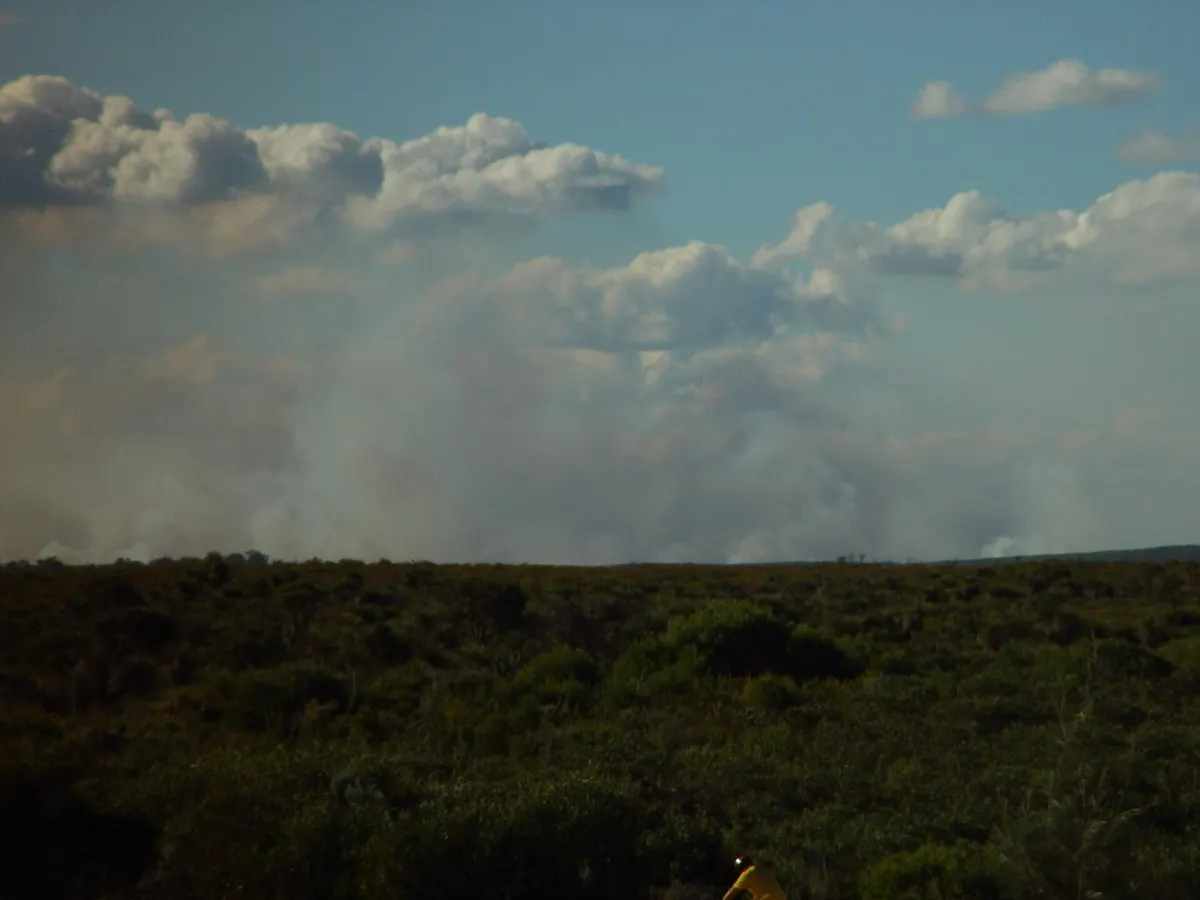
Large parts of southern and central Australia face an elevated bushfire risk this summer, driven by high fuel loads, low soil moisture, and forecast hot conditions. Authorities warn that nearly every state has areas of above-average risk heading into the hottest months of the year.
The seasonal outlook, released on Friday by the Australian and New Zealand Council for Fire and Emergency Services (AFAC), warns that hot weather and extreme temperatures are likely nationwide between December and February. Climate scientists and emergency commissioners stress that communities must prepare not only for bushfires and grassfires, but also for severe storms, floods, and marine heatwaves threatening the Great Barrier Reef.
What happened
The seasonal outlook from AFAC identified most of Victoria, eastern Tasmania, and large parts of South Australia, Western Australia, New South Wales, and the Northern Territory as facing heightened bushfire risks. AFAC chief executive Rob Webb stated that nearly every state had areas of above-average risk, urging residents to prepare emergency plans and know where to get information.
In Victoria, the dire outlook follows back-to-back years of devastating fires and record-breaking heat. Recent rains have spurred abundant grass growth that can dry rapidly, creating the potential for grassfires as temperatures rise. Last summer, more than 440,000 hectares of land burned across Victoria, an area larger than the Black Saturday fires of 2009. Victoria’s emergency management commissioner, Tim Wiebusch, warned that residents face a mixed bag of emergencies, including flash flooding, riverine flooding, earthquakes, and the risk of thunderstorm asthma.
In Tasmania, residents on Flinders Island were already fighting an out-of-control blaze following a warm and dry year with below-average rainfall. Nationally, the Bureau of Meteorology forecasts hotter-than-usual days and nights across the country. North-western Australia and eastern Tasmania are expected to be drier than usual, while above-average rainfall is predicted for Queensland and north-eastern New South Wales. Oceans around Australia are mostly much warmer than usual, with temperatures expected to rise further.
Why it matters
The looming weather conditions put human lives, property, and fragile ecosystems directly at stake. South-eastern Australia is recognized as one of the most bushfire-prone places in the world. With climate change driving long-term warming, experts warn that tinderbox conditions are becoming the norm for the region's future.
Marine life is also in severe jeopardy. The Great Barrier Reef Marine Park Authority is forecasting a high risk of widespread coral bleaching, driven by marine heatwaves up to 2C warmer than average. Conservation groups, such as the Australian Marine Conservation Society, have called for emergency response plans and temporary protections for critical reefs to give the ecosystem a fighting chance against intensifying thermal stress.
The background
The dangerous summer outlook is shaped by a complex combination of climatic influences. According to Climate Council adjunct professor Dr Andrew Watkins, a strong El Nino, a positive Indian Ocean Dipole, and influences from Antarctica are combining with long-term global heating driven by fossil fuel emissions.
AFAC coordinates fire and emergency services across Australia and New Zealand, providing seasonal outlooks to help communities anticipate high-risk weather periods. Last summer's severe fires in Victoria followed major blazes in the Grampians national park during the 2024-25 season.
What happens next
Authorities have urged the public to monitor official forecasts and prepare evacuation plans before fires strike. Conservation advocates continue to push authorities for immediate emergency measures to protect vulnerable marine environments as ocean temperatures climb.
Key takeaways
- Large parts of southern and central Australia face an elevated bushfire risk this summer due to high fuel loads and dry soil.
- Victoria experienced more than 440,000 hectares of land burning last summer, surpassing the footprint of the 2009 Black Saturday fires.
- The Great Barrier Reef faces a high risk of widespread coral bleaching driven by marine heatwaves up to 2C warmer than average.
- Experts attribute the severe seasonal outlook to a combination of El Nino, the Indian Ocean Dipole, and long-term global heating.