
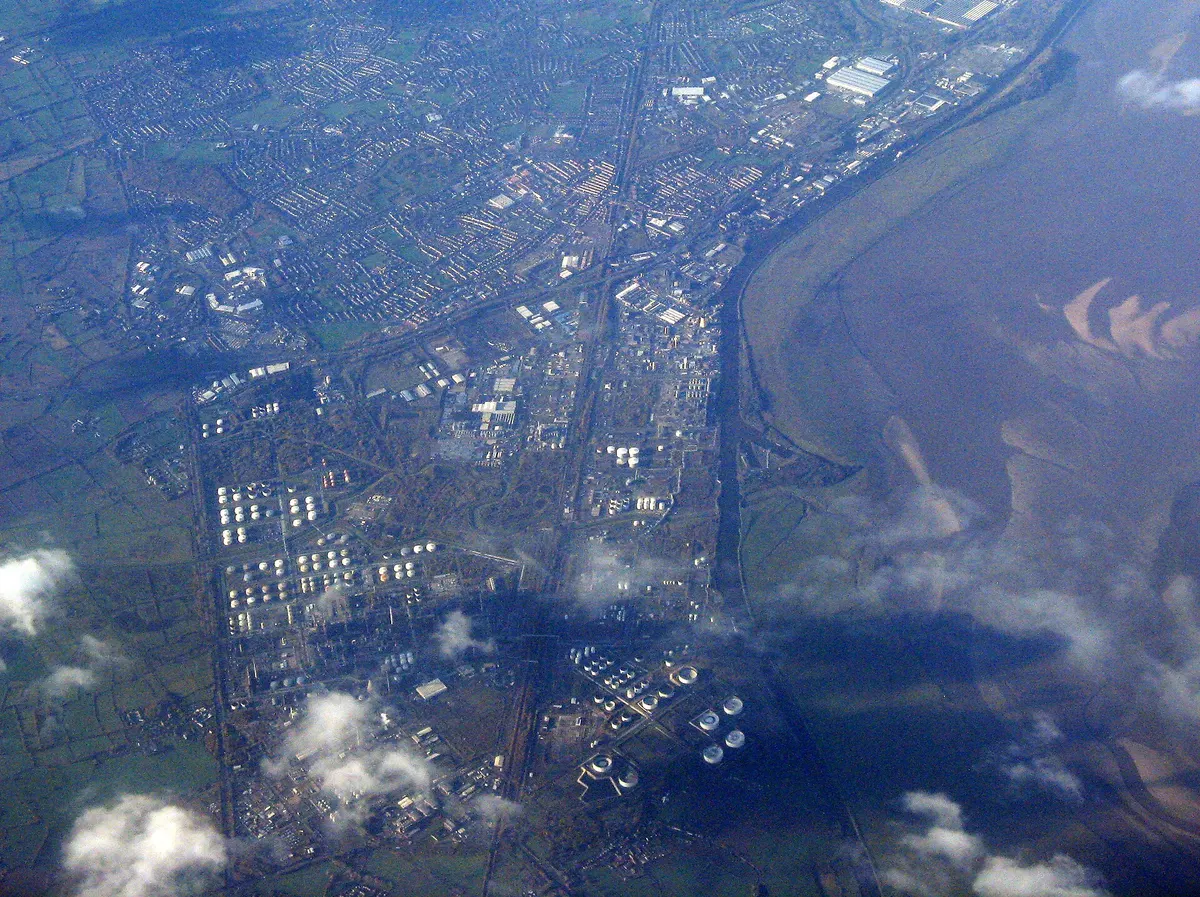
One of the United Kingdom's largest oil refinery operators has been penalised nearly £900,000 following hundreds of breaches of environmental rules over a three-year period. Warrington Magistrates' Court ordered Essar Oil (UK) Limited, which trades as EET Fuels, to pay a fine alongside legal costs after the company pleaded guilty to 12 charges brought by the Environment Agency.
The case centres on operations at the Stanlow refinery in Ellesmere Port, Cheshire. Between 2018 and 2020, the facility exceeded wastewater discharge limits at least 489 times, releasing harmful substances into local waterways.
What happened
The prosecution brought by the Environment Agency covered a multitude of environmental failures at the Cheshire site. Essar Oil pleaded guilty to 12 specific charges relating to permit violations.
Ten of the charges involved illegal wastewater discharges into local waterways including Thornton Brook, the River Gowy, and the Manchester Ship Canal. These discharges contained oil, suspended solids, and dangerous chemicals such as cyanide. Environment Agency officers documented visible pollution, including a sheen of oil on waterways and vegetation downstream that was blackened by oil in January 2020.
The remaining two charges focused on specific major incidents in 2019. In February of that year, an open vent and a failure to follow written procedures resulted in between 15 and 20 tonnes of a chemical leaking into the Manchester Ship Canal. Exactly one month later, a contractor's vehicle ruptured an effluent pipe. During subsequent repairs, approximately 15 tonnes of partially treated sewage entered Thornton Brook, a waterway that flows directly into the protected Mersey Estuary.
For the 10 discharge offences, the court imposed a fine of £80,000 for each count. No additional financial penalty was applied for the two 2019 leakage incidents, and three further breaches from 2022 and 2023 were taken into consideration without separate punishment.
Why it matters
The Environment Agency condemned the refinery's actions as a repeated failure to comply with strict environmental permit conditions designed to protect natural habitats and public health. Chemicals such as cyanide and large volumes of untreated sewage entering protected ecosystems like the Mersey Estuary pose direct threats to local wildlife, water quality, and plant life.
Nigel Glasgow, the area environment manager for the Environment Agency, highlighted the severity of the continuous rule-breaking. The court's decision forces corporate accountability and places a heavy financial burden on the company for damaging public water systems.
What happens next
In response to the legal action and regulatory pressure, EET Fuels expressed regret for what it termed historic incidents. The firm stated that it has invested more than £24 million into improving its environmental performance.
As part of these upgrades, the company has rerouted its wastewater directly to United Utilities' Ellesmere Port treatment works. According to EET Fuels, this engineering change has already driven a significant improvement in environmental metrics, resulting in fewer total discharges and a reduction in overall freshwater usage at the refinery.
Key takeaways
- Essar Oil (UK) Limited was ordered to pay £873,473 at Warrington Magistrates' Court.
- The penalties followed nearly 500 wastewater limit breaches at the Stanlow refinery between 2018 and 2020.
- Ten charges involved illegal chemical and oil discharges into local waterways like the Manchester Ship Canal and Thornton Brook.
- The company stated it has since invested over £24 million to upgrade environmental systems and reroute wastewater.