
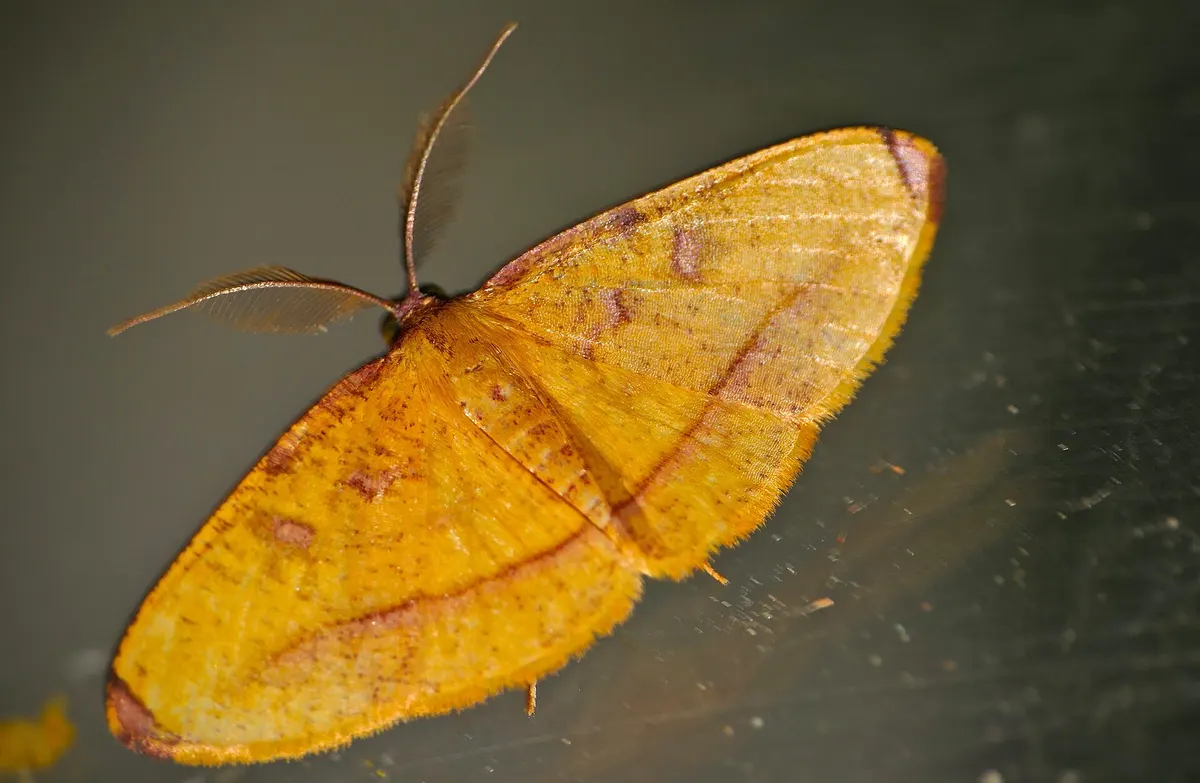
Conservationists in different parts of Great Britain are reporting unprecedented numbers of two of the country's rarest moth species. Targeted environmental management and habitat restoration projects have successfully bolstered populations that were previously under severe threat.
In Essex, wildlife enthusiasts recorded the Fisher's estuarine moth 111 times at the Abbotts Hall nature reserve in 2026. This follows more than 100 recordings in 2025, marking consecutive years of record-breaking numbers for the elusive insect.
Meanwhile, in the Scottish Highlands, a local recorder spotted 43 adult Affric Twitcher moths during a two-day visit to Glen Affric. Staff and volunteers from Butterfly Conservation also logged 111 silken structures, known as larval spinnings, in the same area during surveys.
What happened
The Fisher's estuarine moth is naturally found in low-lying natural grasslands that are vulnerable to erosion. The species relies entirely on rare hog's fennel to survive, a plant that has suffered from rising sea levels along the coast. To combat this decline, the Essex Wildlife Trust planted hog's fennel at Abbotts Hall in 2005 and introduced moth eggs five years later. Following these interventions, sightings surged past 100 in 2025 and reached 111 sightings in 2026 at the Great Wigborough reserve near Colchester.
In the Highlands, Forestry and Land Scotland manages woodland in Glen Affric, an area containing surviving native Caledonian Forest. Surveys conducted around locations like Loch Beinn a' Mheadhoin revealed that the Affric Twitcher has doubled its range in two years. Environmental forester Shona Amos credited deer management, the removal of non-native plants, and the natural regeneration of birch woodland for assisting the moth. Patrick Cook of Butterfly Conservation noted that the moth's larvae feed on native birch leaves to create distinctive canoe-shaped silken shelters.
Why it matters
These parallel developments offer concrete proof that evidence-based conservation and active habitat management can rescue threatened insect species from the brink. Moths are vital indicators of wider biodiversity and ecosystem health. Protecting niche species like the Fisher's estuarine moth and the Affric Twitcher safeguards complex ecological networks, ensuring that native woodlands and coastal grasslands remain functional and resilient.
The background
Insects across the United Kingdom face continuous pressure from habitat loss, climate change, and invasive species. The Fisher's estuarine moth is a heavily threatened coastal dweller, prompting the Essex Wildlife Trust to expand its conservation footprint by planting hog's fennel at additional nature reserves in Fingringhoe, Wrabness, and Tollesbury. Similarly, the Affric Twitcher is among Britain's rarest moths, found almost exclusively within the ancient and protected landscapes of Glen Affric.
What happens next
Conservation groups intend to maintain their momentum. The Essex Wildlife Trust has pledged to continue surveying both new and existing plots along the Essex coast to support the now self-sustaining population at Abbotts Hall. Forestry and Land Scotland and partner organizations will likewise persist with their woodland management strategies in the Highlands to encourage further expansion of vulnerable species.
- The Essex Wildlife Trust recorded the Fisher's estuarine moth 111 times at Abbotts Hall in 2026.
- Forestry and Land Scotland manages woodland in Glen Affric, where the range of the rare Affric Twitcher has doubled in two years.
- Conservationists attribute the population boosts to active habitat restoration, including hog's fennel planting and birch woodland regeneration.