
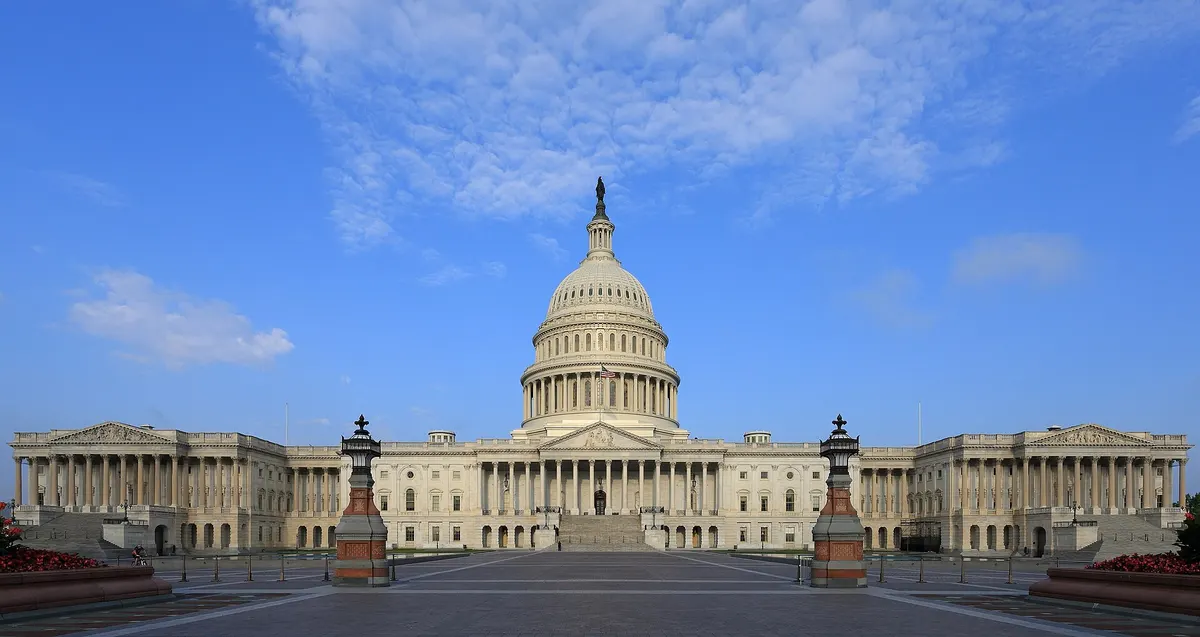
The US Senate has approved a major bipartisan bill intended to speed up the construction of power plants, transmission lines, and fossil fuel infrastructure. The legislation now moves to the House of Representatives for debate following a 62-33 Senate vote.
While supporters argue the measure is necessary to meet surging electricity demand and lower energy costs, critics and environmental advocates warn it rolls back foundational environmental laws and threatens clean water safety.
What happened
The legislation, formally known as the Bipartisan American Affordability and Jobs Act of 2026, or Baaja, passed the Senate with a 62-33 vote following recent midterm elections. The bill was co-written by a bipartisan group of senators including Democrats Martin Heinrich and Sheldon Whitehouse alongside Republicans Mike Lee and Shelley Moore Capito, and received backing from President Donald Trump.
The measure aims to shorten federal agency approval timelines for major energy and infrastructure projects, including power lines, fossil fuel pipelines, natural gas plants, and data centers. It also includes provisions designed to ensure data centers pay for the energy they consume.
However, the legislation also alters several major environmental laws, including the National Environmental Policy Act, the Clean Water Act, and the Endangered Species Act. Among its water-related changes, the bill doubles the time between mandatory reviews of water pollution permits from five years to ten years. It also requires a formal rule-making process for Environmental Protection Agency guidance on state water pollution criteria, which would open the criteria to legal challenges.
More than 50 groups representing communities affected by Pfas, or per- and polyfluoroalkyl substances known as 'forever chemicals', have opposed the bill. They warn that weakening these regulations will prolong public exposure to toxic substances and make it harder for states to manage water pollution.
Why it matters
The legislation directly affects energy developers, utility companies, and communities living near industrial pollution sites. Major industry associations, including the American Petroleum Institute and the American Chemistry Council, strongly support the bill because it aims to clear bureaucratic hurdles that can stall infrastructure projects for a decade or more.
Conversely, nearly every major US environmental organization, along with several tribal groups, has condemned the measure. Opponents argue that the law sacrifices crucial environmental safeguards under the guise of clean energy transition. In North Carolina, local advocacy groups pointed out that extending permit reviews to ten years could allow factories to discharge high levels of toxic chemicals like GenX for much longer before limits are reassessed against newer scientific findings.
Within the climate community, analysts are divided over whether the bill will increase or decrease greenhouse gas emissions. Energy modelers at firms like the Rhodium Group and Resources for the Future predict the bill will cause emissions to fall by accelerating renewable energy and transmission lines, while other models project that expanded fossil fuel infrastructure will cause emissions to rise.
The background
Permitting reform has become a central debate in US energy policy as the nation grapples with soaring electricity demand driven by data centers, artificial intelligence, and industrial growth. Building high-voltage transmission lines, which are required to connect new renewable energy generation to the grid, has historically faced severe regulatory delays and local opposition.
The Senate vote represents the first major legislative action by Congress following midterm elections. President Trump praised the legislation on social media as a victory for energy independence and lower costs, while fifteen Democrats joined the majority of Republicans to pass it. Two Republicans voted against the measure.
What happens next
The legislation now heads to the House of Representatives for debate. The House previously approved a more limited, industry-friendly version of permitting reform, and lawmakers are considering the Senate version while it retains bipartisan momentum.
Key takeaways
- The US Senate approved the Bipartisan American Affordability and Jobs Act of 2026 by a 62-33 vote to speed up energy infrastructure development.
- Supporters say the legislation will lower electricity prices and accelerate renewable energy, while critics argue it rolls back key environmental protections.
- The bill doubles the mandatory review period for water pollution permits from five years to ten years, drawing sharp criticism from Pfas-impacted communities.