
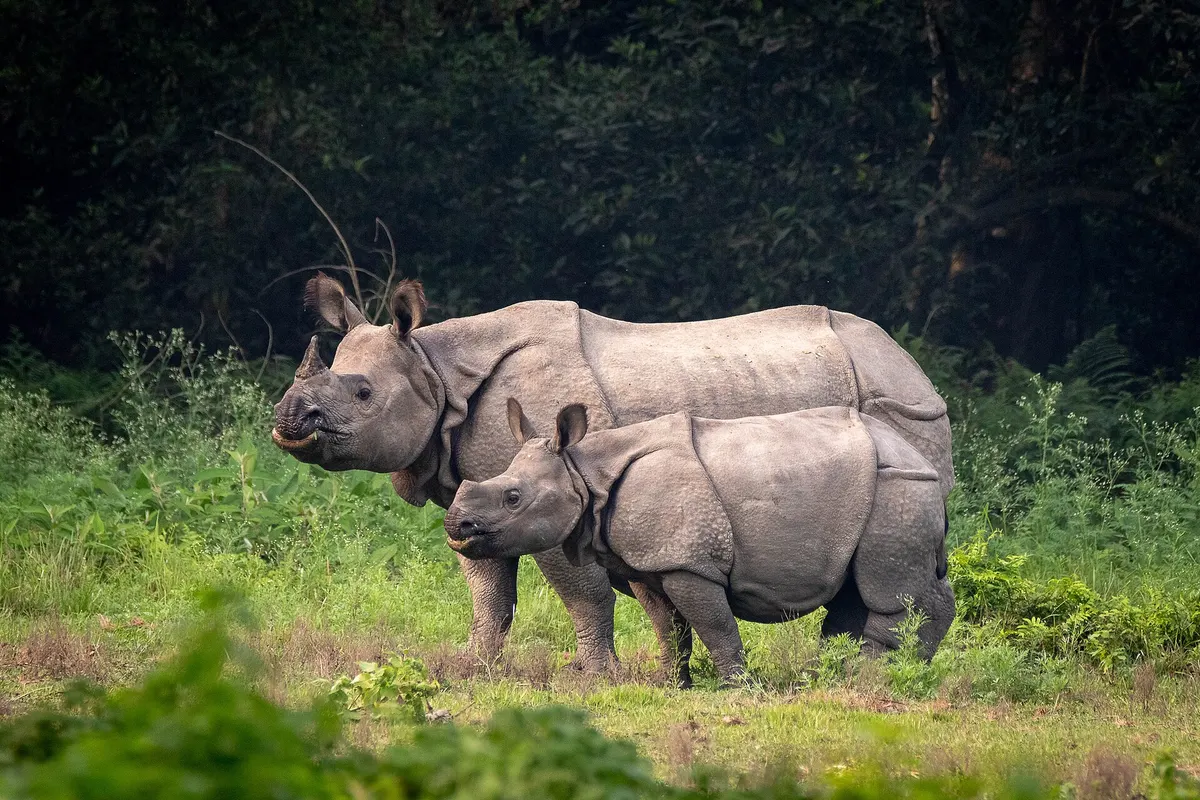
A rare greater one-horned rhinoceros calf has been born at Chester Zoo in England. The newborn was delivered following a 15-month pregnancy by 19-year-old mother Asha.
Zoo keepers have confirmed that both the mother and the as-yet-unnamed calf are in good health. The birth marks an important milestone for European conservation breeding programmes aimed at protecting the vulnerable species.
What happened
The birth took place on November 11, captured by CCTV cameras inside the animal's enclosure at Chester Zoo. The footage recorded the moment the newborn calf took its tentative first steps less than an hour after entering the world. Because of the November chill, the mother and newborn spent their first few days staying warm indoors together before gradually exploring a secluded outdoor paddock. The calf is the fourth born to mother Asha and father Beni. Beni passed away earlier in the year at age 22 following a short and sudden illness. Keepers described Beni as a calm animal who participated in behavioural studies and helped train animal care specialists, leaving a legacy through this new arrival. The sex of the newborn has not yet been publicly revealed by zoo staff.
Why it matters
Every successful birth of a greater one-horned rhinoceros is considered critical for the survival of the species. Because a large proportion of the wild population is concentrated within a single national park in India, the species remains vulnerable to environmental changes and sudden illness. Breeding programmes in human care help safeguard against these risks by maintaining a genetically diverse backup population outside of their native range. Furthermore, animals in zoos act as ambassadors, helping millions of visitors understand the value of wildlife conservation and inspiring support for protecting endangered species.
The background
The greater one-horned rhinoceros, also known as the Indian rhinoceros, is native to the wetlands, forests, and grasslands of India and Nepal. In the early 1900s, the species was driven to the brink of extinction due to habitat loss, trophy hunting, and poaching for its horn. Intensive conservation efforts have since helped numbers recover, with approximately 4,000 greater one-horned rhinos now living in the wild. Zoos across Europe coordinate through specialized breeding programmes to manage captive populations sustainably, ensuring healthy genetics for future generations.
What happens next
The mother and calf are currently bonding in a secluded paddock away from the main public eye. Once they are fully settled and comfortable, the pair will transition into the zoo's main rhinoceros paddock, where visitors will be able to see them.
Key takeaways
- A rare greater one-horned rhino calf was born on November 11 at Chester Zoo to 19-year-old mother Asha.
- The newborn took its first steps less than an hour after birth and is reported to be in good health.
- The calf is the fourth offspring of Asha and the late father Beni, who died earlier this year.
- The birth supports a European conservation breeding programme designed to maintain a genetically diverse backup population for the vulnerable species.