
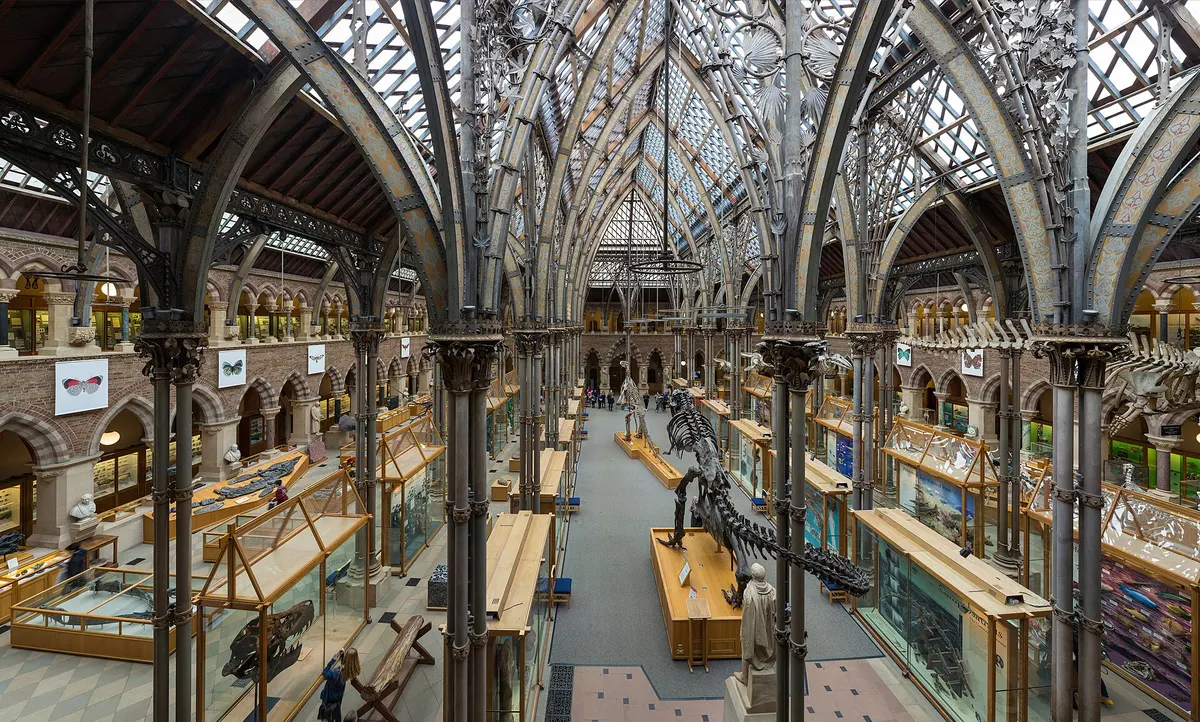
For the first time, Oxford University's Pitt Rivers Museum is exhibiting a collection of 27 personal items belonging to Gaidinliu, an Indian freedom fighter who led an uprising against British colonial rule in the 1930s. The items, which include notebooks containing prophetic visions, clothes, bracelets, and protective amulets, were seized by colonial forces and kept in storage for nearly a century.
The exhibition highlights the complex history of colonial extraction and the ongoing efforts to reconnect Indigenous Naga communities with their dispersed heritage. Researchers and descendants hope the display will raise international recognition of Gaidinliu's resistance and cultural legacy.
What happened
In 1932, British forces imprisoned 17-year-old Gaidinliu for leading a political and religious movement called Heraka across the homeland of the Naga people in north-east India. While pursuing her, colonial officers seized her treasured possessions and sent them to the Pitt Rivers Museum. The newly opened exhibition, titled The Afterlives of Captured Objects, features these 27 items alongside digital recreations and contemporary crafts.
Among the objects on display are a basket of Gaidinliu’s notebooks, which colonial anthropologist JP Mills once dismissed as meaningless scribbling, and ritual items such as a stick with a monkey skull. The exhibition also includes textiles recovered from sacred clay figures in a temple in the village of Kambiron, which British soldiers destroyed in 1931 to strip the site of its cultural potency.
The showcase follows a four-year digitisation project led by researchers from India and the Universities of Oxford and Edinburgh. Craftspeople from Assam, Nagaland, and Manipur used the digital archives to revive traditional weaving, while linguists are working to translate Gaidinliu’s notebooks to help reconstruct an Indigenous Naga language system.
Why it matters
The exhibition offers a platform to reclaim and honor the history of Indigenous resistance against colonial suppression. For Gaidinliu’s family and the broader Naga community, the display validates the struggles and sacrifices made during the fight for Indian independence and subsequent campaigns for a recognized Naga homeland.
It also reflects a broader reassessment by Western ethnographic museums regarding how artefacts and human remains were acquired during the colonial era. By engaging directly with descendant communities, institutions are slowly addressing the historical imbalances of colonial extraction.
The background
Gaidinliu was a prominent leader who fought first against British colonial rule and later advocated for a distinct Naga homeland following Indian independence in 1947. She passed away in 1993 and remains a revered figure in the region's history. The Pitt Rivers Museum houses a massive collection of Naga culture, consisting of over 6,000 objects largely collected during the late 19th and early 20th centuries through punitive military expeditions and colonial administration.
What happens next
Researchers will continue efforts to translate Gaidinliu’s notebooks and reconstruct the Naga language system. The exhibition remains open to the public in Oxford, continuing international education about Gaidinliu's life and the ongoing discourse surrounding museum restitution and colonial heritage.
- Oxford University's Pitt Rivers Museum is exhibiting 27 personal items belonging to Naga freedom fighter Gaidinliu for the first time.
- The collection includes notebooks, clothes, and ritual objects seized by British colonial forces in the 1930s.
- The display is the result of a four-year digitisation project involving researchers from India, Oxford, and Edinburgh.
- Descendants and researchers are using the recovered archives to revive traditional crafts and attempt to reconstruct an Indigenous Naga language.