
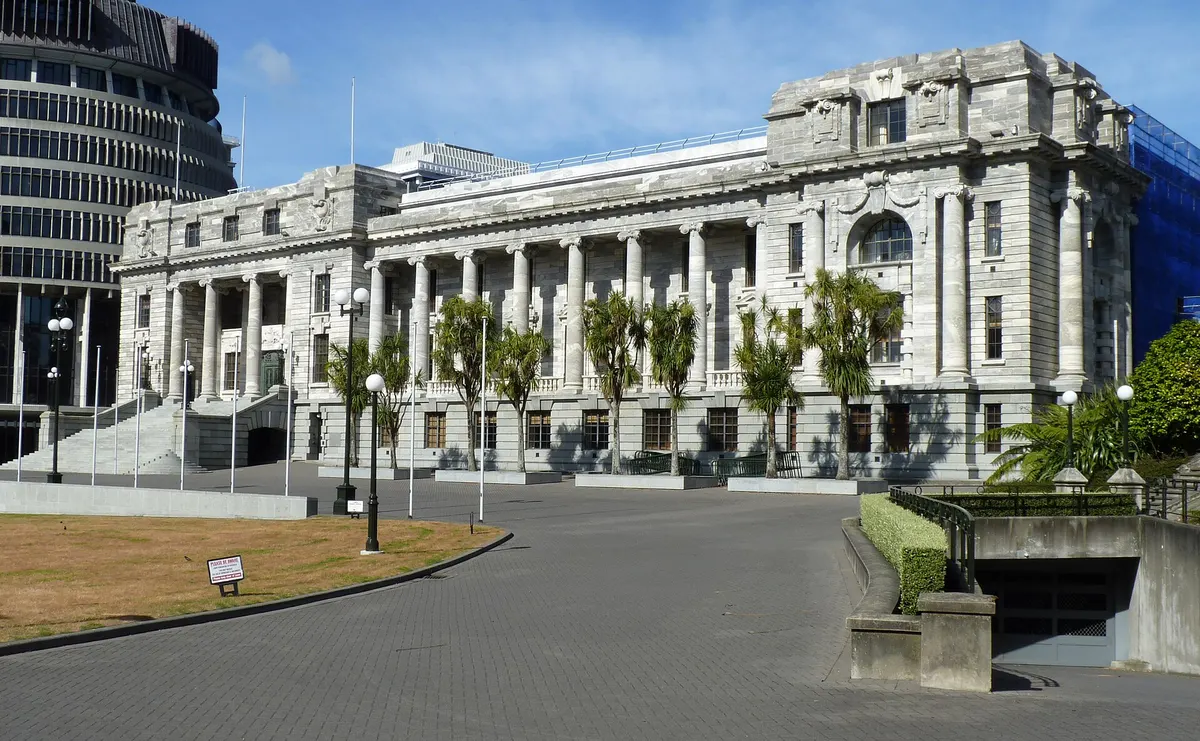
The final results of New Zealand’s general election show that the incumbent rightwing coalition has lost its majority, falling just short of the seats needed to govern alone. Prime Minister Christopher Luxon's government now requires the support of a centrist newcomer party to remain in power, or the country faces the prospect of returning to the polls.
The outcome turns on the tabulation of nearly 485,000 special votes cast from overseas or outside voters' electorates. These late tallies shifted the math in parliament, leaving the country facing weeks of potential negotiations to form a stable administration.
What happened
Preliminary tallies released following the November election had initially handed Prime Minister Christopher Luxon’s National party alongside its coalition partners—the populist New Zealand First and libertarian Act parties—a slim two-seat majority. However, the official release of final results by the electoral commission following the counting of special votes altered the balance of power.
National dropped two seats down to 40, while Labour remained on 36 seats, the Greens picked up one seat to reach 17, Act held 13, New Zealand First took 12, the newcomer Opportunity party secured seven, and Te Pati Māori finished with five. Three individual electorate seats also changed hands during the special vote count. Labour managed to win Wairarapa off National by a narrow margin of just 81 votes and took Hamilton East from National by 173 votes, while the Greens won Wellington Bays from Labour by 1,610 votes.
In New Zealand's 130-seat parliament, a party or bloc requires 66 seats to command a majority. The National-led bloc currently sits at 65 seats. National has until December 3 to apply for a recount; if the party were to win back just one of the lost electorate seats through a successful recount, it could theoretically return to power with a slim majority without needing outside help. Otherwise, the incumbent bloc's only realistic path to power is negotiating a deal with the centrist Opportunity party.
Why it matters
If the ruling bloc cannot strike an agreement with the Opportunity party, New Zealand will likely be forced to hold another general election. This uncertainty stalls policymaking and leaves the country in political limbo as negotiations drag on toward the end of the year, with Christmas approaching.
Forming a government with Opportunity introduces major friction, as the centrist party holds strict non-negotiable policy demands and significant personal objections. Opportunity leader Qiulae Wong has stated that her party will not strike a deal if New Zealand First leader Winston Peters serves as foreign affairs minister, citing concerns over his past behavior. Furthermore, New Zealand First and Act hold diametrically opposed climate policies, and Act opposes Opportunity's proposed reforms to cap political donations, setting up a difficult path for what could become the country's first ever four-party coalition.
The background
New Zealand switched to a mixed member proportional representation electoral system in 1996, a voting framework that structurally makes coalition governments the absolute norm and routinely gives smaller, minor parties outsized leverage. Special votes, which encompass ballots cast by overseas citizens or individuals voting outside their registered electorates, historically tend to favour left-leaning parties and frequently cost rightwing blocs one or two seats during final counts.
Prime Minister Christopher Luxon had previously ruled out working with the Opportunity party during the campaign. However, following the release of the final results, Luxon softened his stance to pursue common ground. Opportunity, led by Auckland businesswoman Qiulae Wong, ran on a platform focused on a low-emissions future and an inclusive society, with five headline bottom-lines including tackling New Zealand’s supermarket duopoly, instituting a 10-year cross-party health plan, ending bottom trawling in the fishing industry, capping political donations, and strengthening climate commitments.
What happens next
Negotiations are expected to unfold over the coming weeks to determine the shape of the next government. Opportunity leader Qiulae Wong confirmed she would speak with Christopher Luxon while maintaining her party's bottom-lines are completely non-negotiable. If National applies for a recount by December 3, the recount process itself could take an additional five days to resolve. With government formation talks potentially extending deep into the calendar, the exact composition and timeline of New Zealand's next administration remain open.
Key takeaways
- The final results of New Zealand’s general election show the incumbent rightwing coalition has lost its majority and needs 66 seats to govern.
- The National-led bloc currently holds 65 seats in the 130-seat parliament following the processing of nearly 485,000 special votes.
- National could potentially avoid needing outside support if it files for a recount by December 3 and wins back at least one of the three electorate seats it narrowly lost.
- The centrist Opportunity party holds the balance of power, with leader Qiulae Wong refusing to strike a deal if New Zealand First leader Winston Peters becomes foreign affairs minister.
- Opportunity's non-negotiable policy demands include action on the supermarket duopoly, capping political donations, and ending bottom trawling in the fishing industry.