
Regulations announced in March dictate that developers in England must install heat pumps and solar panels in all newly built homes. These changes are estimated to add £10,000 to the purchase price of a new property. Despite the high initial expense, owners are expected to save money on their energy bills over the long term.
Heating domestic properties accounts for roughly a fifth of the UK's planet-warming emissions. Switching away from gas and oil to electric systems is a core strategy for meeting the nation's net zero climate targets. However, upfront costs remain substantial for existing homeowners, and recent government budget adjustments have sparked debate over funding.
What happened
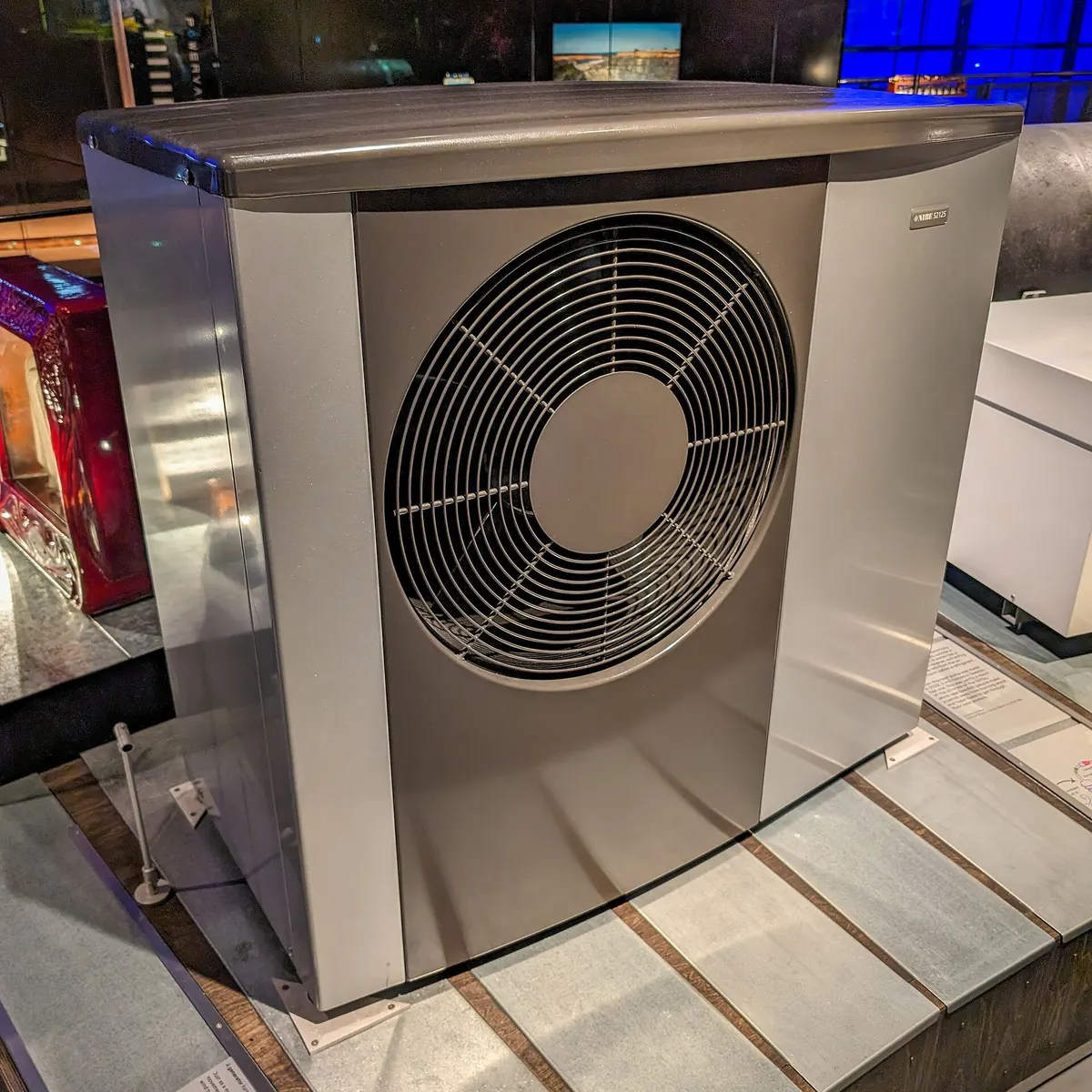
Heat pumps operate on electricity rather than gas, drawing warmth from the air, ground, or water to heat buildings. Air source heat pumps are the most common type. They use outdoor air passing over refrigerant-filled tubes to evaporate into a gas, which is then compressed to increase its temperature. An air source system typically involves an outdoor box measuring about 1m by 1m by 0.4m, alongside an indoor unit roughly the size of a gas boiler and a hot water cylinder.
Ground source heat pumps offer higher efficiency than air models but are more expensive and less common because they require deep boreholes or large horizontal underground systems. To offset expenses, the UK government's Boiler Upgrade Scheme offers a £7,500 grant for air or ground source heat pumps in England and Wales. Households typically pay an additional £5,000 on top of the grant, an amount the UK spending watchdog has flagged as too high for many.
Qualifying for the grant requires an eligible Energy Performance Certificate issued within the last 10 years. Properties no longer need existing loft or cavity wall insulation to qualify, saving about £2,500 in preliminary costs. For low-income and social housing households, a separate £5bn is allocated via the Warm Homes Local Grant and Social Housing Fund, while Scotland and Northern Ireland manage independent efficiency schemes.
Why it matters
The mandate for new builds and the push to retrofit existing properties directly impact property developers, homeowners, and national carbon reduction goals. Although electric heat pumps use three to four times less energy than traditional gas boilers, high electricity prices in the UK can negate those savings. Currently, electricity costs are largely driven by global gas prices, though government expectations point toward normalization as renewable energy scales up.
Upfront expenses remain a barrier, and government support has faced fiscal constraints. The £15bn Warm Homes Plan introduced in January suffered a £1bn cut during the autumn budget to fund defence. Furthermore, portions of departmental investment funds are being diverted toward the £4.7bn 'Your First Home' scheme. These shifts raise questions about future financial backing for green home upgrades.
The background
Transitioning away from fossil fuel heating is a pillar of the UK's legally binding commitment to reach net zero carbon emissions. Domestic heating has traditionally relied on natural gas and oil boilers, which pump vast quantities of greenhouse gases into the atmosphere. Introducing heat pumps into both new developments and older housing stock is intended to break this reliance.
Financial incentives have evolved alongside these green policies. The Boiler Upgrade Scheme provides direct subsidies, and the government has previously maintained a 0% VAT rate on heat pump installations. Additional funding mechanisms include low- and no-interest loans ranging from £7,500 to £35,000 under the Warm Homes Loan Scheme to help citizens adopt green technologies.
What happens next
Funding for the Boiler Upgrade Scheme is promised to remain at £400m for the 2027-28 period before rising in line with inflation, though this represents a significant reduction from earlier plans. Additionally, the 0% VAT rate on heat pump installations is scheduled to increase to 5% in April 2027. The government maintains that it remains committed to heat pump deployment, but potential further cuts to funding schemes depend on future budget allocations and shifting political priorities.
Key takeaways
- Regulations announced in March require developers to install heat pumps and solar panels in all new homes in England, adding an estimated £10,000 to property prices.
- The Boiler Upgrade Scheme provides a £7,500 grant for homeowners in England and Wales, though households typically spend an additional £5,000 out of pocket.
- Heating homes accounts for about a fifth of the UK's planet-warming emissions, making the switch to electric heat pumps essential for meeting net zero targets.
- The 0% VAT rate currently applied to heat pump installations is scheduled to rise to 5% in April 2027.
- The autumn budget cut £1bn from the £15bn Warm Homes Plan to reallocate funds toward defence.