
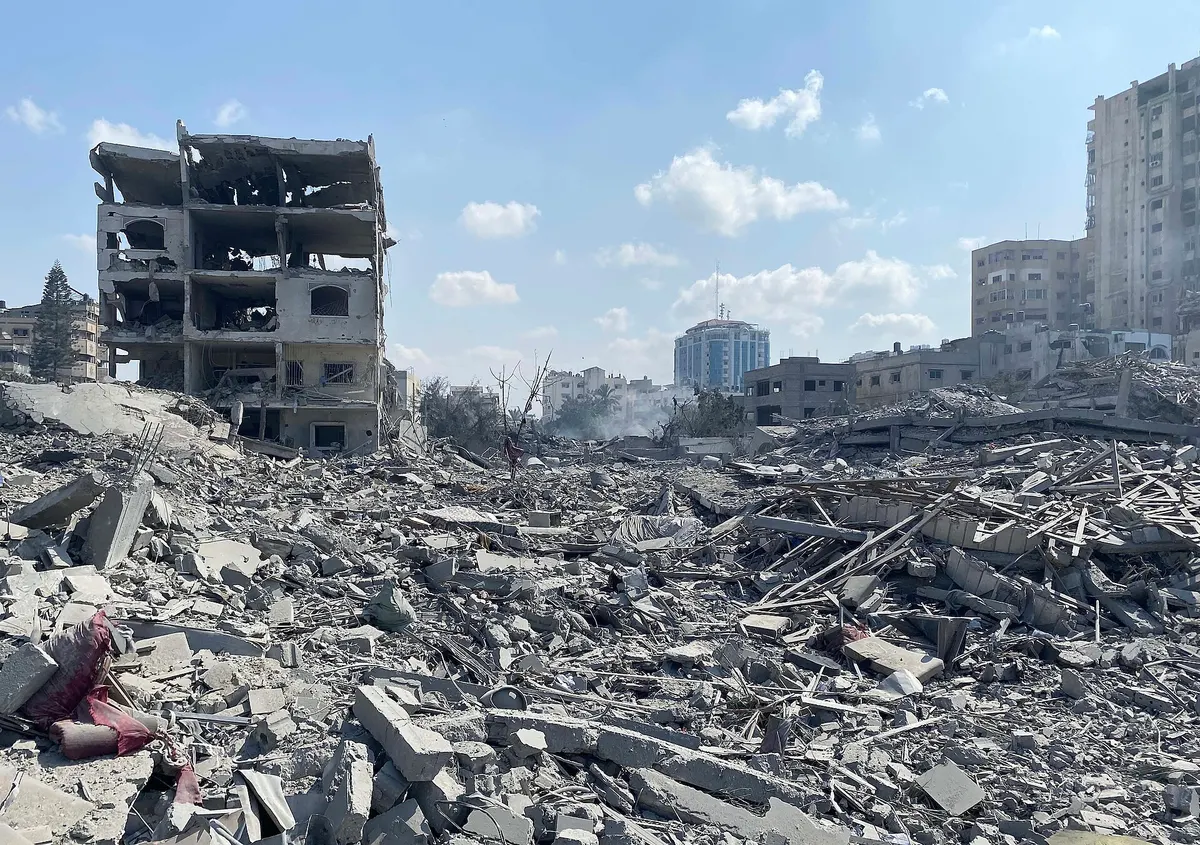
Gaza's ministry of education stated that 16 schoolchildren have been killed by Israeli strikes since the start of November. Young people across the territory continue to face intense bombardment while struggling to find food, clean water, and shelter.
The announcement follows a series of deadly incidents targeting students and families, deepening the ongoing humanitarian and public health crisis across the enclave as the conflict persists.
What happened
On Wednesday, Gaza's ministry of education reported that Palestinian students had been targeted for the third time in less than 24 hours. The ministry stated that the number of schoolchildren killed since the beginning of November had risen to 16. This followed an early morning airstrike in Gaza City that killed two sisters: Yusra Mohammed Abu al-Ouf, 15, and her 13-year-old sister Jana. The strike targeted a residential apartment in western Gaza City, killing the girls alongside their parents, Noura Ezzat Abu Al-Ouf and Mohammed Majed Abu Al-Ouf, who served as a director of internal security services for Hamas in northern Gaza. Yusra attended Kafr Qasim school, while Jana went to al-Manar private school.
Additional incidents earlier in the month contributed to the rising toll. On November 6, 15-year-old Mohammed Nidal Barbakh was shot by Israeli forces while at a sports academy in the al-Mawasi area of Khan Younis. According to his father, an Israeli tank fired two rounds towards the pitch, striking the 10th-grade Muscat school student in the back. He later died from his injuries. On November 13, artillery shelling in Deir al-Balah killed three people, including 12-year-old Ahmed Abu Daher and his father. Later in the week, further attacks killed at least nine Palestinians across Gaza, including Khaled Abu Nada, the undersecretary of Gaza's ministry of education, and his wife.
Why it matters
The ongoing conflict has devastated Gaza's education system, leaving thousands of school-age children and hundreds of education workers dead. Unicef data indicates that 98 percent of school buildings in Gaza have sustained damage, with more than 93 percent requiring major rehabilitation or full reconstruction, and approximately 81 percent directly hit. Tens of thousands of children are unable to attend school regularly.
Beyond education, the humanitarian impact is severe. Young Palestinians are enduring a fourth winter in overcrowded tents and makeshift shelters with limited access to essential services. Public health risks are mounting, highlighted by an epidemic alert issued by Gaza's health ministry for meningitis after recording a sharp rise in infections, including over 270 new cases in October.
The background
Under international humanitarian law, schools and civilians are protected during armed conflicts. However, the Gaza Strip has been subjected to extensive military operations and a severe blockade during the ongoing war between Israel and Hamas. Independent human rights bodies and United Nations inquiries have previously scrutinized the high civilian death toll and the widespread destruction of civilian infrastructure, including educational facilities.
What happens next
The Israel Defense Forces have been approached for comment regarding the recent strikes, but further military actions and humanitarian conditions remain fluid as attacks continue across the territory despite ongoing ceasefire discussions.
Key takeaways
- Gaza's ministry of education reported that Israeli strikes have killed at least 16 schoolchildren in the territory since the start of November.
- The early morning airstrike in Gaza City killed sisters Yusra and Jana Mohammed Abu al-Ouf alongside their parents.
- Unicef reports that 98 percent of school buildings in Gaza have sustained damage during the conflict.