
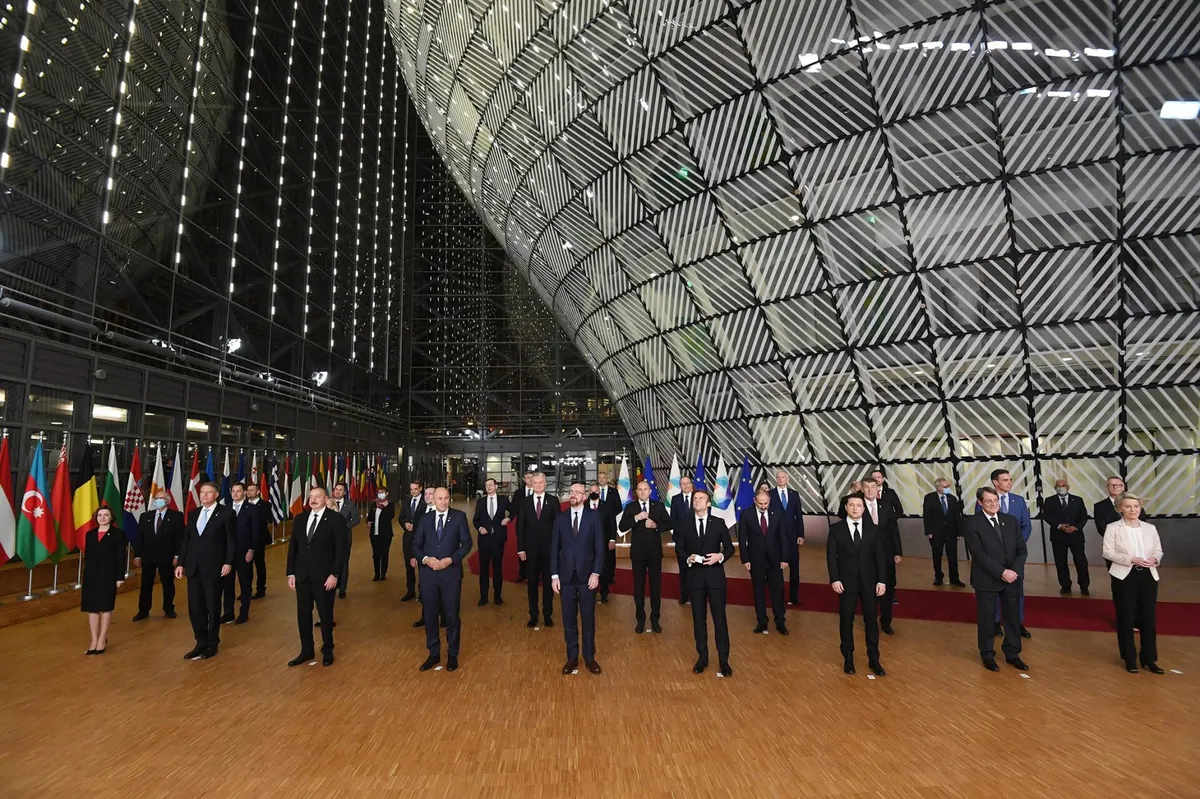
European Union leaders arrived in Brussels facing a severe political standoff over long-term financial support for Kyiv and the bloc's next massive budget. German Chancellor Friedrich Merz has demanded that all 27 member states sign up for a €45bn loan package to sustain Ukraine through 2027.
The demand has triggered fierce resistance from net-recipient nations like Slovakia, Hungary, and the Czech Republic, who want to opt out entirely. The confrontation has entangled critical funding discussions with the wider debate over the bloc's seven-year spending priorities ahead of an end-of-year deadline.
What happened
The European Commission proposed a €45bn EU loan for Ukraine to bridge a massive funding gap caused by relentless Russian attacks. The proposal splits the money evenly, dedicating €25bn for military spending and €20bn for civilian needs such as schools and hospitals. To enforce unanimous backing, German Chancellor Friedrich Merz linked his approval of the EU's next long-term budget to the loan, threatening to veto the spending plans unless all 27 nations contribute.
Slovak Prime Minister Robert Fico condemned the linkage as a textbook case of blackmail, noting that his country holds the same veto power as Germany. Czech Prime Minister Andrej Babiš echoed those objections, arguing that cohesion funds meant for domestic infrastructure like highways and hospitals should not be subordinated to foreign aid. Hungarian leadership also voiced strong opposition to tying the two issues together.
Despite the pushback, Merz's hardline stance found strong backing among western European, Nordic, and Baltic states. Sweden's Prime Minister Ulf Kristersson called it unacceptable for countries to accept EU membership benefits while refusing to pay their share of support for Ukraine. Meanwhile, Bulgaria shifted its position, announcing it would contribute €20bn exclusively for non-military civilian support due to its historic diaspora in Ukraine.
Why it matters
The standoff directly threatens the European Union's financial stability and its ability to present a unified front. The bloc is trying to finalize a €1.78tn long-term budget for 2028-2034, which requires unanimous approval from all member nations. Because both the budget and the Ukraine loan require absolute consensus, a single veto from countries like Slovakia or Hungary could paralyze EU spending priorities.
For Ukraine, the debate represents a critical lifeline. Officials warn of a severe funding shortfall next year, and delays in securing billions in international assistance could undermine the country's defensive and civilian infrastructure.
The background
The European Union operates on multi-year spending frameworks known as long-term budgets, which dictate funding for everything from agriculture and regional development to defense and international aid. The current negotiations cover the 2028-2034 spending period, following a €1.78tn proposal presented by European Council President António Costa. That figure reflects a 10% reduction from an initial €2tn plan put forward by the European Commission.
The debate highlights deep structural divisions within the bloc. On one side are net-contributor nations, often dubbed the frugals, who want to prioritize defense and economic competitiveness. On the other side are numerous central and southern European countries that rely heavily on traditional cohesion and agricultural subsidies. Furthermore, populist and far-right political shifts across the continent, including potential upcoming elections in France, add immense political pressure to conclude budget negotiations swiftly.
What happens next
EU officials are pushing to finalize a comprehensive budget deal by the end of the year to avoid complications from upcoming national elections across member states in 2027. European Council President António Costa urged leaders to approach the talks with a constructive spirit and a sense of compromise.
It remains unconfirmed whether recalcitrant governments will alter their positions or if Chancellor Merz will soften his veto threat, as some European allies worry his aggressive tactics could harden opposition.
Key takeaways
- German Chancellor Friedrich Merz has threatened to veto the EU's next long-term budget unless all 27 member states approve a €45bn loan for Ukraine.
- Slovakia, Hungary, and the Czech Republic have strongly resisted the mandate, with Slovak Prime Minister Robert Fico denouncing the move as blackmail.
- Bulgaria agreed to contribute €20bn to the loan strictly for non-military civilian support due to its diaspora in Ukraine.
- EU leaders face a strict end-of-year deadline to finalize the €1.78tn budget before major political elections complicate negotiations in 2027.