
Van Gogh Masterpiece Fetches Record $190.4m After Nazi-Era Dispute Settlement
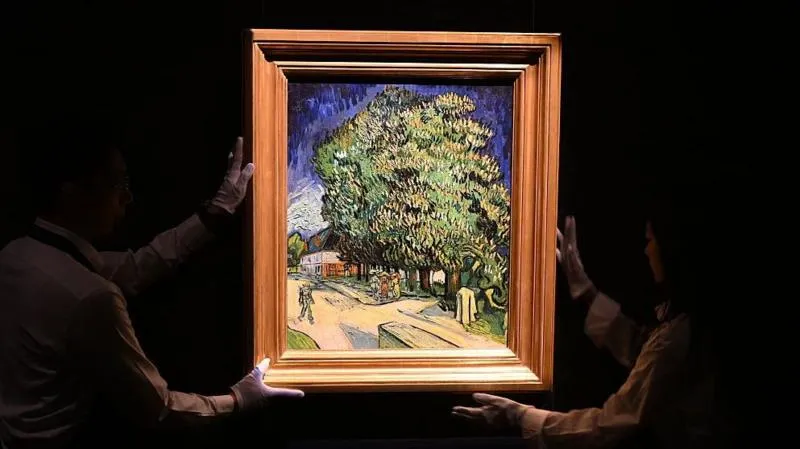
Vincent van Gogh's 1890 painting Chataigniers en fleurs sold at Sotheby's in New York for a record $190.4m on Wednesday. The historic auction followed a last-minute agreement resolving restitution claims raised by the heirs of a Jewish publisher forced to part with the work during the Nazi era. Art dealer William Acquavella reportedly acquired the masterpiece.
- ArtworkChataigniers en fleurs (Chestnut Trees in Blossom)
- ArtistVincent van Gogh
- Sale Price$190.4m (£144.9m)
- LocationSotheby's, New York
- DateWednesday
Photos
1 photosWhat happened
A masterpiece by Dutch post-impressionist painter Vincent van Gogh has shattered previous auction benchmarks, selling for $190.4m (£144.9m) at Sotheby's in New York on Wednesday. The work, titled Chataigniers en fleurs (Chestnut Trees in Blossom) and painted in 1890 during the final two months of the artist's life, surpassed Van Gogh's previous auction record of $117.2m set in November 2022 by Orchard with Cypresses.
The sale established Chataigniers en fleurs as the most expensive work auctioned off for the season. Prior to the bidding, the oil painting carried an estimated value of $180m (£136m) and was offered as part of the Blaquier-Arrieta Collection.
How it unfolded
The high-profile auction proceeded only after an eleventh-hour legal resolution. Representatives and heirs of Samuel Fischer, a prominent German publisher who previously owned the artwork, had raised restitution claims asserting the painting was sold under duress during the rise of the Nazis due to financial persecution.
Legal counsel for the Fischer heirs engaged with Sotheby's and the current owners, the Blaquier-Arrieta family, demanding proof of fair market value transactions from the 1930s. Hours before the event, an agreement was struck between the Blaquier-Arrieta family and all legal descendants of Hedwig and Samuel Fischer, allowing the auction to move forward smoothly.
What the reports confirm
Both reports independently confirm that Chataigniers en fleurs sold at Sotheby's in New York on Wednesday for $190.4m, breaking Van Gogh's prior auction record. They agree that a late settlement resolved a Nazi-era duress claim brought by the heirs of Samuel Fischer against the Blaquier-Arrieta family, who had owned the painting since 1975.
Minor discrepancies exist regarding additional market context: Report A notes that art dealer William Acquavella purchased the painting and details past private sales like Le Zouave, whereas Report B includes the pre-sale valuation of $180m and traces the painting's historical transit through Paul Cassirer in Amsterdam and Henriette and Marcel Kapferer in Paris.
The people involved
The transaction brought together international art institutions, high-profile dealers, and descendants of historical figures. William Acquavella, head of Acquavella Galleries, purchased the painting according to reports citing the New York Times.
Gunnar Schnabel, a Berlin-based lawyer representing the Fischer heirs, advocated for a fair and just resolution acknowledging the historical persecution of Samuel Fischer's family. Gisela Berman Fischer was also cited by Sotheby's for her historical efforts in seeking justice for the family.
Why it matters
This record-breaking sale underscores the astronomical valuations commanded by blue-chip impressionist and post-impressionist works in private hands. Furthermore, the successful eleventh-order settlement highlights the growing legal and ethical imperative for auction houses and collectors to address provenance issues regarding art displaced or sold under financial duress during the Nazi era before public sales proceed.
The background
Vincent van Gogh painted Chataigniers en fleurs in Auvers-sur-Oise, France, in 1890, shortly before his death. It is regarded as one of the most critical works from that final period remaining in private ownership.
Samuel Fischer originally acquired the painting in Paris in 1909. Following his death in 1934, it passed through his family, who deposited it in Amsterdam before it moved to Paris in 1936 amid mounting Nazi persecution and financial distress suffered by the Fischer family publishing business. The Blaquier family subsequently acquired the piece in 1975, holding it for over fifty years.
Response and aftermath
Representatives for the Fischer heirs expressed hope that the swift and fair resolution would serve as an encouragement to other families confronting historical Nazi-era persecutions. Despite the monumental financial milestone, participants noted that the auction room atmosphere remained subdued, devoid of celebratory champagne due to the somber historical context.
Sotheby's praised both families for their collaborative and trusting negotiations, which honored the suffering of the Fischer lineage.
What we still don't know
Neither report discloses the exact financial terms or compensation agreed upon between the Blaquier-Arrieta family and the Fischer heirs as part of the pre-sale settlement. Additionally, it remains unverified whether William Acquavella purchased the painting for his own gallery inventory or on behalf of an anonymous private collector.
Want more on this story? Our research assistant searches the latest reports across the web and explains what it finds, so you get the fuller picture in one place.