
US Flight Chaos Exposes Aging Air Traffic Systems as White House Seeks $50bn
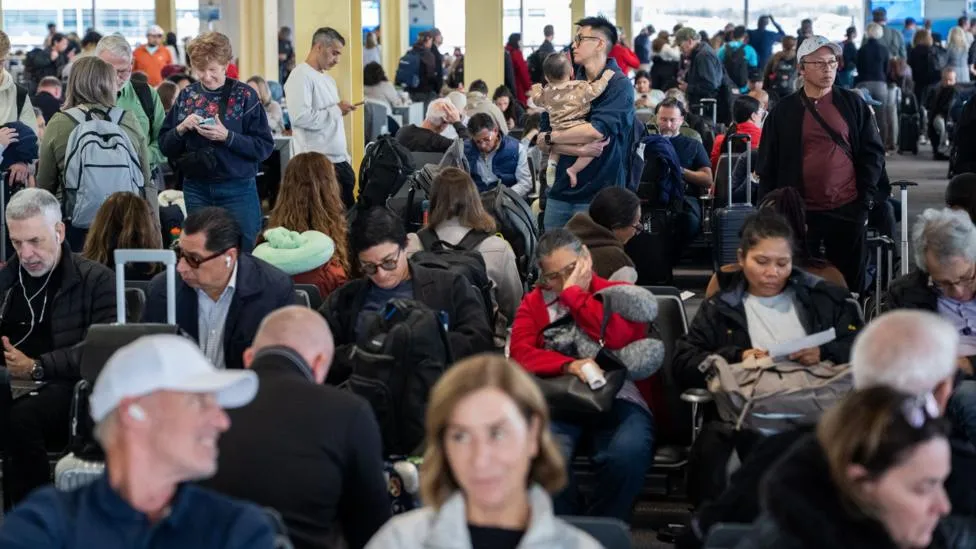
Passengers experience severe delays and crowding inside an airport terminal following the nationwide ground stop.
A routine telecommunications upgrade triggered a massive four-hour ground stop across the United States on 13 November, disrupting over 15,000 flights and affecting 1.5 million passengers. The incident exposed severely outdated infrastructure, prompting US President Donald Trump and transportation officials to press Congress for a $50 billion overhaul. While officials confirmed the outage was isolated rather than a systemic cyberattack, lingering delays have rippled through international schedules.
- Date of Outage13 November
- ImpactOver 15,000 flights delayed or cancelled, affecting 1.5 million passengers
- CauseTelecommunications router flooding air traffic control systems during a copper-to-fiber upgrade
- Funding Request$50bn (£38bn) pushed by the Trump administration to completely rebuild the system
- StatusFAA reviewing details; Congress showing increased receptiveness to funding upgrades
What happened
A nationwide ground stop brought air travel across the United States to a standstill for four hours on 13 November, marking the longest such halt since the terror attacks of 11 September 2001. The disruption rippled across domestic and international networks, resulting in more than 15,000 delayed or cancelled flights and affecting an estimated 1.5 million passengers. Stranded travelers faced long waits in airport terminals, while others remained stuck inside aircraft on tarmacs unable to take off or return to terminal gates.
The cascading failures extended far beyond US borders, causing knock-on delays and cancellations for international flights originating from the United Kingdom and Europe. Although aviation authorities emphasized that the airspace remained safe due to slowed operations and increased spacing, the incident severely strained travel schedules for days following the initial event.

US President Donald Trump speaking about the necessity of upgrading obsolete air traffic control systems.
How it unfolded
The technical failure stemmed from routine infrastructure work conducted by a government contractor upgrading an aviation telecommunications network. Workers were swapping out legacy copper lines for fiber optics and installing a new router designed to direct network traffic. Instead of facilitating smooth data flow, the switch caused the new router to flood other nodes within the air traffic control network with approximately 1,000 connection attempts every four to five seconds.
This overwhelming traffic disrupted voice and ground communications across 17 of the nation's 22 air route traffic control centers. Compounding the emergency, air traffic authorities took 45 minutes simply to locate the source of the failure because system maintenance logs were kept manually on paper. Officials clarified that the incident was entirely isolated and unrelated to separate technological outages occurring during the same week.
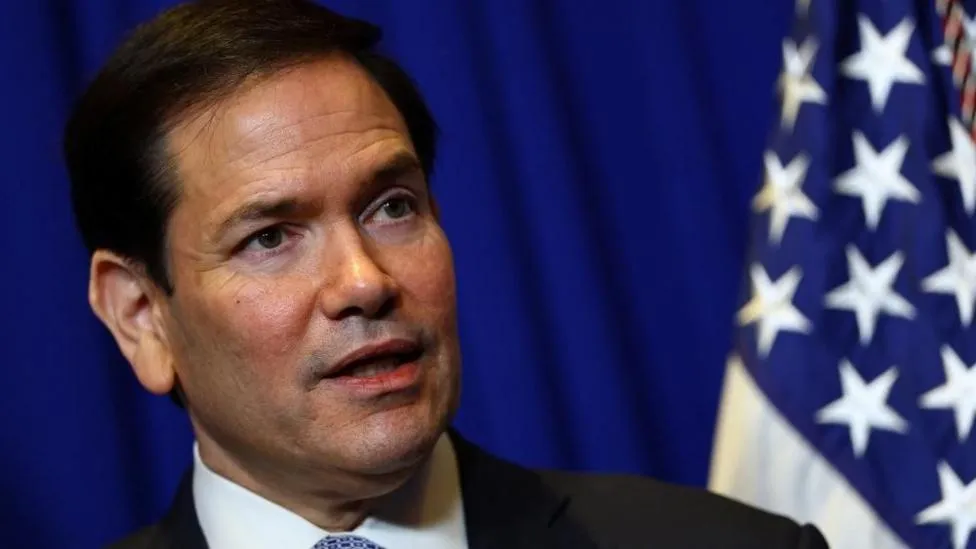
Senator Marco Rubio addressed the public following a series of technological outages, confirming the nation was not under systemic attack.
The people involved
US President Donald Trump addressed the crisis publicly, highlighting the antiquated state of national aviation infrastructure and putting pressure on lawmakers to secure funding. Transport Secretary Sean Duffy detailed the technical mechanics of the failure, explaining how the contractor's router configuration error overloaded the network's communications architecture.
Meanwhile, administration figures such as Senator Marco Rubio moved to calm public anxiety, confirming that the United States was not under systemic cyberattack despite a concurrent series of unrelated tech outages. Aviation officials within the Federal Aviation Administration managed the crisis response and scheduled further briefings to disclose the precise technical sequence that led to the four-hour ground stop.
Why it matters
The crisis exposed profound vulnerabilities in the technological backbone governing American airspace, which handles thousands of commercial and private flights daily. Millions of passengers experienced direct financial and personal disruption, underscoring how heavily modern global mobility relies on fragile, aging digital infrastructure.
Furthermore, the event has forced an urgent political reckoning over public spending. With the administration arguing that minor patches are wasteful in the face of systemic obsolescence, the debate over upgrading national transit networks has shifted from a low-priority policy discussion to an urgent legislative necessity.
The background
The Federal Aviation Administration is the national authority responsible for regulating and overseeing all civil aviation in the United States, including the complex network of air traffic control towers and route centers. According to the administration, much of the underlying equipment managing flights across the country is at least 55 years old, with structural deficiencies noted in several control towers.
Past upgrades have frequently been hampered by bureaucratic hurdles and budgetary constraints. While the Department of Transportation had previously been allotted $12bn (£9bn) for maintenance, executive leadership has argued that piecemeal repairs are inadequate for systems approaching obsolescence.
Response and aftermath
In the wake of the disaster, President Trump rejected temporary stopgap measures, instructing Secretary Duffy to minimize spending on temporary patches in favor of a total structural redesign. Administration officials have begun lobbying Congress—currently controlled by the Republican party—to approve a sweeping $50bn (£38bn) package to completely overhaul the country's air traffic control apparatus.
Lawmakers, previously resistant to large-scale infrastructure spending, appear increasingly receptive to greenlighting the funds in light of the high-profile failure. Federal agencies continue to audit infrastructure networks to ensure that ongoing updates by third-party contractors do not trigger secondary failures.
What happens next
Federal Aviation Administration officials are scheduled to release additional findings detailing the exact timeline and operational failures that enabled the router flood. Congressional committees are expected to review these findings as discussions proceed regarding the approval and structuring of the requested multi-billion-dollar modernization fund.
Concurrently, aviation authorities and private contractors will review maintenance logging procedures, aiming to transition away from manual paper tracking to digital diagnostic systems that can pinpoint network failures in seconds rather than three-quarters of an hour.
What we still don't know
It remains unclear whether the ultimate root cause of the network overload was an inherent flaw in the replacement hardware or an error committed during the physical copper-to-fiber wiring transition. The exact identity of the government contractor responsible for the telecommunications upgrade has not been publicly disclosed.
Additionally, precise figures regarding the total economic losses incurred by airlines and commercial businesses during the multi-day disruption have not yet been reported.
Want more on this story? Our research assistant searches the latest reports across the web and explains what it finds, so you get the fuller picture in one place.