
Unforeseen Vulnerability and Freak Winds Doomed the Bayesian Superyacht
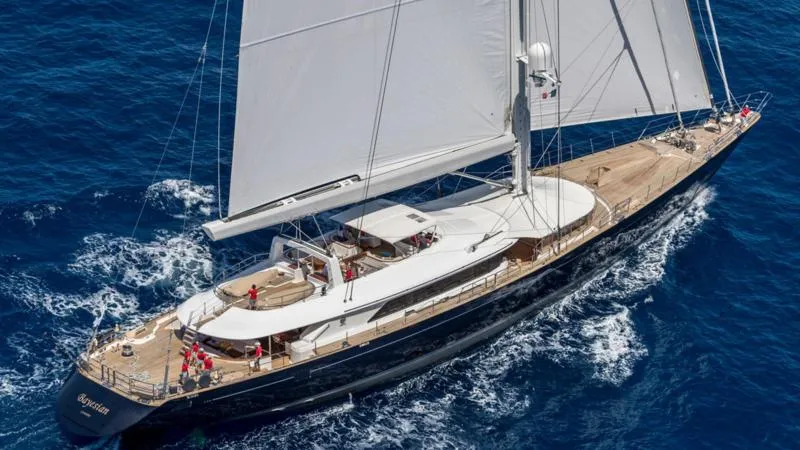
The Bayesian superyacht pictured before it sank off the coast of northern Sicily.
British investigators have concluded that the luxury superyacht Bayesian sank off the coast of Sicily due to an unrecognised design vulnerability and an unforecasted hurricane-force downburst that knocked it sideways in under 15 seconds. The August 2024 disaster claimed seven lives, including British tech entrepreneur Mike Lynch and his daughter, sparking contrasting conclusions between British maritime authorities and Italian criminal prosecutors.
- Date19 August 2024
- LocationOff Porticello, northern Sicily
- Casualties7 dead, 15 survivors
- VesselBayesian, a 56-metre (184ft) luxury superyacht
- Investigating BodyUK Marine Accident Investigation Branch (MAIB)
Photos
2 photosWhat happened
In the early hours of 19 August 2024, the 56-metre (184ft) luxury superyacht Bayesian was anchored outside the port of Porticello on the north coast of Sicily. As thunderstorms moved in rapidly, wind speeds escalated dramatically from 8 knots to approximately 70 knots—about 80mph—within minutes, far exceeding the forecasted gusts of up to 27 knots (31mph).
A violent downburst of hurricane-force winds struck the vessel, knocking it onto its side in less than 15 seconds. Once positioned on its side, the Bayesian rapidly filled with water and sank. Fifteen survivors managed to escape and reached a life raft launched by a crew member.
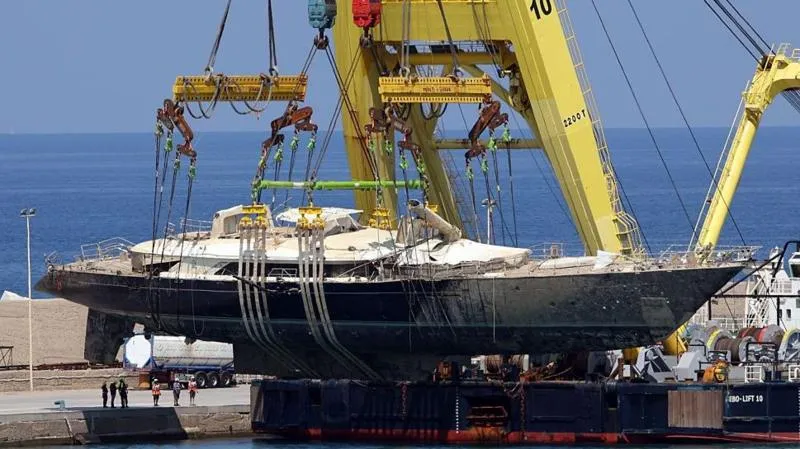
The sunken Bayesian superyacht being raised from the seabed near Sicily.
How it unfolded
According to the final report by the UK's Marine Accident Investigation Branch (MAIB), the sinking unfolded with extraordinary speed, overtaking the crew and preventing them from taking corrective action. A study commissioned by the MAIB revealed that the Bayesian possessed an unrecognised vulnerability to extreme winds at its widest point, known as the beam, because the yacht had never been assessed at anchor with its sails down.
The vessel was found to be vulnerable to being knocked over in severe winds when no sails were set. Once tipped past its angle of vanishing stability—assessed at 73 degrees—the knockdown became irrecoverable, meaning the yacht could not right itself. Additionally, the centreboard, which provides underwater stability when a ship is under sail, was raised, as it was rarely lowered while anchored and using motors. The way the boat was loaded and the angle of the wind also contributed to the disaster.
The people involved
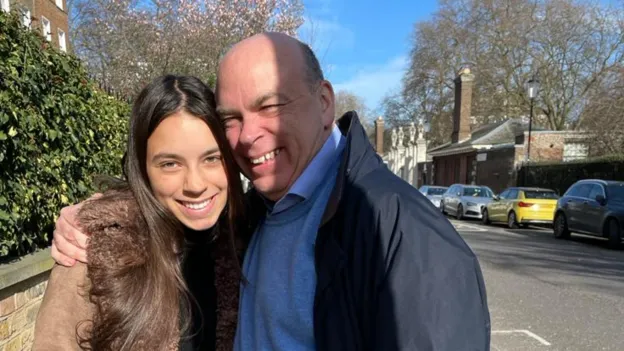
The disaster claimed the lives of seven people. Among the victims were British tech tycoon Mike Lynch, 59, and his daughter Hannah, 18. Also killed were Morgan Stanley International bank chairman Jonathan Bloomer, 70, and his wife, Judy, 71; American lawyer Chris Morvillo, 59, and his wife Neda Morvillo, 57; and crew member Rick Thomas, 59.
Fifteen other individuals survived the sinking. Meanwhile, a parallel criminal probe in Italy has placed captain James Cutfield, chief engineer Tim Parker Eaton, and deckhand Matthew Griffith under investigation over potential charges of multiple manslaughter and culpable shipwreck.
Why it matters
The findings carry significant implications for maritime safety regulations and the operation of large single-hulled sailing vessels worldwide. The MAIB report highlights a dangerous gap in safety information and training syllabuses, noting that neither UK training nor published guidance covered the specific stability risks associated with anchored yachts facing extreme beam winds with retracted centreboards.
Furthermore, the incident underscores systemic issues in severe weather forecasting and communication for mariners, prompting calls for better collaboration between meteorological agencies to prevent similar tragedies.
The background
The Bayesian was a prominent luxury superyacht known for its massive single mast and high-end amenities. Downbursts—phenomena where cold, dense air plunges rapidly, sending out violent winds across the earth's surface—are notoriously difficult to predict, explaining why the extreme weather on the night of the sinking was not explicitly forecast.
While the MAIB report found that alcohol consumption did not contribute to the sinking, its conclusions appear to contrast sharply with recent assessments from Italian prosecution experts, who have reportedly pointed to alleged errors by the crew rather than inherent flaws in the vessel.
Response and aftermath
Following the disaster, the sunken superyacht was raised from the seabed near Sicily. The MAIB's final report, published on Thursday, puts forward seven recommendations directed at four agencies. It calls for new regulations governing single-hulled sailing vessels, updated rules regarding life rafts, and improved weather-information sharing between the Met Office and global counterparts.
The Maritime and Coastguard Agency is also conducting its own investigation. However, British investigators noted that Italian authorities restricted access to certain witnesses and evidence, leaving open the possibility that the report's depicted circumstances could alter once withheld evidence is disclosed.
What happens next
In Italy, the criminal investigation involving the captain, chief engineer, and deckhand continues, though inquests and legal proceedings have experienced delays due to the complexities of the ongoing criminal cases.
Regulatory bodies are expected to review the MAIB's seven recommendations to determine whether changes to safety standards, crew training syllabuses, and weather forecasting protocols should be implemented internationally.
What we still don't know
It remains unclear how the Italian criminal probe will formally resolve, particularly given the tension between British investigators' findings on structural vulnerabilities and Italian prosecution theories blaming crew actions. It has not been reported how the withheld evidence from Italian authorities might alter the understanding of the accident once fully disclosed.
Want more on this story? Our research assistant searches the latest reports across the web and explains what it finds, so you get the fuller picture in one place.