
UK Launches World's Largest AI Breast Cancer Screening Trial
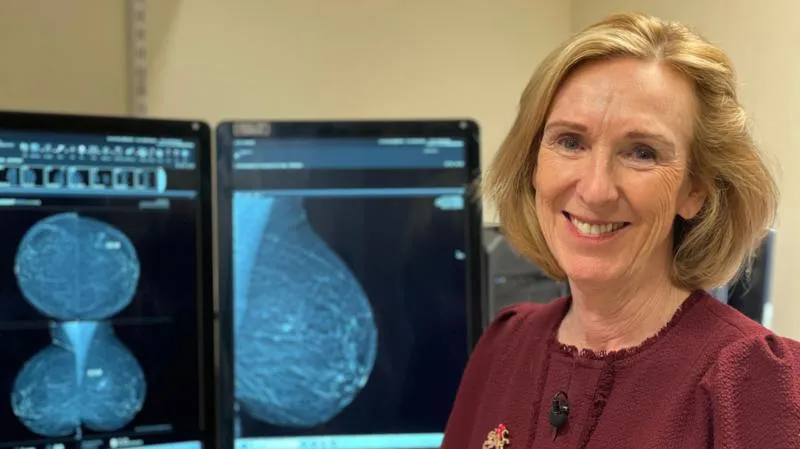
Prof Fiona Gilbert, co-chief investigator from the University of Cambridge and Addenbrooke's Hospital, alongside diagnostic display monitors showing mammogram scans.
Nearly 700,000 women across the United Kingdom are being invited to participate in a major clinical trial evaluating whether artificial intelligence can successfully replace one of the two human specialists who examine routine mammograms. Funded by an £11 million grant and spanning 30 hospital sites, the three-year study aims to improve early cancer detection rates while easing workloads for clinical staff and avoiding unnecessary patient recalls. Recruitment has officially begun at Cambridge University Hospitals as researchers test four different AI software systems.
- ScaleNearly 700,000 women across 30 UK sites
- Funding£11 million from the National Institute for Health and Care Research
- DurationExpected to last around three years
- PartnersUniversity of Warwick, University of Cambridge, Cambridge University Hospitals NHS Foundation Trust, and NHS England
Photos
2 photosWhat happened
A nationwide clinical evaluation has commenced in the United Kingdom to test the integration of artificial intelligence into breast cancer screening programmes. Nearly 700,000 women will be invited to join the initiative, designated as the EDITH trial, which stands as the largest investigation of its kind globally.
Recruitment has already started at Cambridge University Hospitals, marking the first of 30 participating medical sites across the country. The £11 million study is funded by the National Institute for Health and Care Research and brings together academic institutions, hospital trusts, and NHS England to assess how machine-learning technology can assist clinical workflows.

Shirley Essex, 70, from Cambridgeshire, whose early-stage breast cancer was caught during a routine screening appointment.
How it unfolded
Under current standard procedures across the UK, women aged 50 to 71 are invited for routine breast screening every three years, drawing more than two million attendees annually. Typically, each breast X-ray, or mammogram, is independently reviewed by two separate National Health Service experts to check for abnormalities.
In the new trial, artificial intelligence will step in to replace one of those human readers. Four distinct AI companies are participating in the evaluation, which is structured in different arms: one approach has the AI programme grade images before they reach human experts, while another has the software review images afterward. The trial will not alter what a patient experiences during a screening appointment, and participation remains completely voluntary.
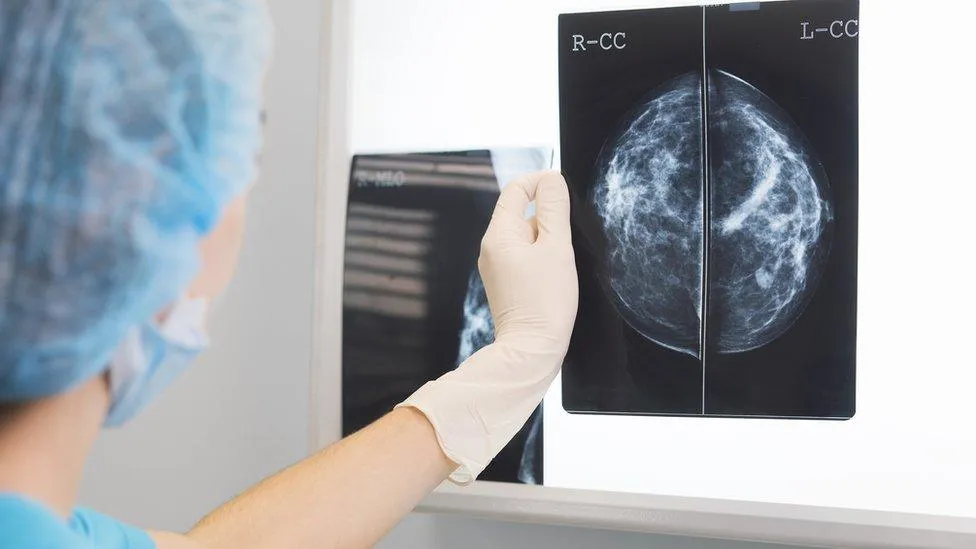
A healthcare professional reviewing breast X-ray mammograms.
The people involved
The research effort is being led collaboratively by the University of Warwick, the University of Cambridge, and Cambridge University Hospitals NHS Foundation Trust, working alongside NHS England. Key academic figures include Sian Taylor-Phillips, professor of population health at the University of Warwick, and Fiona Gilbert, a professor in the department of radiology at the University of Cambridge and honorary consultant at Addenbrooke's Hospital, both serving as co-chief investigators.
Government and health leadership have also backed the initiative. During a visit to the breast screening unit at Addenbrooke's Hospital, Health Secretary Yvette Cooper discussed the potential of technology with broadcasters, while Prof Peter Johnson, national clinical director for cancer at NHS England, urged eligible women to participate. Individual experiences continue to highlight the stakes of screening; Shirley Essex, a 70-year-old patient from Cambridgeshire diagnosed with early-stage breast cancer following a routine appointment, credited mammograms with saving her life.
Why it matters
Breast cancer remains the most prevalent cancer among women in the UK, with approximately 59,000 diagnoses each year. About a third of these cases are caught through routine mammograms at an early stage when treatment is most effective, with the national screening programme estimated to prevent roughly 1,300 deaths annually.
Health experts point out that the healthcare system faces a significant shortfall in radiologists while imaging examinations increase by roughly 8% each year. Introducing machine learning could streamline image review, allowing specialist breast radiologists to dedicate more time to active cancer care and accelerating diagnoses. However, researchers stress the need to ensure the technology does not cause harm by triggering unnecessary patient recalls or overdiagnosing milder conditions that would never have produced symptoms.
The background
Routine breast screening in the UK forms a cornerstone of preventative oncology for women within the designated 50-to-71 age bracket. While smaller preceding studies have indicated that artificial intelligence algorithms can enhance detection rates by identifying subtle tissue patterns trained across millions of historical images, researchers require large-scale randomized trials to confirm safety and efficacy in everyday clinical practice.
The integration of software tools aims to bridge the gap between rising administrative imaging demands and finite clinical staffing resources without compromising diagnostic accuracy.
What happens next
The EDITH trial is projected to run for approximately three years as investigators gather data across all 30 participating hospital sites. Women receiving routine screening invitations will be informed of the study and given the option to take part without obligation.
If the trial successfully demonstrates that artificial intelligence can safely and effectively replace a human reader, the technology could be integrated more broadly across NHS screening services to expedite diagnoses and optimize clinical capacity.
What we still don't know
Reports have not disclosed the specific identities of the four commercial AI companies whose software is being deployed across the trial's various arms. Furthermore, detailed metrics regarding preliminary error rates or specific software sensitivity thresholds under trial conditions have not yet been published.
Want more on this story? Our research assistant searches the latest reports across the web and explains what it finds, so you get the fuller picture in one place.