
Swimmer highlights environmental fallout of Middle East conflict in Hormuz
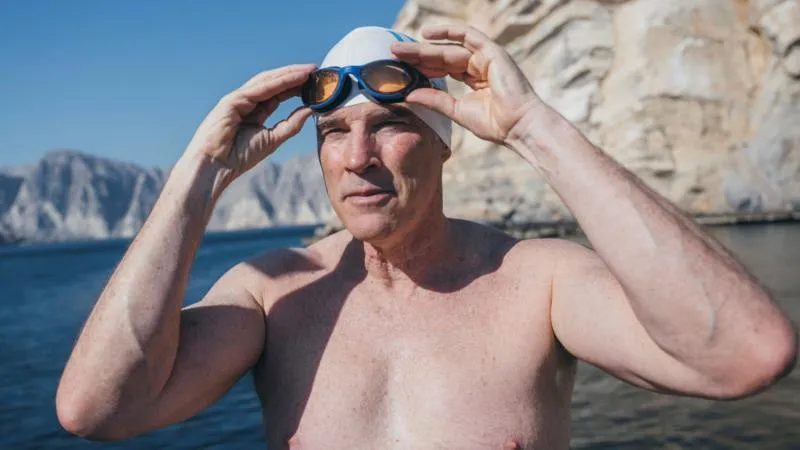
British endurance swimmer Lewis Pugh preparing to swim in the Strait of Hormuz.
British endurance swimmer Lewis Pugh has completed a three-day, 15km swim through the strategic Strait of Hormuz to draw attention to the environmental destruction caused by the ongoing conflict involving Iran. During his journey, Pugh encountered the hazardous realities of the shipping route, witnessing a burning liquefied petroleum gas carrier and noting a nearby oil tanker struck by a projectile. He is calling for an end to the fighting, the reopening of the waterway, and urgent protection for vulnerable marine ecosystems.
- WhenMarch ongoing conflict
- WhereStrait of Hormuz, between Musandam Island and the Cape of Hormuz
- WhoLewis Pugh, 56, British endurance swimmer and UN Patron of the Oceans
- DistanceAbout 15km (9.3 miles)
Photos
8 photosWhat happened
Lewis Pugh, a 56-year-old British endurance swimmer born in Plymouth, Devon, completed a strenuous three-day swim spanning approximately 15km (9.3 miles) through the Strait of Hormuz. The strategic waterway serves as a vital global route for oil shipments originating from the Middle East.
Pugh undertook the swim to draw public and international attention to what he describes as a neglected casualty of war: the natural environment. Believed to be the first person to attempt a long-distance swim in the strait since the current conflict involving Iran began in March, he called for an immediate halt to hostilities and the reopening of the shipping lane.
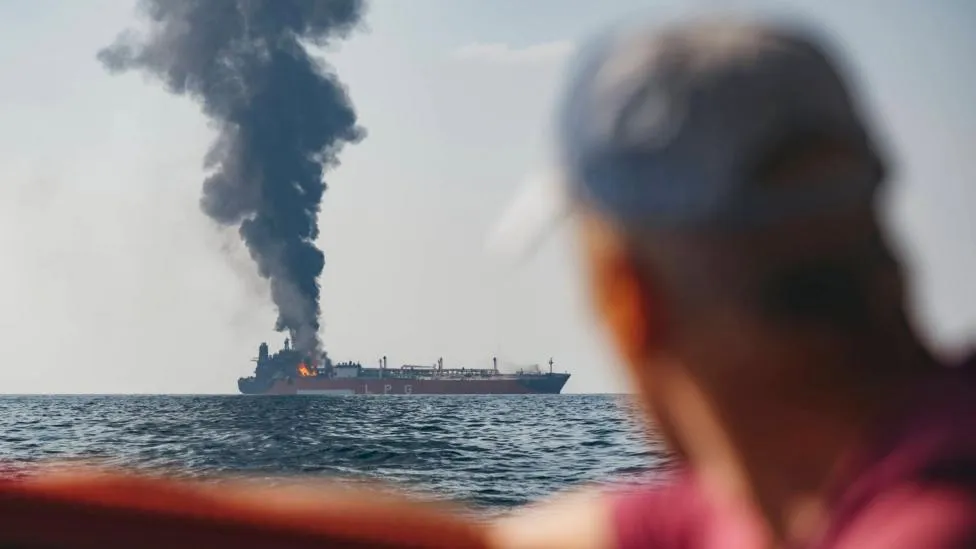
Smoke rises from the burning liquefied petroleum gas carrier Tara Gas near the shipping route.
How it unfolded
The swim began at Musandam Island and concluded at the Cape of Hormuz, situated at the northern tip of Oman's Musandam Peninsula. The journey took place against a backdrop of active danger in the maritime corridor.
According to the Lewis Pugh Foundation, an oil tanker was struck by a projectile approximately 4km away from Pugh's location on the first day of his swim. On the second day, Pugh observed towering flames rising above a headland from the burning liquefied petroleum gas carrier Tara Gas, passing close to the stricken vessel while it remained on fire.
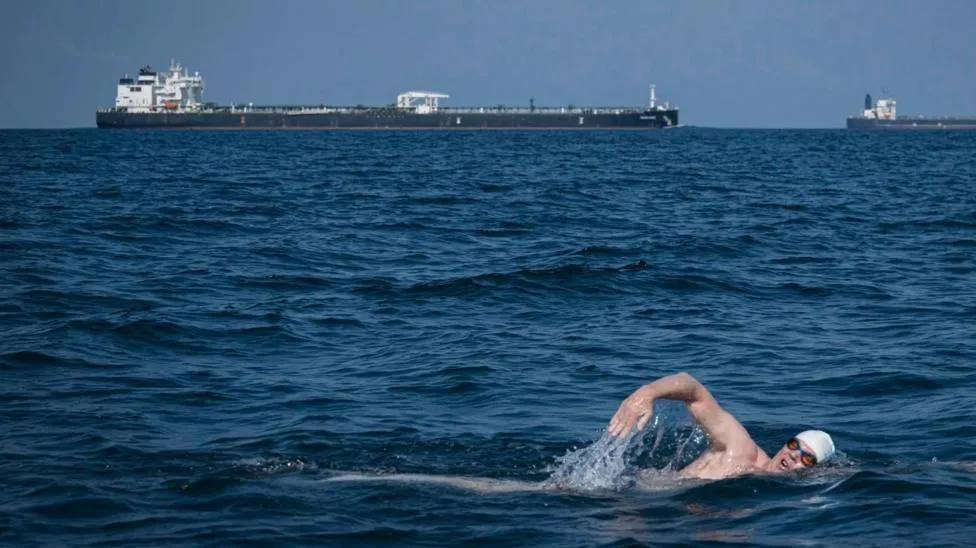
Lewis Pugh swimming in the strategic waterway alongside commercial shipping traffic.
The people involved
Lewis Pugh serves as a United Nations (UN) Patron of the Oceans, utilizing his platform as an elite endurance athlete to campaign for environmental protection in vulnerable aquatic regions around the globe.
Upon witnessing the burning vessels, Pugh expressed immediate concern for the welfare of the merchant mariners working in the war zone. He emphasized that attacks on vessels carrying highly flammable cargoes pose catastrophic threats not only to human crews, but also to fragile marine habitats.
Why it matters
The Strait of Hormuz is not only one of the world's most critical economic shipping arteries, but also a rich ecological habitat supporting diverse wildlife, including dugongs, sea turtles, and whale sharks.
Environmental experts and advocates warn that oil spills, chemical contamination, and burning wreckage can inflict lasting devastation on marine ecosystems, including coral reefs, seagrass meadows, and mangrove forests. Pugh noted that while the human toll of war receives immediate coverage, ecological damage often persists long after the fighting stops.
The background
The conflict involving Iran escalated around March, severely impacting commercial navigation and security within the Persian Gulf and surrounding chokepoints.
Pugh has a long history of undertaking high-profile open-water swims in politically sensitive or environmentally threatened regions to advocate for conservation policies and draw media attention to climate and ecological crises.
Want more on this story? Our research assistant searches the latest reports across the web and explains what it finds, so you get the fuller picture in one place.