
Rare San Francisco Garter Snakes Released into the Wild in Conservation Milestone
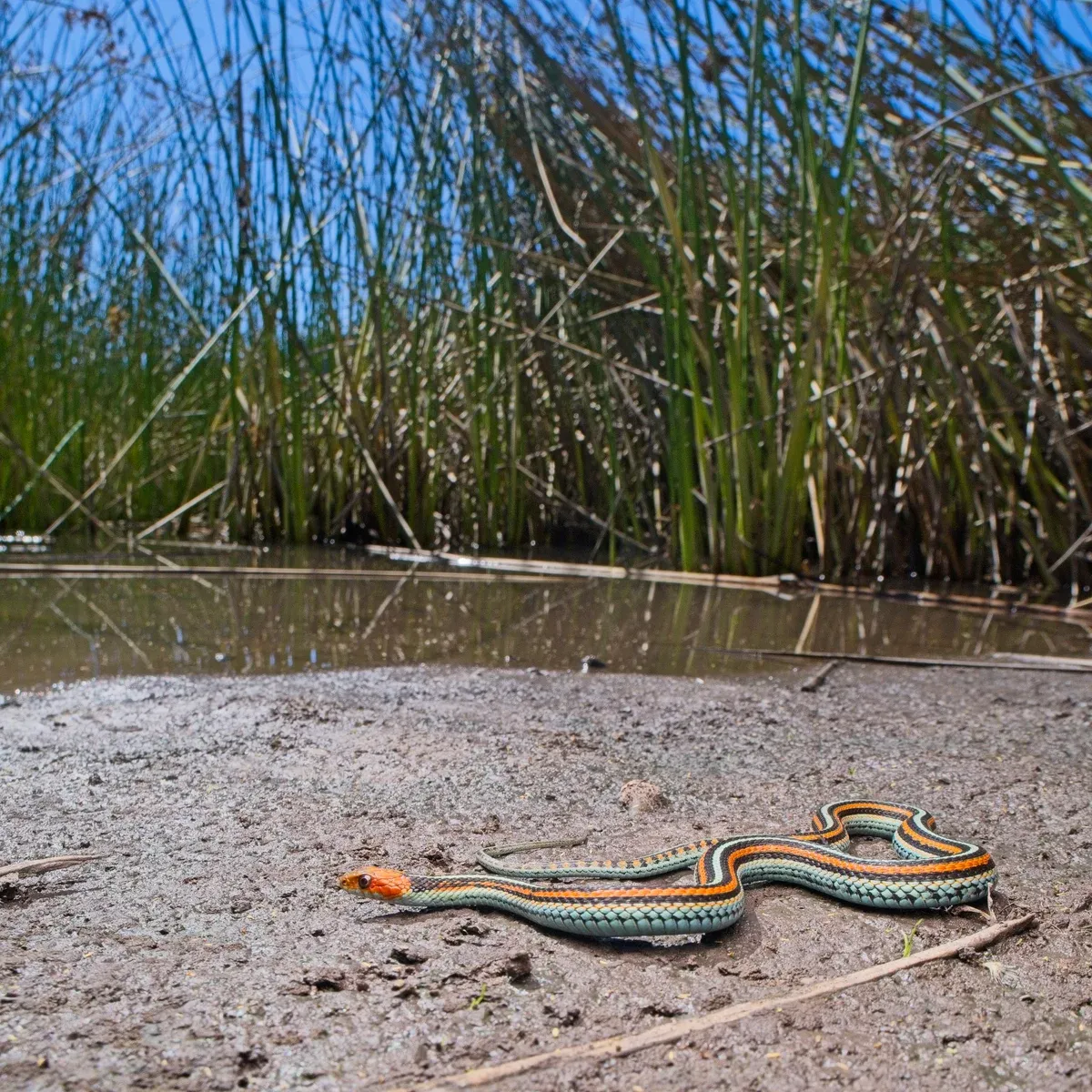
A San Francisco garter snake, distinguished by its red head, turquoise belly, and vibrant stripes, rests on muddy ground near tall wetland grasses.
Sixty-two captive-reared San Francisco garter snakes have been returned to the wild in San Mateo county in an unprecedented conservation effort. Biologists collected pregnant mothers in 2025 to protect their offspring through their most vulnerable early life stages. The milestone marks a major step forward in safeguarding an endangered reptile native exclusively to the San Francisco peninsula.
- SpeciesSan Francisco garter snake
- Released62 snakes
- LocationSan Mateo county
- TimelineAutumn release with more scheduled for 2027
- StatusEndangered
Photos
4 photosWhat happened
A coalition of conservationists, state agencies, and federal bodies has achieved a major milestone by releasing 62 captive-bred San Francisco garter snakes into carefully selected natural habitats within San Mateo county. The non-venomous reptiles, celebrated for their vibrant turquoise bellies, red heads, and striking red-and-black lateral stripes, represent one of North America's most visually distinct snake species.
This autumn release marks the culmination of a specialized conservation strategy known as head-starting. By shielding the reptiles during their most precarious early life stages, the zoo-based program aims to build resilient, self-sustaining populations capable of weathering decades of environmental decline.
A view of the wetland habitat and tall grasses at one of the release sites in San Mateo county.
How it unfolded
The initiative began in 2025 when biologists from the US Geological Survey gathered pregnant San Francisco garter snakes in the wild and transferred them safely to the San Francisco zoo. After giving birth, the mother snakes were successfully returned to their native habitats.
Meanwhile, the zoo's conservation team reared the offspring in captivity, protecting them through the high-risk juvenile phase until they reached a robust size. Before returning them to nature, scientists performed genetic testing on every individual snake to identify the ideal release locations that would maximize their chances of survival and genetic health.
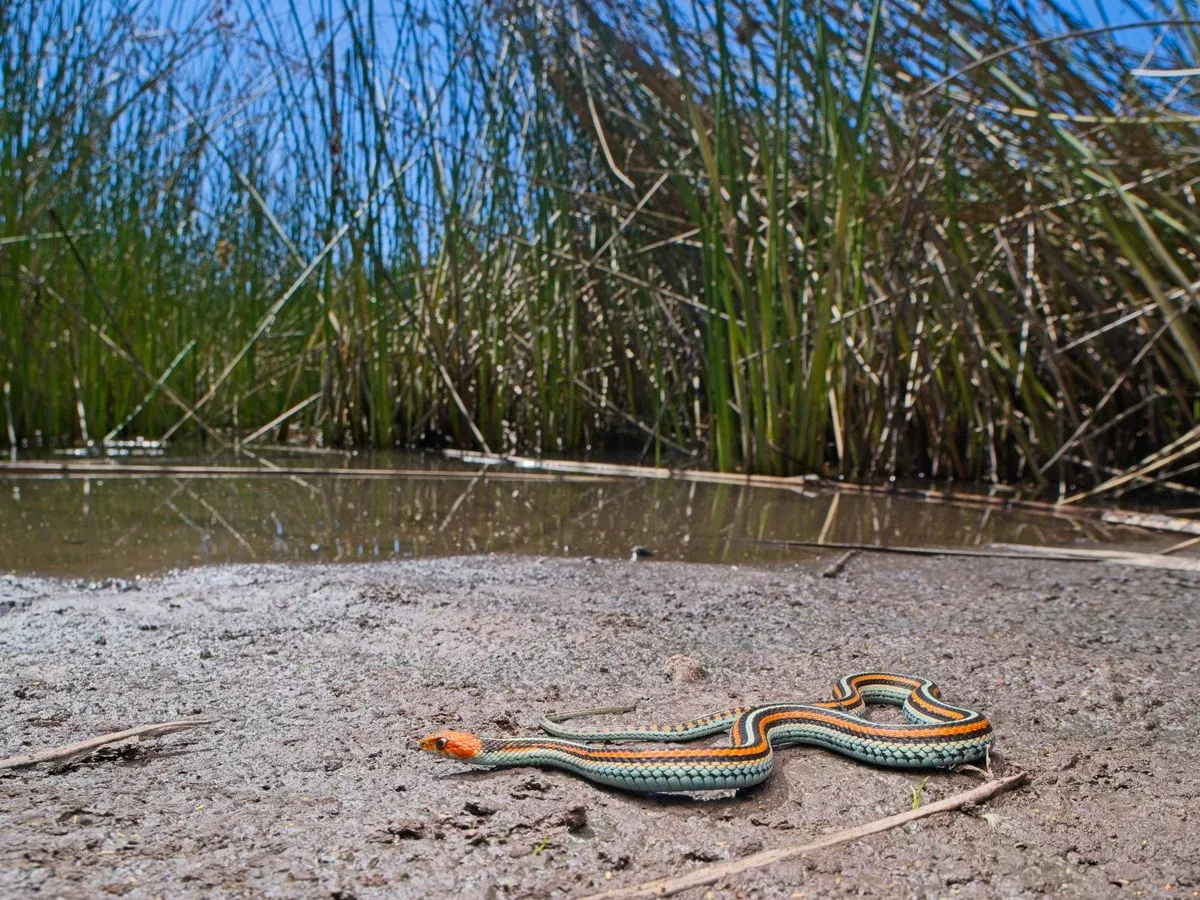
A captive-reared garter snake navigating the muddy edge of a natural water source during its introduction to the wild.
The people involved
The project represents a multi-agency collaboration involving a team of state and federal bodies, non-profit organizations, and specialized scientific institutions. Key voices leading the public announcement include Karine Tokatlian, a biologist with the Midpeninsula Regional Open Space District, and Dr Rochelle Stiles, the field conservation director at the San Francisco zoo.
These specialists worked alongside researchers from the US Geological Survey to gather, monitor, and genetically test the reptiles, reflecting generations of dedicated research, habitat restoration, and meticulous conservation planning.
Why it matters
Endangered for more than half a century, the San Francisco garter snake exists exclusively on the San Francisco peninsula and faces relentless ecological pressures. The species has suffered from illegal poaching, severe habitat loss, and fragmentation driven by local construction and urban development.
Additionally, the snakes confront shrinking prey availability as their primary food sources decline, alongside compounding challenges from drought, disease, invasive species, and dangerously low genetic diversity. Successful head-starting provides a vital lifeline to prevent the permanent extinction of a unique local fauna.
The background
The San Francisco garter snake has long captured the attention of biologists due to its vivid coloration and extreme geographic restriction. Confined solely to the San Francisco peninsula, the reptiles depend heavily on specific wetland and upland habitats that have steadily vanished beneath urban sprawl.
Conservation groups and government agencies have spent decades working to safeguard the remaining pockets of suitable land. Despite ongoing habitat restoration efforts, natural reproduction rates have struggled against environmental pressures, prompting scientists to intervene directly through captive rearing programs.
What happens next
Conservation efforts are already expanding beyond the initial autumn release. More than 130 additional garter snakes were born at the San Francisco zoo this year and are currently being reared under the same protective protocols.
These younger reptiles are scheduled for release into the wild in 2027. Biologists will continue to monitor the newly established populations in San Mateo county to evaluate their long-term adaptation and reproductive success in natural ecosystems.
What we still don't know
Specific geographical coordinates of the release sites within San Mateo county have not been disclosed, a common protective measure to deter illegal poaching. Additionally, reports have not detailed the exact methodologies used to track the released snakes over time or the specific metrics that will define long-term population stability.
Want more on this story? Our research assistant searches the latest reports across the web and explains what it finds, so you get the fuller picture in one place.