
Putin Vows Severe Retaliation After Ukrainian Strikes Collapsed Crimean Bridge
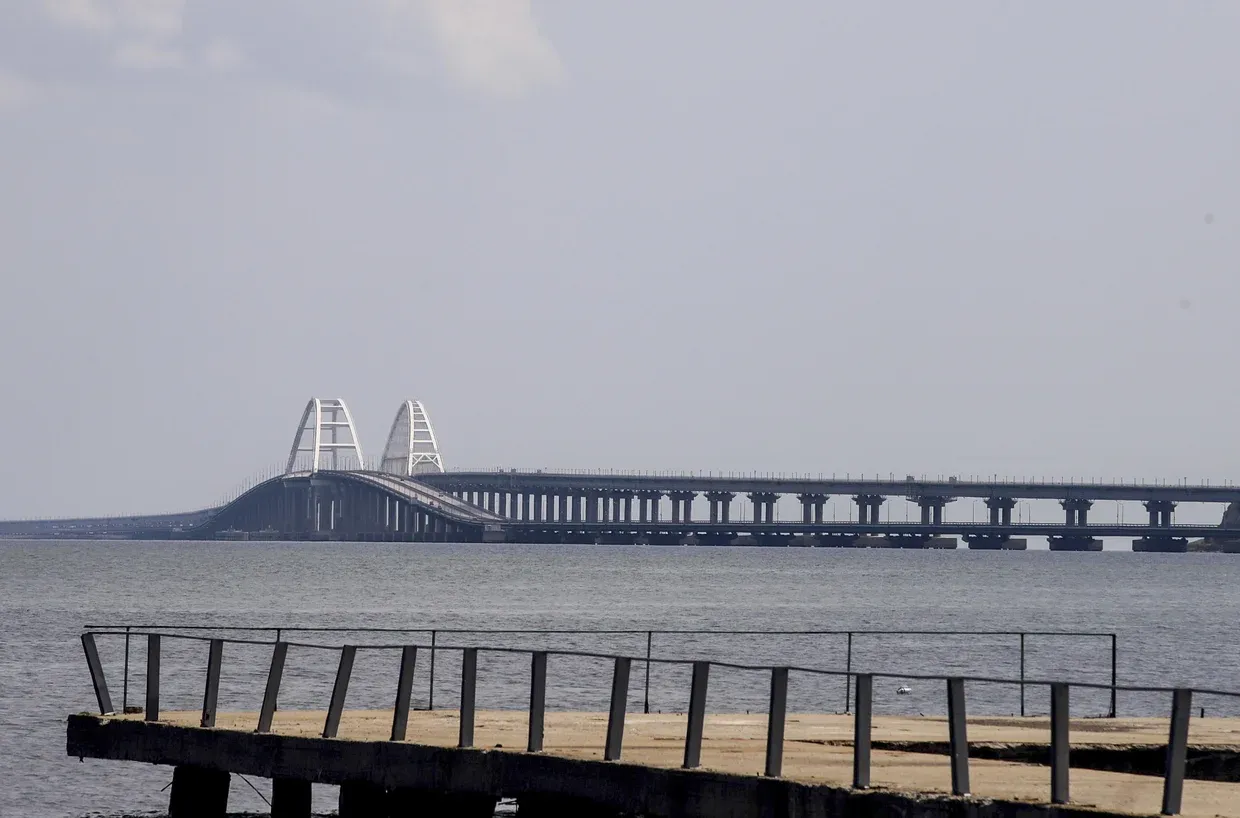
A view of the multi-span bridge crossing the Kerch Strait, connecting Russia to the Crimean Peninsula.
Russian President Vladimir Putin has abandoned potential local ceasefire talks and vowed a painful military response following a series of Ukrainian missile and drone attacks that destroyed a central span of the strategic Kerch bridge connecting Russia to Crimea. The escalation coincided with high-level international meetings in China involving Putin, Donald Trump, and Xi Jinping, as well as separate diplomatic discussions in Europe involving Ukrainian and Western leaders.
- WhenNovember 2026
- WhereKerch Strait, Crimea, Kyiv, and Shenzhen, China
- WhoVladimir Putin, Volodymyr Zelenskyy, Donald Trump, and Xi Jinping
- CasualtiesOne person killed and five injured in afternoon attacks in Kyiv
- StatusRoad traffic on the Kerch bridge prohibited for the foreseeable future; train services temporarily suspended then resumed
Photos
2 photosWhat happened
Ukrainian military forces launched a complex, multi-stage aerial assault that severely damaged the vital infrastructure connecting the Russian mainland to the Crimean Peninsula. The centerpiece of the attack targeted the 12-mile Kerch road bridge, collapsing a significant section of tarmac and its supporting arch into the water.
The destruction of the bridge marked the third time the strategic link was struck within a week, effectively halting road transit across the Kerch Strait. Subsequent attacks targeted remaining rail connections, temporarily pausing train services before repair crews managed to initiate partial restorations.
How it unfolded
The coordinated operation had reportedly been prepared over several weeks, beginning with a systematic campaign to degrade Russian air defense systems, radar installations, and electronic warfare assets in occupied territories. Once these defensive layers were cleared, a combined barrage of cruise missiles and drones struck the central spans of the bridge.
Simultaneously, explosions rocked the Ukrainian capital of Kyiv, where city authorities reported structural damage and casualties, including one fatality and multiple injuries resulting from afternoon attacks. Russian authorities also reported strikes targeting major river bridges within Kyiv on the same day.
What the reports confirm
All accounts confirm that the Kerch road bridge suffered catastrophic damage to its central section following a series of strikes by Ukrainian forces, prompting a direct reaction from the Kremlin. Reports similarly verify that Vladimir Putin addressed the media from China, confirming that Moscow would halt consideration of local ceasefires.
Discrepancies remain regarding the specific armaments utilized in the operation, with varying mentions of domestically produced Ukrainian missiles, Dutch-manufactured components, and Neptune cruise missiles. Reports also differ on the exact timeline of secondary rail strikes and collateral incidents, such as a reported projectile impact near the Dutch embassy in Kyiv.
The people involved
Russian President Vladimir Putin reacted angrily to the infrastructure destruction during a press conference in Shenzhen, China, where he had been conferring with U.S. President Donald Trump and Chinese President Xi Jinping. Putin asserted that the bridge served exclusively civilian functions and declared that negotiations were off the table.
Meanwhile, Ukrainian President Volodymyr Zelenskyy lauded the operation as an unprecedented multi-stage feat of military engineering. Western leaders, including European officials and U.S. representatives such as Jared Kushner and Steve Witkoff, held parallel discussions in Berlin with European allies regarding diplomatic avenues toward a lasting peace.
Why it matters
The Kerch bridge holds immense psychological and logistical significance for both warring nations. For Moscow, the structure represents a cornerstone of its 2014 annexation of Crimea and a primary transit artery used to supply occupation forces in southern Ukraine with fuel, ammunition, and military equipment.
For Kyiv, the bridge is a hated symbol of colonial occupation. Its destruction serves both to cripple Russian military supply lines and to deliver a high-profile political blow designed to challenge the perception of Russian strength on the global stage.
The background
Built by Russia following its illegal annexation of the Crimean Peninsula, the $3.6 billion bridge was ceremonially opened by Putin in 2018. It has been a primary target for Ukrainian forces throughout the full-scale invasion launched in February 2022, having survived prior assaults involving a 2022 truck bomb and a subsequent sea drone attack.
Crimea itself has served as a heavily militarized base for Russian operations, featuring numerous airbases, training grounds, and artillery stockpiles used to project power across southern and eastern Ukraine.
Response and aftermath
Following the bridge collapse, Kremlin spokesperson Dmitry Peskov vowed that the structure would be rebuilt to a higher standard, though transport officials noted that repairs would likely be protracted and fraught with ongoing military risks. Russian transport authorities confirmed that railway operations resumed after emergency workers effected temporary track repairs.
Diplomatically, the aftermath saw sharp friction, with Russian diplomatic missions questioning the involvement of foreign technology firms in supplying missile components. Concurrently, international debates intensified regarding the sincerity of peace overtures discussed by global superpowers in Asia and European allies in Berlin.
What happens next
With road traffic suspended indefinitely and repair work underway under the constant threat of renewed aerial engagements, logistics across the Kerch Strait face long-term disruption. The breakdown in diplomatic talks over local ceasefires signals an intensification of hostilities rather than a de-escalation.
International stakeholders, including U.S. and European leaders, must navigate the fallout from the Shenzhen summit and coordinate their ongoing military and financial assistance to Kyiv in the face of imminent Russian retaliation.
What we still don't know
The specific nature, timing, and targets of Russia's promised retaliation remain undisclosed beyond official warnings of a severe response. Full details regarding the extent of infrastructural damage inside Kyiv and the exact casualty figures from concurrent regional strikes have not been fully quantified by independent observers.
Want more on this story? Our research assistant searches the latest reports across the web and explains what it finds, so you get the fuller picture in one place.