
Peter Fluck, Co-Creator of Groundbreaking Satirical Show Spitting Image, Dies at 85
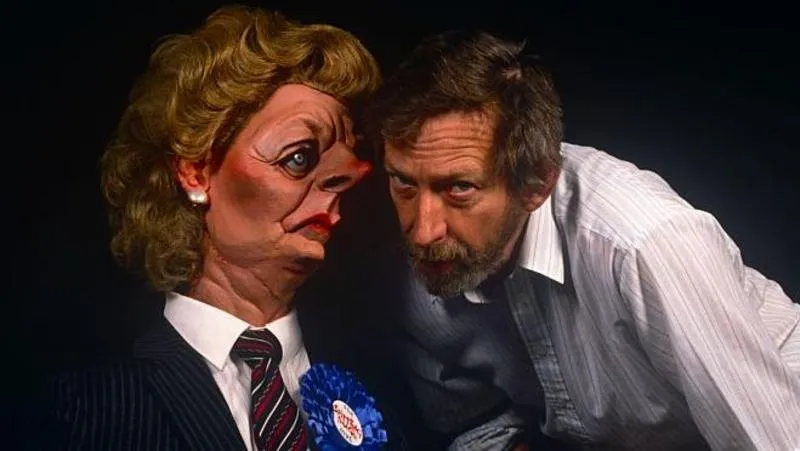
Peter Fluck posing alongside a puppet caricature of former British Prime Minister Margaret Thatcher.
Peter Fluck, the co-creator of the influential British satirical puppet show Spitting Image, has died at the age of 85 following a recent illness at his home in Cornwall. Alongside his artistic partner Roger Law under the banner 'Luck and Flaw', Fluck reshaped television satire by turning traditional newspaper cartoons into biting, latex caricatures of politicians and royals. The show dominated British television screens from 1984 to 1996, drawing audiences of up to 15 million and capturing a definitive era of the cultural zeitgeist.
- SubjectPeter Fluck
- Age85
- Key AchievementCo-creator of Spitting Image and 'Luck and Flaw'
- Show Run1984-1996 across 18 seasons on ITV
- AwardsOne BAFTA TV award and two Emmys
Photos
4 photosWhat happened
Peter Fluck, the artist and puppeteer who helped redefine television comedy through the creation of the satirical program Spitting Image, has passed away at the age of 85. His family announced that he died in the early hours of Saturday at his home in Cornwall, following a recent illness.
Remembered by his family as a private man who shunned fame and attention, Fluck spent his later years in Cornwall focusing his creative energy on printmaking, ceramics, and mobiles. Broadcasters and family alike paid tribute to his trailblazing contributions to British culture.
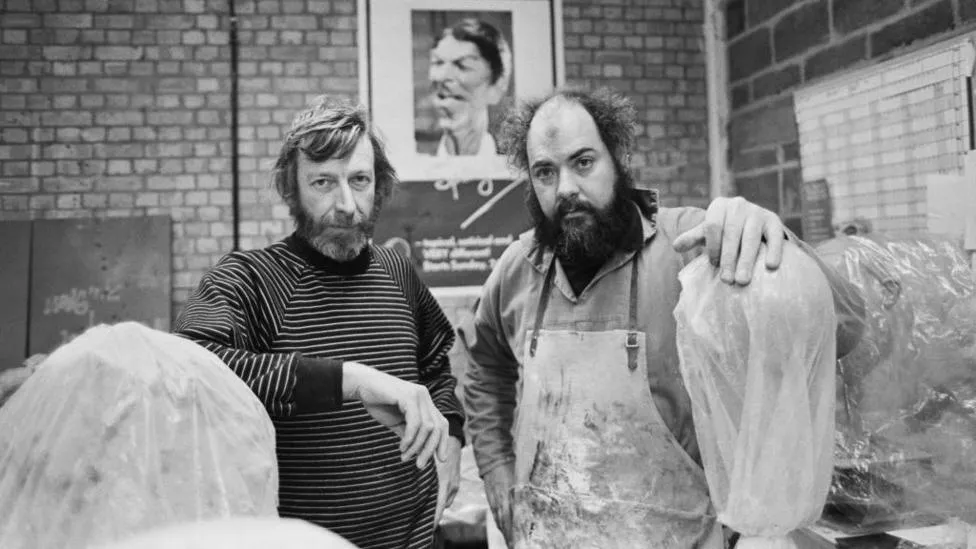
Peter Fluck and Roger Law inside their studio workspace.
How it unfolded
Born in Cambridge in 1941, Fluck crossed paths with childhood friend and future collaborator Roger Law while studying at the Cambridge School of Art. The two subsequently moved to London to work as freelance illustrators before officially establishing their partnership, 'Luck and Flaw', back in Cambridge in 1976.
What began as illustration evolved into a unique brand of physical caricature that eventually spawned the television series Spitting Image. The show broadcast on ITV at 10 o'clock on Sunday nights—a time slot Fluck once joked should have found politicians safely in bed—running for 12 years across 18 seasons before being axed due to declining audience numbers.
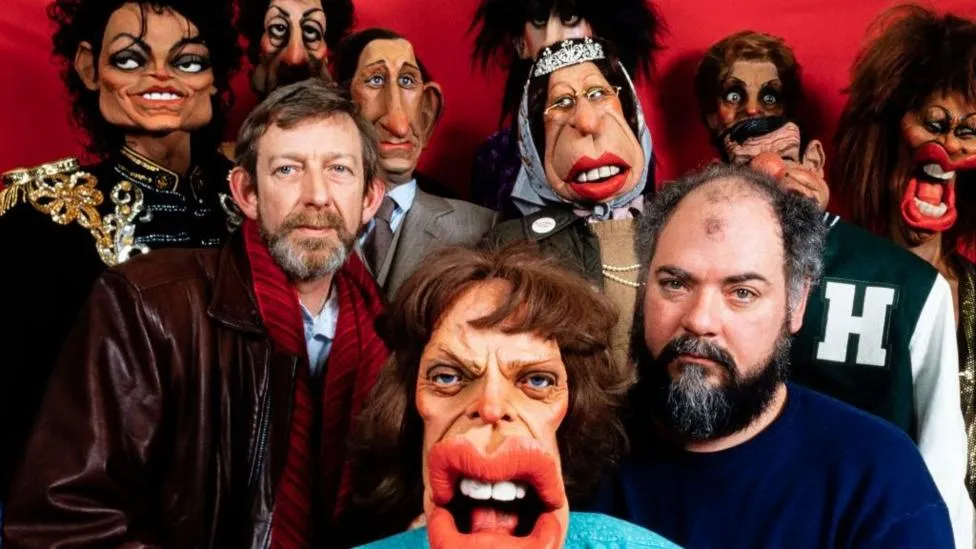
Peter Fluck and Roger Law surrounded by a selection of their famous satirical puppets.
The people involved
Alongside Roger Law, Fluck brought to life some of the most recognizable and biting puppet likenesses of global figures, celebrities, and British politicians. Their creations targeted prominent figures of the era, including former Prime Minister Margaret Thatcher, Queen Elizabeth the Queen Mother, and members of Thatcher's cabinet such as Douglas Hurd, whose hair was famously depicted as Mr Whippy ice cream, and her successor John Major, portrayed as a grey puppet obsessed with peas.
Politicians frequently sought out the creators to have their own puppets made, as appearing on the program became an unofficial metric of political arrival. Broadcasters praised Fluck's unrivaled skill in cutting-edge puppetry and caricature, which captured the humour of an entire generation.
Why it matters
Spitting Image permanently altered the relationship between the British public, television entertainment, and the political elite by making political satire visceral, accessible, and unavoidable. At its peak, the program commanded an audience of 15 million viewers, setting a cultural benchmark for how television addressed authority.
The loss of its co-creator marks the passing of a defining voice in modern satire, whose visual language influenced generations of artists, cartoonists, and comedians. The breadth of their creative legacy was solidified in 2018 when Roger Law donated the complete Spitting Image archive—comprising original scripts, puppet moulds, drawings, and recordings—to the library at Cambridge University.
The background
Spitting Image was an immensely popular, occasionally controversial satirical puppet show that aired on the British broadcaster ITV from 1984 to 1996. Utilizing grotesque, highly expressive latex caricatures, the show poked fun at the political and social establishment of late-20th-century Britain.
The programme won critical acclaim and major accolades, securing a BAFTA TV award and two Emmys during its landmark run. Decades after its initial cancellation, the cultural footprint of the series endured, prompting occasional revivals and deep academic interest in its production history.
Response and aftermath
Following news of his death, tributes poured in from family members and broadcasting institutions alike. A statement released by his family described the spirit that Spitting Image brought to the nation as epoch-defining, highlighting how Fluck continued his artistic life from his studio in Cornwall long after stepping away from television production.
ITV issued a statement acknowledging that Fluck's creative contribution to television satire remains unmatched. The broadcaster emphasized that his pioneering puppetry and sharp humor formed an indelible part of the cultural zeitgeist.
What we still don't know
Specific details concerning the nature and duration of the recent illness that preceded Fluck's death have not been publicly disclosed by his family.
Want more on this story? Our research assistant searches the latest reports across the web and explains what it finds, so you get the fuller picture in one place.