
Parents Sentenced Decades After 'Little Martyr of the A10' Murder
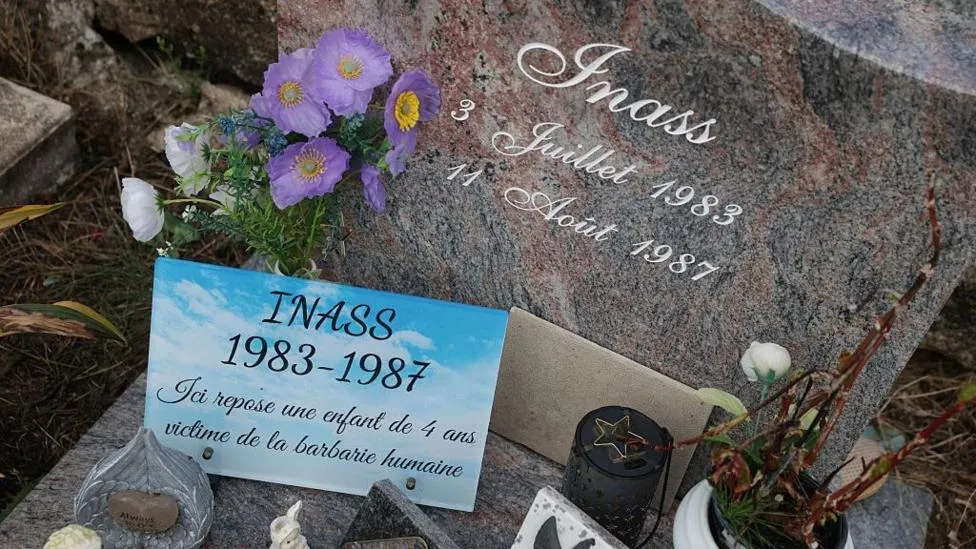
A gravestone marks the resting place of Inass Touloub, who remained unidentified for three decades as the 'Little Martyr of the A10'.
Nearly 40 years after a four-year-old girl was found dead alongside a motorway in central France, her elderly parents have been convicted of her torture and death. Inass Touloub spent three decades as an anonymous symbol of child abuse known as the 'Little Martyr of the A10' before a familial DNA match in 2018 led investigators to her parents. A court in Loir-et-Cher sentenced the mother to 20 years in prison and the father to 15 years as an accomplice.
What happened
On 11 August 1987, the body of four-year-old Inass Touloub was discovered alongside the A10 road in Suèvres, located in the Loir-et-Cher department of central France. Her autopsy revealed an extensive record of abuse, bearing multiple broken bones, human bite marks, and burns inflicted with an iron. Prosecutor Anaïs Allio noted during the trial that not a single part of the young girl's body was spared from violence.
Following her discovery, Inass could not be identified and was buried in an unmarked grave near where she was found. For thirty years, she remained an anonymous figure in French criminal history, widely referred to as the 'Little Martyr of the A10' while investigators pursued one of the largest missing-child and murder inquiries the country had ever seen.
How it unfolded
The breakthrough in the decades-old cold case occurred in 2018. A match was found when the DNA of Inass's brother was tested in connection with an unrelated legal case, directly linking him to the unidentified girl. This genetic connection allowed authorities to trace the family and ultimately arrest the parents.
Following the arrests, the case proceeded to trial at the Loir-et-Cher Assize Court, beginning on 2 November. After several hours of deliberation, the verdict was delivered on a Tuesday. The jury concluded that the mother, Halima El Bakhti, was suffering from impaired judgment at the time of the killing, a factor that reduced her maximum potential sentence.
The people involved
The defendants, 72-year-old Halima El Bakhti and 74-year-old Ahmed Touloub, sat stoically with their heads bowed as the court's reasoning was read aloud. El Bakhti was found guilty of torture and acts of barbarity resulting in death without the intent to kill, receiving a 20-year prison sentence. Touloub, identified as an accomplice, was handed a 15-year sentence.
During the proceedings, prosecutors brought forward the harrowing findings of the original autopsy, recalling the profound distress and vertigo experienced by officials upon reviewing the graphic photographic evidence of the child's injuries.
The background
Inass Touloub's death in 1987 triggered an immense nationwide investigation in France. Authorities plastered her photograph in public spaces across the country and issued formal alerts to more than 30 nations in an urgent attempt to discover her identity. Despite these sweeping measures, the leads dried up, and she remained nameless for three decades.
Assize courts in France handle the most serious criminal offences, including severe violent crimes and murder. Defendants convicted in these courts retain the legal right to challenge judicial outcomes; both El Bakhti and Touloub have a 10-day window following the verdict to lodge an appeal.
What happens next
With the conclusion of the trial and the delivery of the verdicts, the convicted parents face their respective prison terms of 20 and 15 years, barring successful appeals. Because both defendants were handed 10-day windows to contest the court's decision, legal proceedings remain technically open until that timeframe expires.
Want more on this story? Our research assistant searches the latest reports across the web and explains what it finds, so you get the fuller picture in one place.