
No Charges for Madison Officer in Fatal Shooting of Corey Ruiz
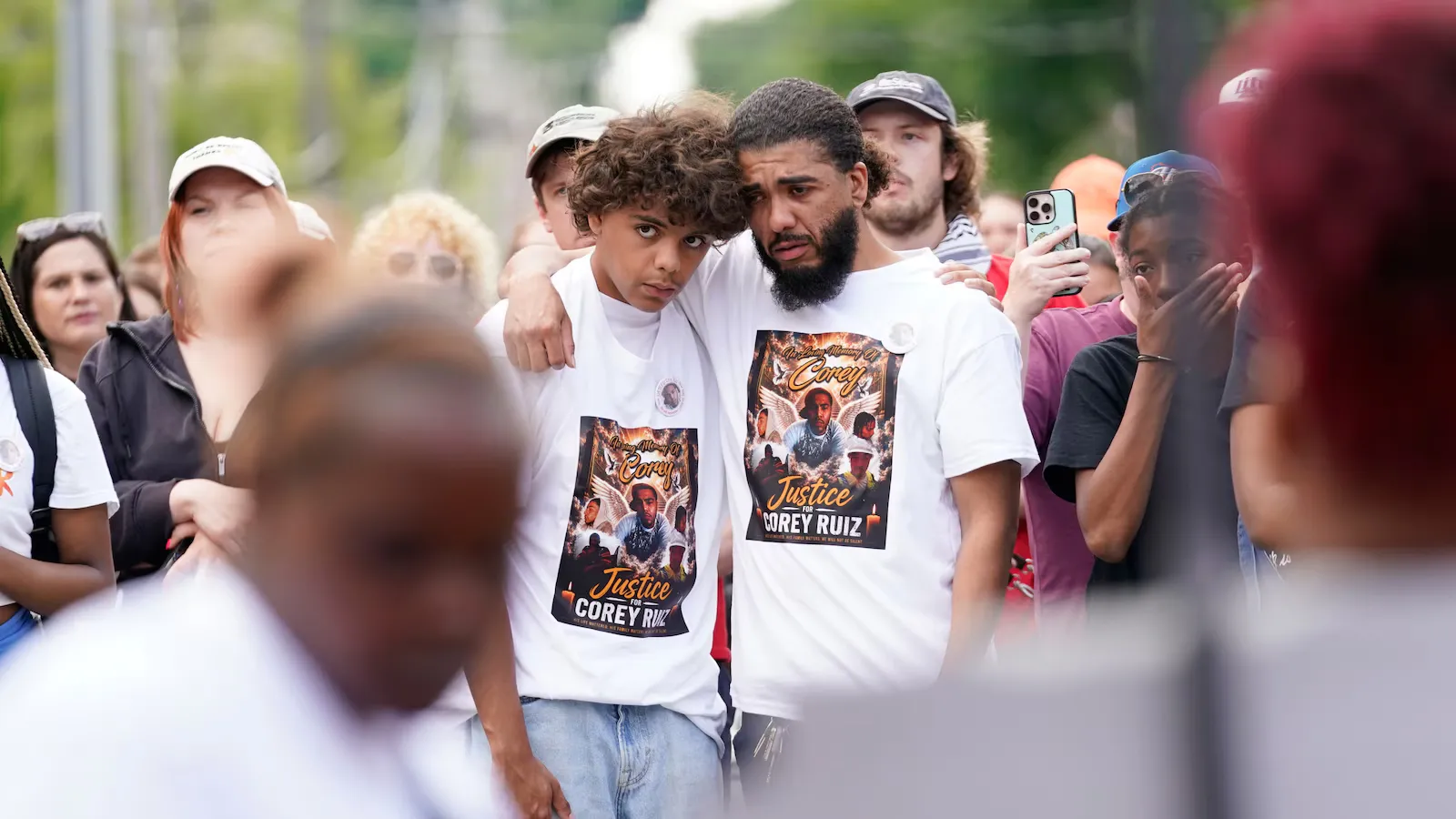
Mourners and family members gather during a demonstration following the fatal police shooting of Corey Ruiz in Madison, Wisconsin.
A Wisconsin prosecutor has decided not to file criminal charges against the police officer who shot and killed 38-year-old Corey Ruiz in Madison last July. Dane County District Attorney Ismael Ozanne concluded the use of deadly force was reasonable after Ruiz allegedly resisted officers, produced a knife, and was unaffected by Tasers. Family attorney Ben Crump condemned the decision, arguing that video evidence shows an unjustified execution.
- WhenJuly 22
- WhereMadison, Wisconsin
- WhoCorey Ruiz (38-year-old victim) and Officer Kiel Baitinger-Peterson
- StatusNo criminal charges filed against the officer by the Dane County District Attorney
Photos
1 photosWhat happened
On July 22 in Madison, Wisconsin, a confrontation between law enforcement and 38-year-old Corey Ruiz ended in a fatal shooting. Four officers responded to calls regarding someone checking parked cars and an alleged burglary attempt, ultimately surrounding Ruiz as he was on a bicycle. During the encounter, officer Kiel Baitinger-Peterson fired the shots that killed Ruiz.
Dane County District Attorney Ismael Ozanne announced that no criminal charges would be filed against Baitinger-Peterson. According to official findings, officers attempted to use Tasers on Ruiz without success before he brandished a knife and injured Baitinger-Peterson.
The people involved
Corey Ruiz was a 38-year-old Black man who was fatally shot while on a bicycle. Officer Kiel Baitinger-Peterson is a white law enforcement officer with more than ten years of experience. He, along with three other responding officers, has been on paid administrative leave since the incident occurred.
Ismael Ozanne serves as the Dane County District Attorney, and Ben Crump is the civil rights attorney representing the Ruiz family. Jim Palmer is the executive director of the Wisconsin Professional Police Association, the union supporting the officer's legal defense and actions.
Why it matters
The case has reignited intense community debates over police accountability, the use of deadly force, and racial justice in Madison. It marks the third time since 2012 that Madison police have shot and killed someone in the same neighborhood, prompting days of protests and renewed demands for comprehensive police reforms.
Furthermore, the incident highlights ongoing scrutiny over transparency, as the city's police officers currently do not wear body cameras, leaving investigators and the public to rely on surveillance footage, squad car recordings, and citizen videos.
Response and aftermath
District Attorney Ozanne stated that his decision was based on a careful review of police reports, diagrams, surveillance footage, squad car videos, and citizen recordings, emphasizing that he is sworn to apply the law equally to all individuals. The Wisconsin Professional Police Association released a statement backing the prosecutor's finding as consistent with legal standards governing law enforcement use of force.
Conversely, family attorney Ben Crump strongly disputed the findings during a press conference. Sharing details from a meeting where the district attorney and medical examiner briefed the family, Crump argued that video evidence shows an excessive and unjustifiable use of force, asserting that Ruiz would have survived had the final shot to his head not been fired.
What happens next
With the prosecutor declining to file criminal charges, the immediate legal avenue for criminal prosecution of the officer has closed, though civil rights advocates and the family continue to challenge the official account. The four officers involved remain on paid administrative leave pending internal or administrative reviews.
In the broader community, efforts toward technological reform are underway. City officials announced in September that a $350,000 donation from a local nonprofit, combined with grants, will fund the equipping of all Madison police officers with body cameras by the end of 2027.
What we still don't know
Key details regarding the exact chronological micro-steps of the physical struggle remain contested between official investigative summaries and the family's legal team. While various video angles captured portions of the confrontation, the absence of police body camera footage leaves certain perspectives of the encounter unrecorded.
Want more on this story? Our research assistant searches the latest reports across the web and explains what it finds, so you get the fuller picture in one place.