
New Data Reveals Scale of Human Cost in Ukraine War
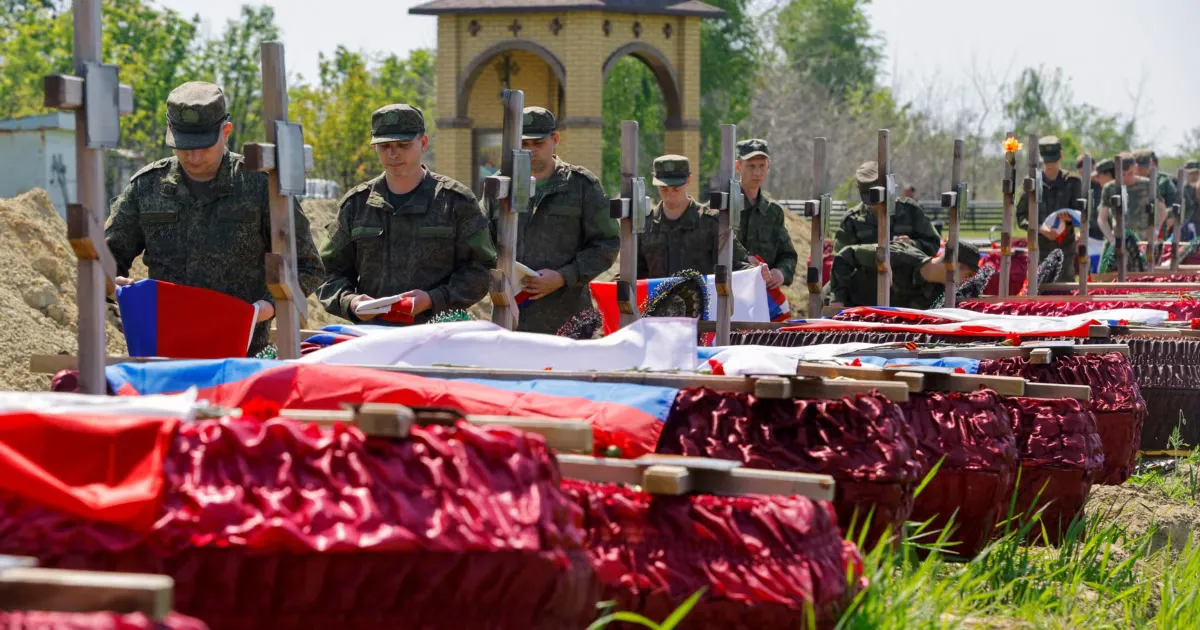
Russian soldiers stand near rows of coffins, illustrating the human cost of the ongoing conflict.
A new analysis indicates that over 700,000 Russian soldiers have died in the nearly five-year conflict, with total casualties potentially reaching 2 million. Ukraine has also suffered massive losses, estimated at 600,000 dead and wounded. These figures underscore the extreme human toll as both nations struggle to maintain military manpower.
- ConflictRussia-Ukraine War
- Estimated Russian DeadOver 700,000
- Estimated Ukrainian Permanent Losses600,000
- War DurationNearly 5 years
Photos
1 photosWhat happened
A joint analysis released on November 23 has provided a stark update on the human cost of the war in Ukraine. By examining data from a recent breach of Rosstat, the Russian state statistics agency, researchers have estimated that more than 700,000 Russian soldiers have been killed since the invasion began. This figure is part of a broader trend of escalating losses that suggests Russia could soon see its total casualties—including wounded—surpass 2 million.
The breach of Rosstat was attributed to hacker groups known as the Belarusian Cyber Partisans and Silent Crow. This new data aligns with previous, separate assessments from Western intelligence agencies, including British signals intelligence and Dutch military intelligence, which have consistently reported high casualty counts throughout the conflict.
How it unfolded
The conflict, which is approaching its five-year anniversary in February, has been characterized by intense, sustained combat. Russia has maintained its offensive capabilities by offering significant financial incentives to volunteers and recruiting from prison populations. However, recent evidence suggests these recruitment efforts are facing strain as the financial allure for potential soldiers appears to be diminishing.
Ukraine, facing an existential threat, has also endured immense losses. While the Kyiv government has not released official casualty figures in years, the Center for Strategic and International Studies estimates that Ukraine has suffered approximately 600,000 permanent losses, a category that includes both the dead and those too severely wounded to return to service.
The people involved
The soldiers on both sides are the primary individuals affected by these developments. For Russia, the frontline infantry is heavily comprised of volunteers enticed by wages and benefits, as well as inmates. In Ukraine, the government has faced significant domestic backlash over its recruitment methods. The term 'busification' has emerged as a pejorative description for the aggressive and heavy-handed tactics used to conscript men for the frontlines.
Why it matters
The staggering casualty figures highlight the sheer intensity of the conflict and the difficulty both nations face in sustaining their war efforts. For Russia, the data suggests that despite its ability to mobilize resources, the human cost is unprecedented in its post-World War II history. For Ukraine, the losses are particularly acute given its smaller population base, creating a critical challenge in replacing frontline personnel.
The findings suggest that Russia is increasingly finding it difficult to maintain staffing levels on the frontlines. As both sides grapple with these massive losses, the ability to continue the war effort becomes a primary concern for military planners and political leaders alike.
The background
The war in Ukraine began with a full-scale Russian invasion that has since evolved into a grueling, multi-year conflict. Throughout this period, Western intelligence agencies have provided periodic assessments of the war's progress, often highlighting the high attrition rates. The reliance on probate records and state data breaches has become a key method for independent organizations to track the scale of the devastation in the absence of transparent official reporting.
What we still don't know
While these estimates provide a grim picture, the exact number of casualties remains difficult to verify with absolute certainty. The long-term demographic and social consequences of these losses for both Russia and Ukraine remain unknown, as does the future sustainability of current recruitment pipelines in both countries.
Want more on this story? Our research assistant searches the latest reports across the web and explains what it finds, so you get the fuller picture in one place.