
New Daily Pill Shows Unprecedented Success Against Advanced Pancreatic Cancer
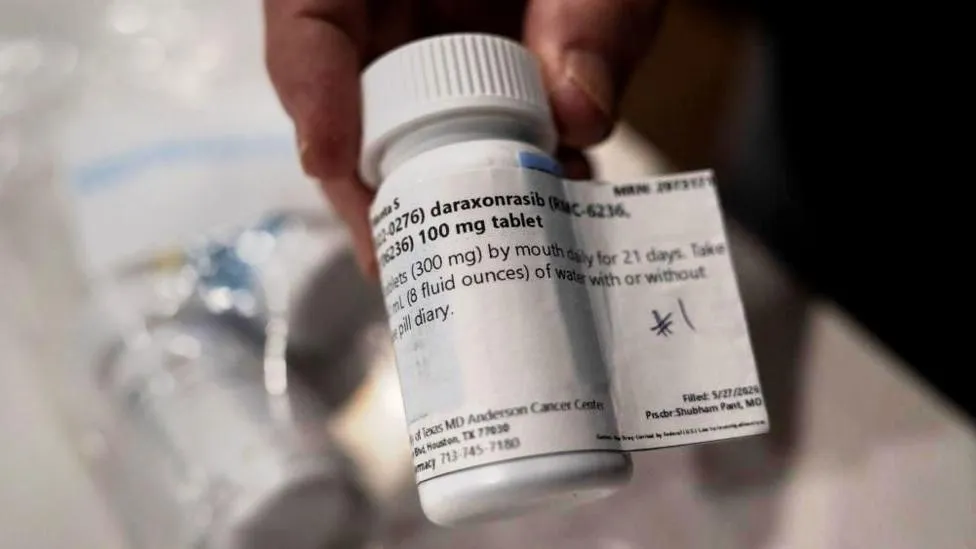
A bottle of daraxonrasib, a KRAS inhibitor medication used in clinical trials alongside chemotherapy for advanced pancreatic cancer patients.
Early medical trials of a daily pill called daraxonrasib combined with chemotherapy have demonstrated remarkable efficacy in shrinking and stopping the growth of advanced pancreatic cancer tumours. Experts are hailing the treatment as a historic leap forward for one of the deadliest and most stubborn forms of cancer, though doctors urge caution as long-term survival rates remain unproven.
- DrugDaraxonrasib
- Trial Participants61 patients with recently diagnosed advanced pancreatic cancer
- Key ResultsTumours stopped growing in nearly all participants; 60% saw tumours shrink or disappear; 8% had tumours become undetectable on CT scans
- MechanismKRAS inhibitor targeting RAS mutations that drive tumour growth
What happened
Medical experts are heralding what they call the most significant advancement in pancreatic cancer treatment in decades. Early medical trials testing a daily pill called daraxonrasib alongside standard chemotherapy have revealed an extraordinary ability to shrink, control, and in some cases eliminate tumours in patients battling one of the world's most aggressive and difficult-to-treat diseases.
Out of 61 trial participants who were recently diagnosed with advanced pancreatic cancer that had spread to other parts of the body, tumour growth was successfully halted in nearly all individuals. Just over 60% of these patients experienced tangible shrinkage or complete disappearance of their tumours, while roughly 8%—equating to one in every 12 patients—achieved a state where their cancer became entirely undetectable on computed tomography (CT) scans.

A collection of daily medicinal capsules of the type evaluated in recent clinical trials.
How it unfolded
The clinical evaluation followed patients for an average of a year and a half. Throughout this monitoring period, a subset of participants experienced no return of their cancer, prompting cautious optimism among the medical community.
Daraxonrasib functions as a targeted KRAS inhibitor. It operates by locking onto and shutting down specific cellular mutations known as RAS, which are present in the majority of pancreatic cancers and act as the primary engine driving uncontrolled tumour growth. Because these identical mutations also fuel dozens of other malignancies, including lung and ovarian cancers, researchers believe the therapeutic framework could eventually benefit a much broader patient demographic.
The people involved
The trials involved 61 participants suffering from advanced-stage disease. Medical leaders supervising and commenting on the research include Dr Sam Godfrey from the prominent British charity Cancer Research UK, who described the medication as finding a way of 'drugging the undruggable.'
Additional expert analysis was provided by Dr Wungki Park of the Memorial Sloan Kettering Cancer Center in the United States, who noted the unprecedented depth of tumour response and a near-doubling in the duration of disease control. Furthermore, Professor Elena Garralda, chair of the European cancer conference EORTC, highlighted the potential for the combined treatment to substantially improve overall patient survival and delay cancer progression.
Why it matters
Pancreatic cancer historically carries the lowest survival rate among all common cancers in the United Kingdom, where roughly 11,500 new diagnoses and 10,200 deaths occur annually. Traditional therapies like chemotherapy frequently offer only modest, temporary tumour reduction before the aggressive disease resumes growth, leaving most advanced-stage patients with a prognosis measured in months rather than years.
This breakthrough matters because it shatters a long-standing therapeutic barrier, offering patients crucial extra time and a significantly improved quality of life. Moreover, its underlying mechanism opens structural pathways to tackle other hard-to-treat tumour types across oncology.
The background
Pancreatic cancer is notoriously difficult to diagnose early, frequently manifesting symptoms only after the disease has advanced. Recognised warning signs include jaundice, itchy skin, darkened urine, pale bowel movements, unexplained weight loss, persistent fatigue, and high temperatures.
The disease has claimed the lives of numerous high-profile individuals, such as British actor Alan Rickman, who passed away in 2016 merely five months after receiving his diagnosis. Daraxonrasib has already secured approval for use within the United States, setting a precedent for its wider global evaluation.
Response and aftermath
Organizations such as Cancer Research UK have celebrated the findings as the most monumental leap forward for the field in decades. Medical professionals across international networks are presenting the data at conferences like EORTC to educate the wider clinical community.
Despite the enthusiasm, healthcare providers have emphasized that the therapy should not yet be misconstrued as an outright cure. Comprehensive medical consensus dictates that celebrating these response rates must be tempered by clinical realism regarding long-term outcomes.
What happens next
Longer-term clinical studies are currently required to determine whether the promising responses observed in trials can translate into genuine, sustained remission. Researchers must follow patients across extended timelines to see if the disease remains suppressed permanently or if it eventually recurs.
Additionally, medical experts plan to explore whether the early successes witnessed in pancreatic cancer trials can be successfully replicated in clinical applications for lung, ovarian, and other RAS-driven cancers.
What we still don't know
Despite the enthusiasm surrounding the initial trial results, significant medical questions remain unanswered. It is not yet known precisely how long the drug can keep the disease at bay over a multi-year horizon, nor whether any of the participating patients are truly cured of their cancer.
Furthermore, exact timelines for the broader international rollout of daraxonrasib outside of the United States have not yet been established by regulatory authorities.
Want more on this story? Our research assistant searches the latest reports across the web and explains what it finds, so you get the fuller picture in one place.