
Nato Vows Space Defense Amid Intelligence Warning of Russian Nuclear Satellite
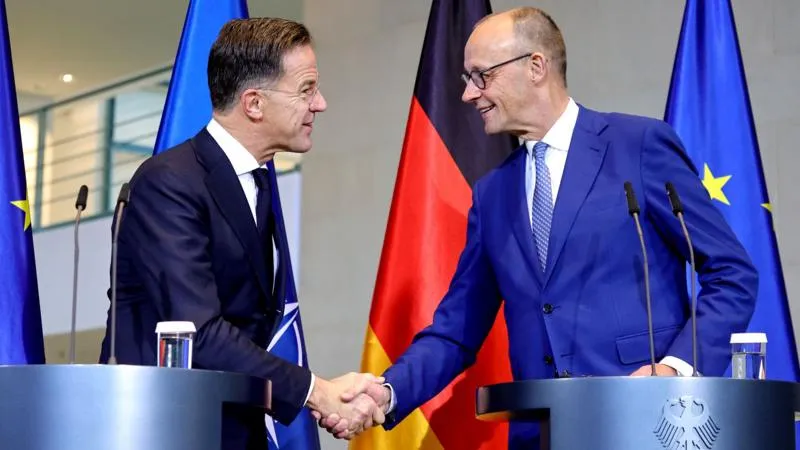
Nato Secretary General Mark Rutte and German Chancellor Friedrich Merz shake hands during a joint press conference in Berlin.
Nato chief Mark Rutte has affirmed that the military alliance will defend against any space-based threats after intelligence reports circulated among member states regarding a potential Russian launch. German media outlets reported that a nuclear-armed satellite dubbed 'Sputnik-S' could be deployed within 60 days to target crucial communication systems. While Kremlin and Russian embassy officials dismissed the claims as propaganda, the reports have heightened international concern over the militarisation of orbit.
- WhenIntelligence reports shared this month; potential launch within 60 days
- WhereBerlin, Germany, and orbit
- WhoNato chief Mark Rutte, German Chancellor Friedrich Merz, Kremlin spokesman Dmitry Peskov
- StatusUnconfirmed by German leadership; dismissed by Moscow as propaganda
Photos
2 photosWhat happened
Intelligence reports shared among members of the North Atlantic Treaty Organisation (Nato)—a military alliance of North American and European nations—indicate that Russia may be preparing to launch a nuclear-armed satellite within the next 60 days. German media outlets, citing anonymous military and intelligence sources, reported that the satellite has been dubbed 'Sputnik-S' and carries a nuclear warhead designed to disrupt or destroy critical communication and observation satellites.
Speaking at a press conference in Berlin, Nato Secretary General Mark Rutte addressed the disclosures, asserting that the alliance maintains a steadfast commitment to defending all allied territory, including the space domain. Rutte noted that the military alliance possesses a variety of response options and constantly updates its deterrence and defense strategies as circumstances require.
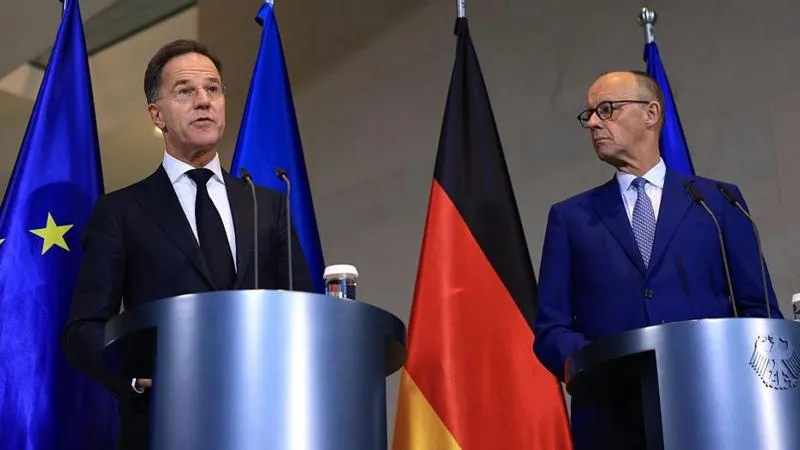
Nato Secretary General Mark Rutte speaking at the press podium alongside German Chancellor Friedrich Merz.
How it unfolded
The intelligence regarding the potential orbital launch began circulating among Nato countries earlier this month, though it remains unclear which specific member nation authored the reports. German broadcasters NDR and WDR, alongside the newspaper Sueddeutsche Zeitung, published details about the alleged 'Sputnik-S' project, prompting widespread international reactions.
During a joint appearance with Rutte, German Chancellor Friedrich Merz refrained from confirming or denying the specific intelligence details, but remarked that the reports highlight the escalating path Russia is willing to pursue. A German government spokesman similarly urged caution against causing undue alarm over hypothetical dangers while emphasizing that Berlin takes the intelligence very seriously. Meanwhile, European Space Agency head Josef Aschbacher characterized the prospect of nuclear weapons in orbit as the 'ultimate nightmare scenario'.

A view of planet Earth from orbit, highlighting the space domain where international security concerns are rising.
The response and reactions
Moscow swiftly rejected the intelligence findings. Kremlin spokesman Dmitry Peskov stated he had not seen the latest reports and dismissed information originating from unknown sources as unworthy of serious consideration. Similarly, the Russian embassy in Berlin issued a statement condemning the claims as unfounded allegations fabricated as part of a propaganda campaign.
The situation underscores a growing friction over military capabilities in outer space. In 2024, the United States previously accused Russia of developing a space-based anti-satellite weapon equipped with a nuclear warhead, an allegation that Russian President Vladimir Putin denied at the time by reiterating his country's categorical opposition to stationing nuclear arms in orbit. More recently, US officials acknowledged maintaining active space-control weapons circling the planet, prompting further international debate over orbital security.
The background
The framework governing activities beyond Earth is anchored by the 1967 Outer Space Treaty, an international agreement signed by Russia that explicitly bans the deployment of weapons of mass destruction in Earth's orbit. Despite these legal prohibitions, major global powers have increasingly explored alternative military capabilities in space, such as conventional anti-satellite technologies capable of targeting rival assets used for military communications, surveillance, and navigation.
Satellites form the backbone of modern global infrastructure, supporting everything from civilian communications and weather forecasting to military command and control networks. The introduction of nuclear weaponry or dedicated disruption systems into this environment poses severe systemic risks to global stability, elevating outer space into a prominent theater of geopolitical competition.
What we still don't know
Crucial details regarding the intelligence reports remain unconfirmed. Public authorities have not disclosed which specific country authored the intelligence dossier shared among Nato members this month. Furthermore, independent verification of the 'Sputnik-S' satellite's existence, its specific technical specifications, or an exact launch schedule has not been officially established by allied governments.
Want more on this story? Our research assistant searches the latest reports across the web and explains what it finds, so you get the fuller picture in one place.