
Israeli Forces Cross Gaza Boundary in Rare Incursion as Truce Teeters
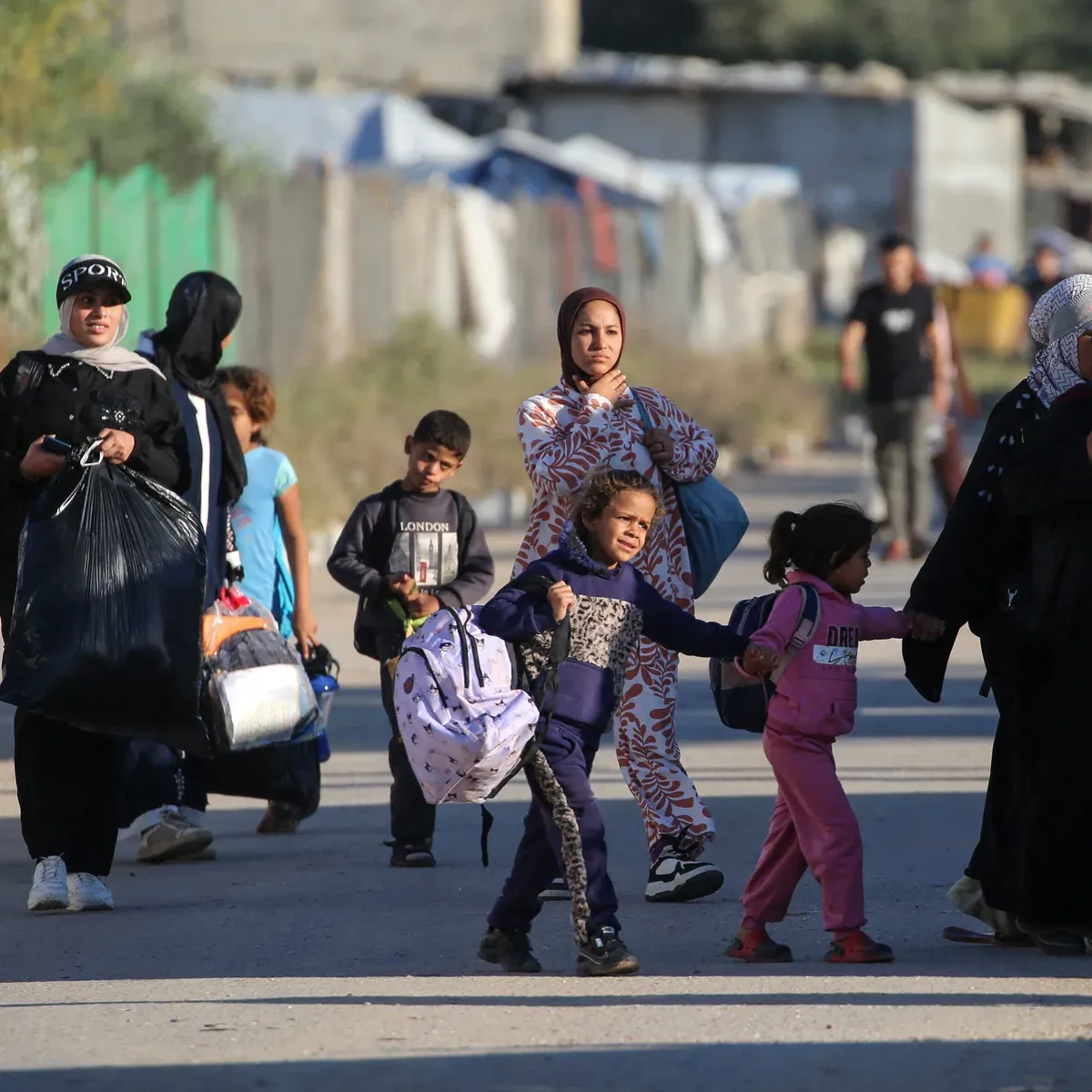
Israeli troops and tanks crossed the Yellow Line boundary into central Gaza on Wednesday in the first ground operation of its kind since last October's ceasefire. The raid, aimed at dismantling a tunnel network near Nuseirat refugee camp, triggered artillery shelling, forced families to flee their tents along the Salah al-Din road, and drew sharp condemnation from Hamas as a severe escalation.
- WhenWednesday
- WhereCentral Gaza, near Nuseirat refugee camp along the Salah al-Din road
- WhoIsraeli military and Shin Bet operating against Hamas
- CasualtiesAt least three reported killed in separate incidents (Nuseirat, Gaza City, Deir al-Balah)
- StatusOngoing operations amid a strained October 2025 ceasefire
Photos
4 photosWhat happened
The Israeli military launched a ground operation into central Gaza on Wednesday, crossing the demarcation boundary known as the Yellow Line for the first time since a fragile ceasefire was established in October 2025. Tanks and military vehicles advanced under the cover of intense artillery shelling and airstrikes, moving along the Salah al-Din road, which serves as Gaza's primary north-to-south artery.
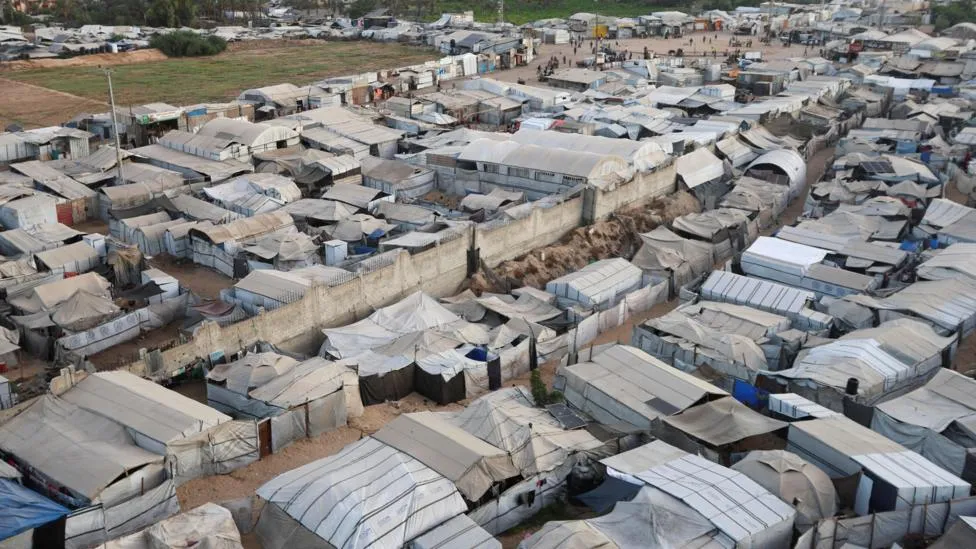
The incursion directly impacted vulnerable civilian populations residing in makeshift shelters and tents near the Nuseirat refugee camp. Evacuation orders had been issued shortly beforehand by the Arabic spokesperson for Cogat, the Israeli military body handling civilian coordination, warning residents in areas north of Nuseirat and Bureij to stay away and closing a section of the vital highway.
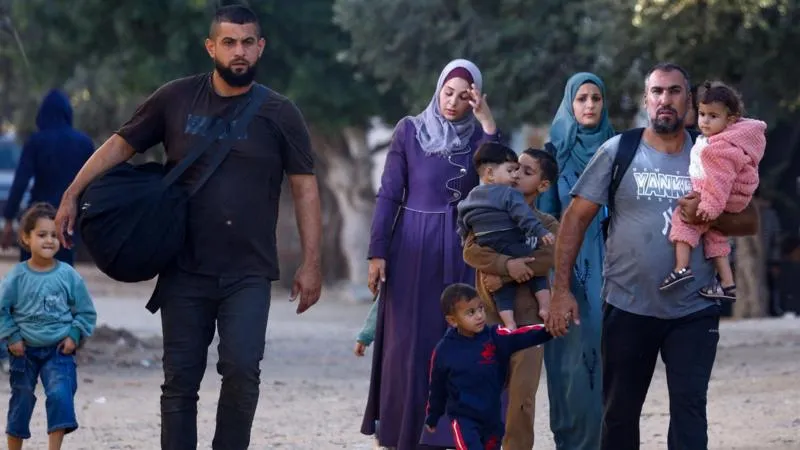
Footage verified by independent monitors captured families hastily fleeing on foot, carrying what belongings they could grab as automatic gunfire and explosions echoed through the area. Residents described indiscriminate firing near humanitarian zones, compounding an already catastrophic humanitarian crisis where over 90% of Gaza's population remains displaced.
Children carrying water containers amid flooded conditions in a makeshift camp for displaced people in Gaza.
How it unfolded
The escalation began early on Wednesday afternoon when military warnings were broadcast to residents in central Gaza. Shortly after, armored columns rolled past the Yellow Line—the boundary marking territory occupied by Israeli forces—into areas nominally outside their direct control.
According to the Israel Defense Forces and the Shin Bet security service, the joint operation was specifically targeted at dismantling a "terror tunnel" situated west of the Yellow Line that presented an immediate threat to deployed troops. Palestinian security sources and local witnesses, however, reported widespread shelling, airstrikes, and gunfire extending beyond the immediate target zone.
Amid the central Gaza advance, separate violent incidents unfolded across the strip. Medics reported fatalities in Nuseirat, Gaza City, and the central town of Deir al-Balah, though the military stated it was unaware of specific engagements in Deir al-Balah while confirming a strike against a militant in Gaza City.
A medical worker inspects the heavily damaged interior of a Gaza facility following an airstrike.
What the reports confirm
Both accounts verify that Israeli ground forces crossed the Yellow Line in central Gaza on Wednesday, utilizing tanks along the Salah al-Din road amid artillery support. They agree that the action forced displaced Palestinians living near the Nuseirat camp to flee their tents and that Hamas denounced the operation as a flagrant ceasefire violation.
Discrepancies appear in the broader political and statistical framing. While one report links the timing of the military action to domestic Israeli political maneuvering involving opposition politician Gadi Eisenkot and caretaker Prime Minister Benjamin Netanyahu, the other omits domestic political context entirely. Furthermore, cumulative casualty figures vary slightly between the sources, citing either 1,600 or 1,658 Palestinian deaths since the truce began.
Crucial details regarding the precise operational dimensions, the exact structural damage to the targeted tunnel, and verified casualty numbers specifically tied to the incursion remain unconfirmed by independent observers beyond general statements from local health authorities and the military.
The people involved
The operation involves the Israel Defense Forces and the Shin Bet internal security agency executing operations on one side, confronting the Palestinian armed group Hamas, which governs the remaining territory of Gaza outside the Israeli-occupied zones.
Civilians bear the heaviest burden of the renewed violence. Over 1.9 million displaced individuals—representing roughly 90% of Gaza's total population—live in precarious conditions, many squeezed into tents and makeshift camps that lack basic infrastructure. Local medics, hospital administrators, and international bodies like the United Nations and the US-backed Board of Peace navigate the deteriorating security environment.
On the political stage, figures such as Israeli opposition politician Gadi Eisenkot and caretaker Prime Minister Benjamin Netanyahu operate against a backdrop of intense domestic pressure, while international mediators attempt to salvage a stalling peace framework.
Why it matters
This ground operation represents the first physical crossing of the Yellow Line since the October 2025 truce, piercing the fragile architecture holding the ceasefire together. For the 2.1 million residents enduring dire living conditions, the incursion brings immediate danger, further displacement, and the destruction of remaining shelters.
Politically, the breach tests the credibility of international oversight bodies, notably the US-backed Board of Peace, which recently warned that a ceasefire delivering no visible improvements to human security cannot endure. With reconstruction stalled and roughly 82% of Gaza's structures damaged or destroyed, any breakdown in territorial boundaries threatens to ignite a wider renewal of full-scale hostilities.
The background
The ongoing conflict was triggered by the Hamas-led attack on southern Israel on October 7, 2023, which resulted in about 1,200 deaths and 251 hostages taken. Israel's subsequent military campaign has resulted in over 74,000 Palestinian deaths.
A fragile ceasefire was brokered and agreed upon in October 2025, establishing a Yellow Line that partitioned approximately 60% of Gaza under Israeli occupation from the remainder. Despite the truce, low-level violence, daily strikes, and disputes over key issues—such as the full disarmament of Hamas and the phased withdrawal of Israeli troops—have kept tensions near boiling point.
International pressure has mounted persistently, with the UN and allied nations demanding rapid humanitarian access, while oversight boards report that the yawning gap between diplomatic agreements and ground reality puts the entire peace process at continuous risk of collapse.
Response and aftermath
Hamas condemned the operation as a dangerous escalation and a flagrant breach of the October agreement, pointing to the forced displacement of families as evidence of bad faith. The Israeli military defended its actions as necessary to eliminate immediate threats to its personnel and dismantle militant infrastructure.
International monitoring mechanisms have expressed grave concern over the stability of the truce. The Board of Peace warned in a recent report to the UN Security Council that the lack of tangible improvements for civilians leaves the entire arrangement extremely vulnerable.
On the ground, displaced families driven from Nuseirat are forced to seek shelter elsewhere without basic provisions like blankets or clothing, deepening the humanitarian emergency as aid access remains restricted.
What happens next
Diplomatic efforts face renewed scrutiny as international mediators evaluate whether the ceasefire can be pulled back from the brink. The Board of Peace and allied nations are expected to pressure both sides to pull back from escalatory moves and restore compliance with the October terms.
Domestically, political jockeying within Israel—including efforts to form alternative government coalitions—will heavily influence military posture in the coming weeks. Meanwhile, humanitarian organizations will attempt to address the urgent needs of newly displaced families while awaiting security clearances to begin long-delayed reconstruction efforts.
What we still don't know
Exact casualty figures specifically attributable to the Wednesday incursion have not been definitively separated from the broader daily toll of strikes across Gaza.
The precise tactical success of the joint military and security operation in neutralizing the alleged tunnel network remains unverified by independent third parties. Furthermore, the long-term impact of this boundary breach on the survival of the October 2025 ceasefire is not yet known.
Want more on this story? Our research assistant searches the latest reports across the web and explains what it finds, so you get the fuller picture in one place.