
Inside the Predatory Immigration Bail Ring Resurfacing Under New Names

An individual photographed in connection with immigration detention and bond experiences.
An investigation reveals how a notorious network of immigration bond companies, shuttered by federal regulators following an $811m penalty for predatory practices, has continued operations through a web of interconnected entities. Detained migrants and their families continue to face trapped funds, misleading fees, and delayed releases despite enforcement actions. The unfolding situation highlights ongoing vulnerabilities within the US immigration detention and bond system.
- CompanyLibre Immigration Services and Libre by Nexus
- Amount$811m fine issued in 2024
- Why nowContinued operations despite regulatory penalties and asset transfers
- StatusAssets sold for $3.50, sales voided by a federal judge, and ongoing legal reviews
What happened
Detained immigrants and their families seeking release through bail bonds have found themselves trapped in financial limbo by companies utilizing recycled assets from sanctioned operations. Friends and relatives wired funds to bond networks recommended by lawyers, only to experience extended detentions without bond payments being processed as promised.
Public records and interviews reveal that despite federal crackdowns and massive judicial penalties, interconnected operations have persisted, keeping migrants locked in detention centres while cash continues to flow through successor entities.

A client pictured outdoors during the period surrounding their bond processing.
How it unfolded
The pattern traces back to Libre by Nexus, which grew to become the largest immigration bail company in America after its founding in 2013. The firm acted as a middleman between immigrant clients and licensed bondsmen, taking in over $230m in revenue across a decade while imposing mandatory private GPS ankle monitors and non-refundable monthly fees.
Following a successful lawsuit by the Consumer Financial Protection Bureau, a federal judge fined the company, its parent company, and co-founders $811m in 2024 for running a predatory immigrant-services scam. Days after the order, co-founder Michael Donovan sold customer lists and assets for $3.50 to a businessman previously convicted of writing fake bail bonds, who then established Libre Immigration Services (LIS).
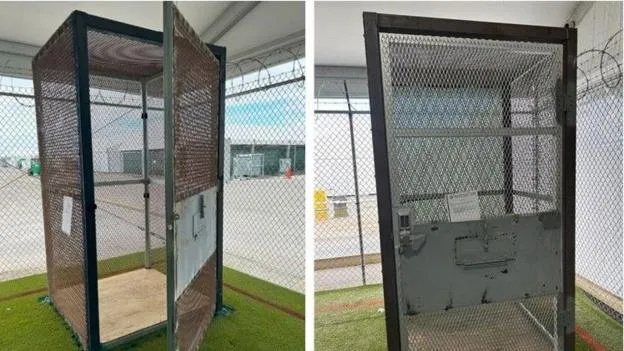
Outdoor holding structures documented by investigators at a detention facility.
The people involved
The network was initially co-founded by Michael Donovan and Richard Moore, both of whom had served prison time in the 1990s and early 2000s for fraud and forgery convictions. Moore is now in prison for filing fraudulent taxes, while both men await sentencing for insurance fraud and conspiracy, and Donovan faces a charge of sexually abusing a boy under 12.
Other key figures include former co-owner Evan Ajin, former employees who managed high daily call volumes, and Pennsylvania businessman Vincent Smith, who purchased the company's assets. Migrants such as Mildred Juarez and Rosa Murillo found themselves caught in the middle, enduring prolonged detention, confusing contract terms, and financial losses.
Why it matters
The persistence of these operations directly affects vulnerable immigrants navigating an immigration system marked by rising detentions and fast-tracked deportations under the administration. With bail amounts often exceeding $7,000 and traditional bondsmen viewing migrants as flight risks, families resort to alternative bond services out of desperation.
The resulting financial exploitation drains thousands of dollars from families while leaving detained individuals stranded in crowded facilities characterized by poor conditions, bright lights left on all night, and restricted communication.
The background
Immigrants charged with illegal entry can sometimes be granted bail by a judge, allowing them to live freely while their cases are heard over a period of years, after which the bond amount is returned. Because regular bail agents often refuse to help due to high perceived flight risks, specialized middlemen stepped in to bridge the gap.
However, regulatory scrutiny intensified after investigators found that companies misled clients into believing private GPS tracking bracelets were court-mandated and collected non-refundable fees disguised as program costs rather than bond payments.
Response and aftermath
Legal authorities have moved to dismantle the network, with Judge Elizabeth Dillon voiding the asset sale because it violated her previous order by transferring debts. The judge is also scheduled to review additional claims that LIS violated orders by attempting to build an application to collect debts from old Nexus clients.
Representatives for LIS have denied wrongdoing, asserting that the company connects clients to licensed bondsmen, that verification procedures caused necessary delays, and that business locations serve operational rather than client-facing functions. The White House and Homeland Security officials have not responded to requests for comment.
What happens next
Judicial reviews remain pending as the court examines whether successor entities breached transfer restrictions and debt collection prohibitions. LIS continues to advertise online and solicit clients through digital platforms, leaving regulators and advocates to determine how to prevent further exploitation of detained individuals.
Meanwhile, affected clients await promised refunds of their deposits, and former executives face ongoing criminal proceedings and sentencing hearings.
What we still don't know
The precise outcome of the pending court hearings and whether additional sanctions will be imposed on LIS have not yet been determined. Specific details regarding the total number of current clients affected by the transition from Nexus to LIS remain unquantified in public records.
Want more on this story? Our research assistant searches the latest reports across the web and explains what it finds, so you get the fuller picture in one place.