
Inside the Chokehold: Life and Survival Under the Siege of Taiz
A topographic map showing the mountainous terrain of Taiz and the surrounding Houthi-controlled territory.
Houthi rebel forces have fully encircled Yemen's third-largest city, Taiz, trapping between 600,000 and one million residents in a suffocating blockade. With basic staples, fuel, and medical supplies severely dwindling, civilians face daily shelling, sniper fire, and a collapsing healthcare system. While local authorities report mounting civilian deaths from both direct attacks and supply shortages, Houthi leadership denies the city is under siege.
- LocationTaiz, Yemen
- StatusFully encircled and cut off by Houthi rebel forces
- Population affectedEstimated between 600,000 and 1 million
- Casualties reported148 civilians killed by Houthi attacks since August (local government figures)
- Key shortagesFood staples, cooking oil, clean water, fuel, and medical supplies
Photos
6 photosWhat happened
Houthi rebel forces have tightened their grip on Taiz, Yemen's third-largest city, fully encircling the government-controlled area and cutting its population—estimated between 600,000 and one million—off from the outside world. The city, ringed by jagged mountains and rebel positions, has become a massive prison where only minimal amounts of food can enter.
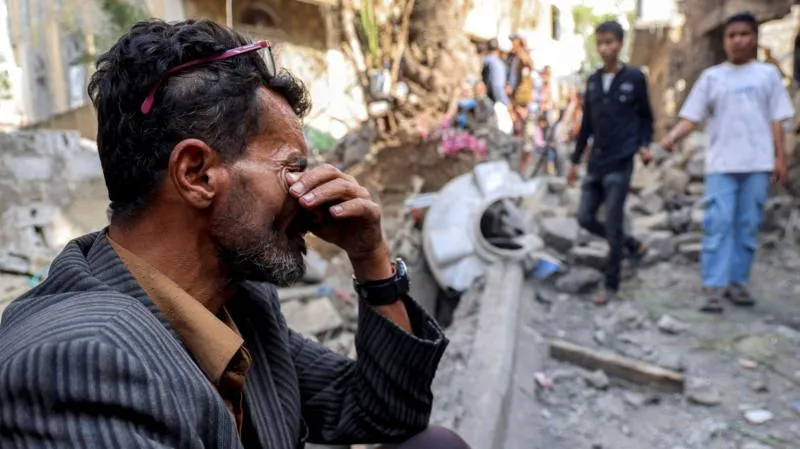
Streets that once bustled with traffic are now silent, punctuated only by the sounds of nighttime bombing and shelling. Essential services have collapsed, schools are closed, and uncollected rubbish piles up, creating toxic smoke when residents attempt to burn it.

A child stands near piles of uncollected rubbish trapped inside the besieged city.
How it unfolded
The strategic city of Taiz has served as a key front line in Yemen's long-running civil war, acting as a gateway to Aden and southern Yemen. Houthi forces originally reached the outskirts of the city in 2015, laying siege from three sides following their seizure of the capital, Sanaa, a year earlier.
Following a four-year lull, the conflict flared up as Houthi forces launched a lightning advance, culminating last month in a complete encirclement of Taiz. The renewed offensive has cut off all major transit routes and intensified military pressure through the use of advanced technology, including drones and increased sniper activity.
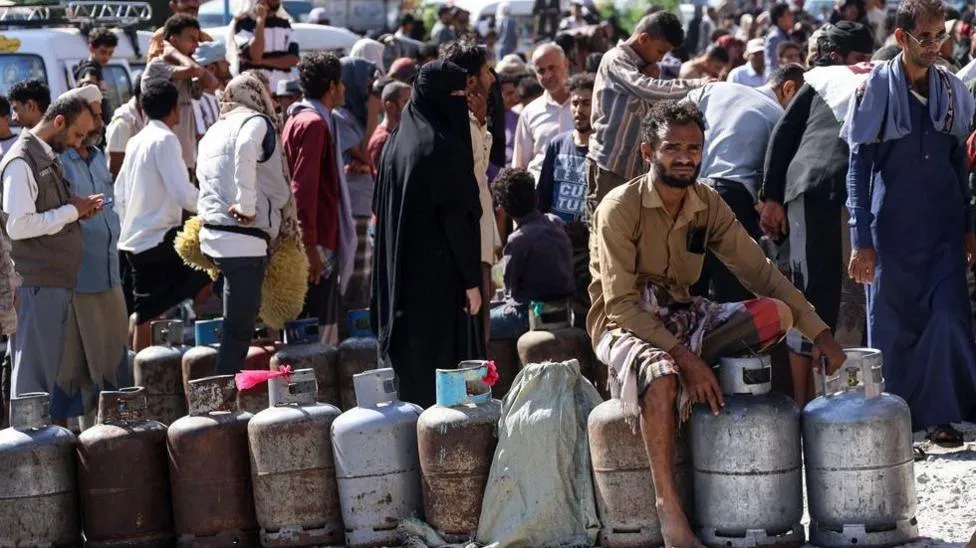
Residents queue with gas cylinders amid severe shortages of fuel and basic staples.
The people involved
Residents like Ashwaq, a teacher and mother, must constantly shield their children from the psychological and physical realities of war by disguising explosions as fireworks. Doctors within the city's straining hospitals struggle to treat patients—including children targeted by snipers—while operating on empty inventories with only weeks of supplies remaining.
Local authorities, including Taiz Governor Nabil Shamsan, remain inside the city living among the population, reporting daily burials driven by both direct violence and the collapse of medical and food supplies. Meanwhile, civilian volunteers and five pro-government brigades attempt to defend the area despite lacking heavy weaponry.
Why it matters
The siege directly threatens the lives and well-being of up to one million civilians trapped inside Taiz, plunging them into severe malnutrition and a growing health crisis as hospitals lose 70% of their capacity. Beyond the immediate humanitarian catastrophe, the battle carries deep cultural and political significance, with local officials warning that the Houthi forces aim to suppress the city's pluralistic character and impose strict religious doctrine.
Regionally, the escalation in Taiz mirrors a broader expansion of the conflict that threatens stability across Yemen and involves international actors, including Saudi-backed government forces and Iran-backed Houthi rebels.
The background
Yemen's civil war began more than a decade ago when Houthi rebels—a movement largely following a branch of Shia Islam—seized control of the capital, Sanaa. The internationally recognised government, weakened and fractured, has struggled to reclaim north-western Yemen despite receiving air support and backing from Saudi Arabia.
Taiz has historically been known as a vibrant seat of learning, political pluralism, and a bastion of resistance against Houthi control. Its geographical position as a gateway to the temporary government seat of Aden makes it a vital prize for control over southern Yemen.
Response and aftermath
Houthi leader Abdul Malik al-Houthi has publicly denied that Taiz is under a siege, claiming late last month that routes remain open for food, medicine, and humanitarian aid. This assertion is strongly disputed by the local government, residents, aid agencies, and the United Nations.
Inside the city, residents express deep frustration and a sense of abandonment by both their own fractured government and the international community. Training camps have emerged for civilian volunteers seeking to join the defense, even as military veterans express fears for the survival of their families.
What happens next
With supply lines choked and hospitals operating on limited fuel and surgical liquids, medical facilities face total shutdown within weeks. Residents and local observers fear that if the blockade continues without outside intervention, the Houthis will consolidate total control, potentially eliminating all remaining resistance and settling scores with opponents.
Efforts to lift the blockade or secure humanitarian corridors remain stalled amid ongoing hostilities and disputed claims over the openness of transit routes.
What we still don't know
Independent verification of the precise daily death toll and casualty figures reported by the local government and hospital staff remains unavailable. The exact operational capacity and long-term defensive strategy of the pro-government brigades and untrained civilian volunteers are not fully detailed.
Furthermore, the specific terms or diplomatic initiatives, if any, being weighed by international bodies to break the humanitarian deadlock have not been disclosed.
Want more on this story? Our research assistant searches the latest reports across the web and explains what it finds, so you get the fuller picture in one place.