
Gaza Faces Generations of Toxic Hazard After Military Assault, Report Warns
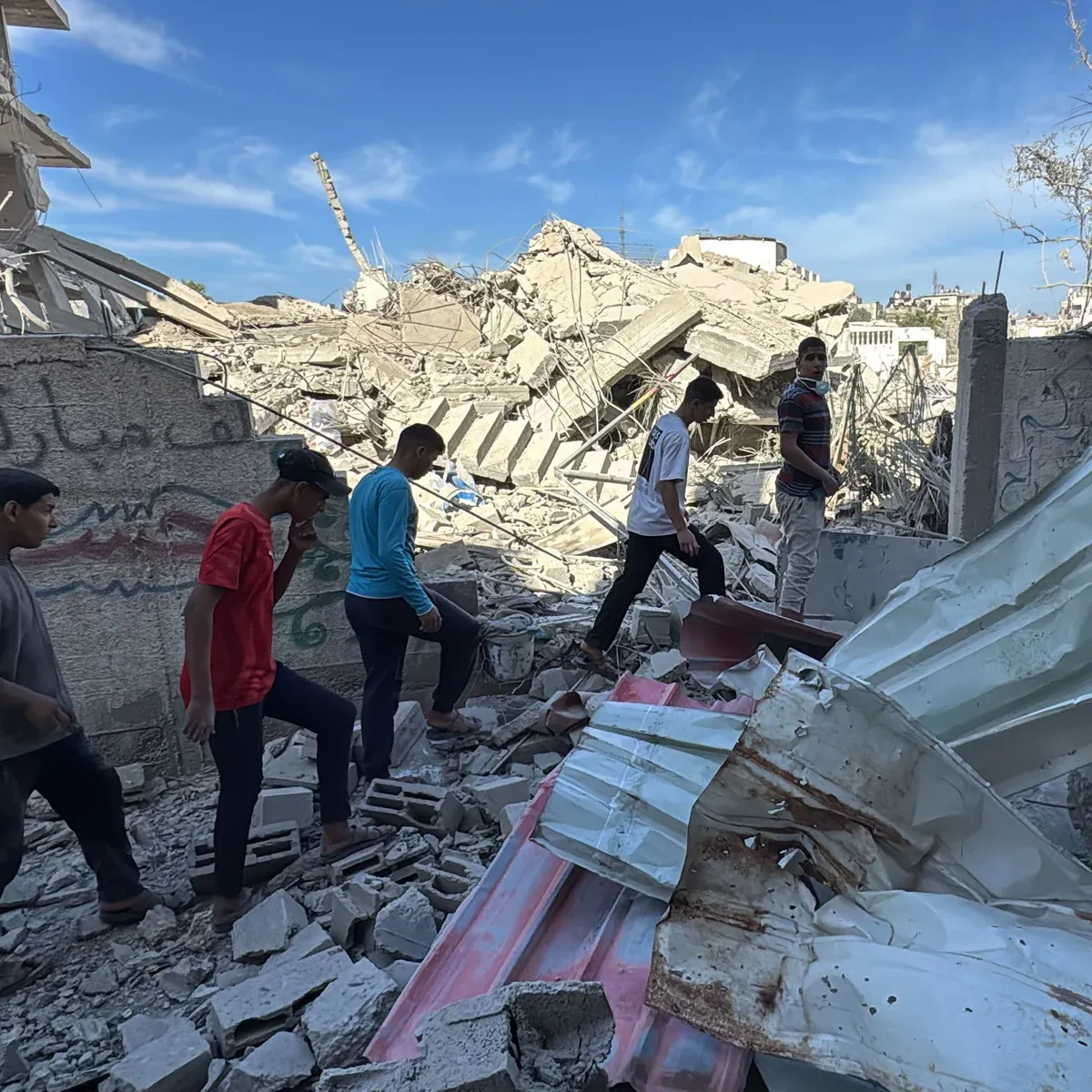
Young people navigate through heavy rubble and debris in Gaza.
A comprehensive report by international humanitarian and environmental organizations warns that Israel's military assault has left Gaza heavily contaminated with heavy metals, explosive residues, asbestos, and raw sewage. The widespread degradation of soil, air, and water systems poses severe public health threats that will persist for generations. Millions of tonnes of debris continue to block access and endanger civilians across the densely populated strip.
- LocationGaza
- Key OrganizationsOxfam, Conflict and Environment Observatory (Ceobs), UN Environment Programme (UNEP)
- CasualtiesMore than 74,000 Palestinians killed, at least 175,000 wounded
- Debris VolumeMore than 61 million tonnes
Photos
6 photosWhat happened
A collaborative report issued by Oxfam and the Conflict and Environment Observatory (Ceobs) has revealed that the military assault on Gaza has created a catastrophic environmental legacy. The investigation warns of poisoned water, contaminated soil, and toxic air that threaten the life-support systems of the entire territory.
Using satellite imagery, remote sensing, and open-source scientific analysis, the study outlines how heavy metals, explosive residues, hazardous asbestos from ruined structures, and raw sewage have permeated the urban and rural landscape. Analysts describe the territory as a toxic wasteland where continuous exposure to hazardous substances is virtually unavoidable for the civilian population.
How it unfolded
The widespread contamination developed across the Gaza Strip as continuous bombardment reduced homes, neighborhoods, and essential infrastructure to ruins. According to estimates by the United Nations Environment Programme (UNEP), military operations have generated more than 61 million tonnes of debris across the territory.
With sanitation systems severely damaged, raw sewage has poured directly into the sea and leaked into underground aquifers. Experts note that unexploded ordnance continues to block safe access to large portions of the land, heavily restricting any immediate cleanup efforts or detailed on-the-ground assessments.
The people involved
Amitabh Behar, the executive director of Oxfam International, condemned the military actions as environmental war crimes that breach international humanitarian law. He emphasized that vulnerable groups, particularly pregnant women and children, face the highest risks from prolonged exposure to toxins.
Lama Abdul Samad, a global water and sanitation specialist at Oxfam and author of the report, underscored the immense logistical challenges involved. She pointed out that contamination is widely dispersed across farmland, water networks, and urban rubble, requiring highly specialized remediation.
Why it matters
The degradation of Gaza's environmental safety conditions presents severe, long-term public health consequences that will endanger generations of Palestinians. Because the population is densely packed into a small area with virtually no means of escape or protection, inhabitants are continuously surrounded by disease-spreading waste and hazardous pollutants.
Experts stress that focusing solely on physical reconstruction without addressing invisible toxic hazards risks cementing a permanent public health crisis. Safe survival depends entirely on prioritizing comprehensive clean-up, environmental remediation, and monitoring alongside rebuilding efforts.
The background
The Gaza Strip is a densely populated coastal enclave that has experienced prolonged conflict and blockade, severely straining its basic infrastructure even prior to the current escalation. Water and sanitation systems were already vulnerable before the latest military assault dramatically accelerated environmental collapse.
In related international legal proceedings, independent UN commissions of inquiry have examined actions in the region, while leaders such as Israeli Prime Minister Benjamin Netanyahu face separate scrutiny and warrants from the International Criminal Court (ICC) related to war crimes allegations.
Response and aftermath
Humanitarian organizations are calling on Israel to immediately grant access for specialized environmental assessment teams to enter the territory. Such access is considered vital to accurately measure toxicity levels and formulate effective harm-reduction strategies.
Meanwhile, the Israeli government has been approached for comment regarding the findings of the Oxfam and Ceobs report. International bodies continue to debate how environmental recovery can be integrated into future international rebuilding initiatives.
What happens next
International attention is increasingly turning toward the eventual reconstruction of Gaza, though humanitarian agencies insist that environmental restoration must happen concurrently rather than as an afterthought. Extensive clearance of explosive remnants and specialized soil decontamination must take place before affected areas can be certified as safe.
Researchers and specialists will continue to monitor satellite data and open-source intelligence to track the spread of pollutants through groundwater and coastal ecosystems while awaiting ground access for physical sampling.
What we still don't know
The precise concentration levels of specific heavy metals and organic pollutants across individual neighborhoods remain difficult to quantify without direct on-the-ground sampling. Furthermore, a concrete timeline for when independent environmental teams might be permitted entry to conduct thorough ground assessments has not been established.
Want more on this story? Our research assistant searches the latest reports across the web and explains what it finds, so you get the fuller picture in one place.