
Four Dead and Dozens Missing After Migrant Boat Capsizes Off Senegal
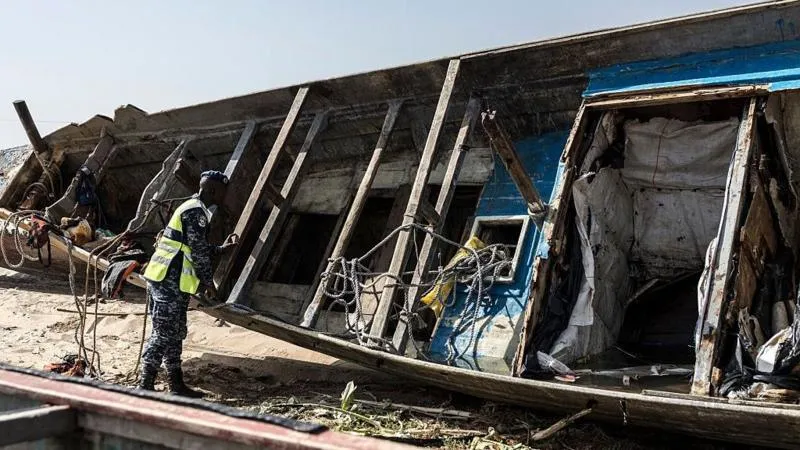
A law enforcement officer inspects the badly damaged wooden boat that washed ashore near the village of Yenne, south of Dakar.
Search operations are ongoing off the coast of Senegal after a migrant vessel capsized in the Atlantic Ocean near the village of Yenne. Four bodies have been recovered, while conflicting reports place the number of passengers between 50 and 100. The incident follows a recent surge in maritime disasters along the West African migration route toward Spain's Canary Islands.
- LocationYenne, south of Dakar, Senegal
- Casualties4 bodies recovered, dozens missing
- Estimated Passengers50 to 100 people
- Vessel TypePirogue (wooden boat)
What happened
Search operations are continuing in the Atlantic Ocean following the capsizing of a wooden boat carrying migrants near the Senegalese coast. Authorities have recovered four bodies so far, while dozens of individuals remain unaccounted for.
The badly damaged vessel washed ashore near the village of Yenne, located south of the capital city of Dakar. Personal belongings, identity documents, mobile phones, and a school enrolment document were subsequently recovered from the wreckage by police.
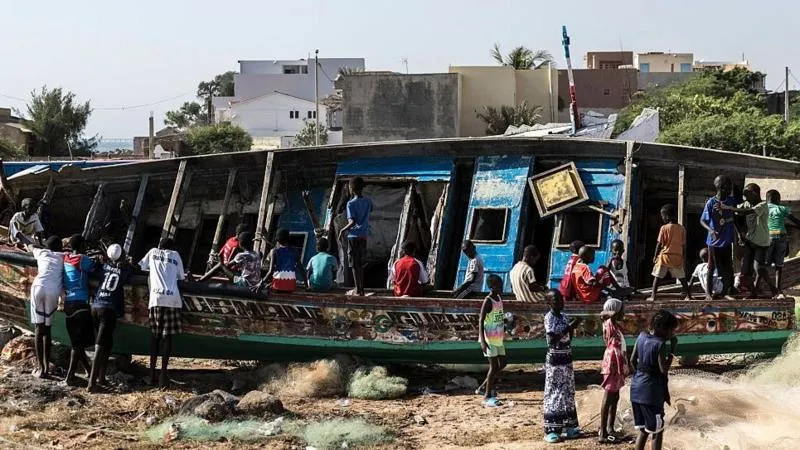
Local residents gather near the wreckage of the pirogue on the beach following the disaster.
How it unfolded
The tragedy occurred at approximately 02:00 local time (02:00 GMT). Oumar Sow, a representative of the village chief, reported that cries coming from the pirogue—a traditional wooden boat—were audible from the beach.
Accounts regarding the scale of the voyage differ. A survivor questioned by police stated that roughly 100 people were on board, including five women. Conversely, a local official informed news agencies that the vessel was carrying 50 people and struck a rock while migrants were transferring from small fishing boats to a larger vessel.
Search operations continued throughout Wednesday and were scheduled to resume on Thursday.
The response and aftermath
In response to the disaster, Senegalese President Diomaye Faye addressed a cabinet meeting on Wednesday, expressing concern over a renewed increase in irregular departures toward Europe. He instructed the interior ministry to compile a report examining the driving factors behind these dangerous journeys and proposing concrete measures to tackle the problem.
This incident follows closely behind another major maritime disaster less than two weeks prior, when a shipwreck off the north-western town of Thieppe killed at least 39 people. Following that earlier tragedy, President Faye had publicly urged citizens not to risk their lives attempting sea crossings.
The background
Thousands of people from West Africa attempt hazardous sea voyages each year to flee poverty, conflict, or authoritarian rule. Migrants frequently utilize wooden pirogues that are heavily overloaded and poorly equipped for long voyages across the Atlantic Ocean.
As tighter border controls and increased cooperation with European nations have made North African routes more difficult to navigate, migrants are increasingly targeting Spain's Canary Islands. According to United Nations data, most migrants arriving in the Canary Islands this year originate from Senegal. The International Organization for Migration (IOM) notes that departures are driven by limited local employment opportunities, family pressures, and established migration networks.
The scale of the migration pressure is stark: on the Canary Island of El Hierro, a state of emergency was declared on November 7 following a surge of more than 3,300 arrivals in about 30 boats over the course of roughly two weeks—amounting to nearly a third of the island's total population. Across the wider region, the UN's migration agency recorded at least 454 deaths and disappearances off the West African coast this year alone, warning that the true figure is likely an underestimate due to unrecorded wrecks. Meanwhile, the Senegalese navy reported rescuing more than 1,400 people over a two-day period earlier in the week.
What we still don't know
Exact figures regarding the total number of passengers aboard the capsized vessel remain unconfirmed, with estimates ranging widely between 50 and 100 individuals. The precise number of people still missing is also yet to be finalized as search and rescue operations proceed.
Want more on this story? Our research assistant searches the latest reports across the web and explains what it finds, so you get the fuller picture in one place.