
Dual Executions Highlight Aging US Death Row Population Amid Scrutiny
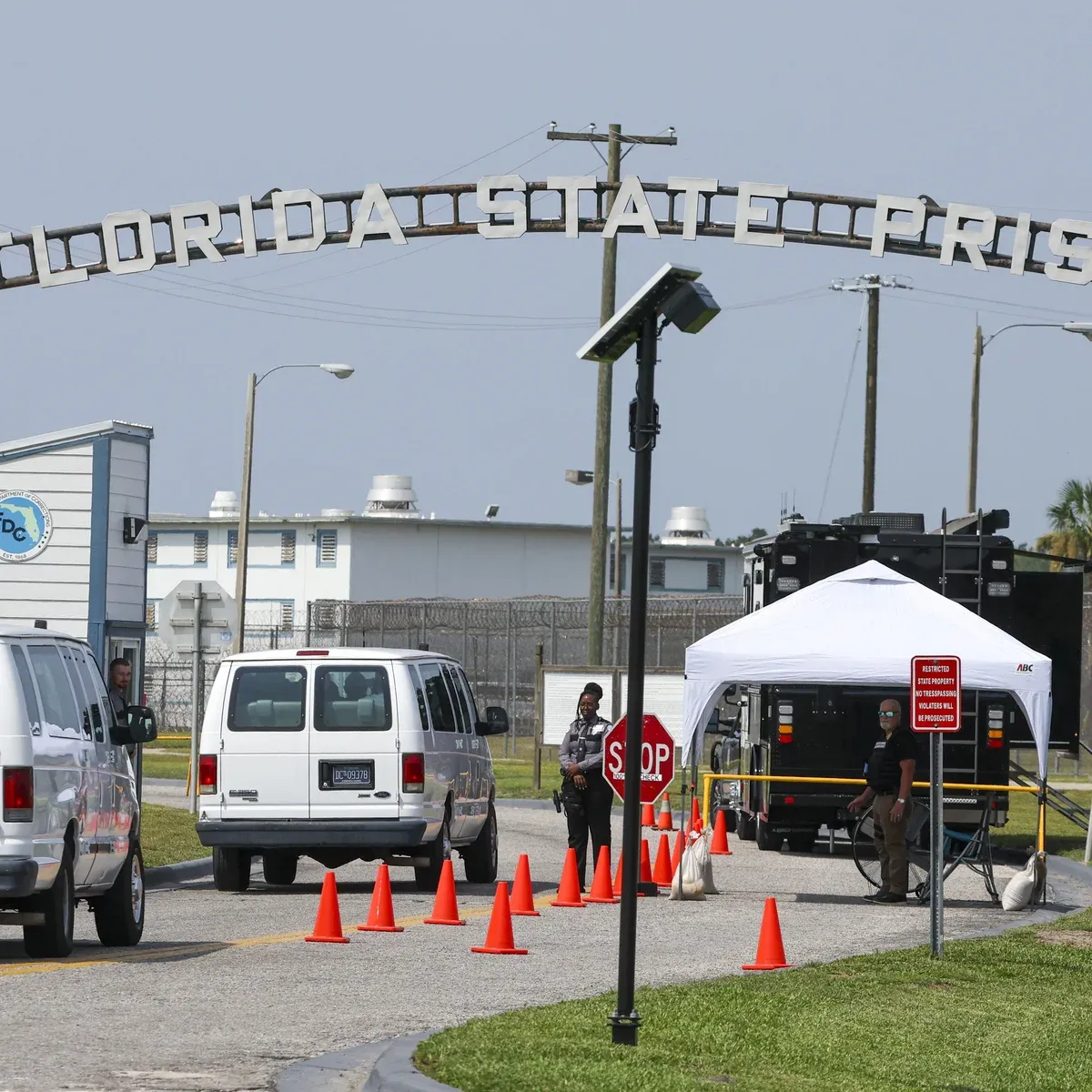
Vehicles and security personnel outside the gates of Florida State Prison in Raiford.
Texas and Florida carried out executions on Thursday involving two septuagenarian inmates, marking a significant milestone as Florida reaches a record number for the year. The procedures occurred under heightened national scrutiny following recent legal and procedural debates surrounding capital punishment. Officials in both states confirmed the completion of the sentences after final appeals were denied.
- DateThursday
- InmatesReinaldo Dennes (Texas) and Thomas Mitchell Overton (Florida)
- Ages70 (Dennes) and 71 (Overton)
- State TotalsFlorida reached 20 executions this year; Texas reached 9
Photos
1 photosWhat happened
On Thursday, prison authorities in Texas and Florida carried out two separate executions on the same day. Reinaldo Dennes, 70, was put to death at the penitentiary in Huntsville, Texas, using a lethal dose of the sedative pentobarbital. In Florida, 71-year-old Thomas Mitchell Overton was executed at the Florida state prison in Raiford via a three-drug injection.
The simultaneous events brought national attention to the aging demographics of inmates currently awaiting capital punishment across the United States. While Florida’s execution marked a record-breaking milestone for the state within a single calendar year, the procedure in Texas encountered notable procedural complications during administration.
How it unfolded
The execution in Texas took over an hour to complete after prison staff experienced difficulties finding a suitable vein for the two intravenous needles required for the sedative. Prior to the procedure, Dennes gave a brief statement before telling the warden to proceed. Almost immediately following the administration of the drug, he expressed distress and discomfort, vocalizing pain and pleading for relief.
The Texas procedure concluded at 7:07 pm, exactly 63 minutes after Dennes was strapped to the gurney. Following an examination by a physician, he was officially pronounced dead at 7:08 pm. Prison officials subsequently maintained that all established protocols were followed appropriately throughout the process.
In Florida, Overton woke up early on Thursday morning and remained compliant throughout the day without meeting visitors or a spiritual adviser. He received a three-drug injection and was pronounced dead at 6:19 pm. In his final statement, he maintained his innocence, asserting that he had never killed anyone.
The people involved
Reinaldo Dennes was previously convicted of capital murder for the 1996 killing of Janos Szucs, a diamond dealer and jeweler who was found shot multiple times inside his Houston office. Court documents indicated that Dennes had operated a jewelry business in the same building. A security guard who survived being shot during the incident identified Dennes as the attacker, and investigators found the victim's safe empty with missing cash and diamonds.
Thomas Mitchell Overton was convicted in 1999 of two counts of first-degree murder for the August 1991 deaths of Michael and Susan MacIvor and their unborn child during a home invasion in their Florida Keys residence. Autopsies revealed that both victims were strangled and that Susan MacIvor, who was eight months pregnant, had been raped. Investigators matched DNA evidence collected at the scene to Overton, who had previously worked at a nearby gas station.
Why it matters
The executions underscore broader trends regarding the aging population on death row in the United States and highlight differing state-level approaches to capital punishment. Florida's aggressive utilization of the death penalty under outgoing governor Ron DeSantis accounts for more than half of the country's total executions for the year.
Furthermore, the events unfolded amid intensified national scrutiny concerning execution protocols and methods. This increased attention follows recent procedural challenges and debates in other jurisdictions, bringing renewed focus to the legal and operational standards governing capital punishment.
The background
Capital punishment procedures in the United States have long been subject to intense legal review, appeals processes, and debates over methods of execution. Both Dennes and Overton had pursued legal avenues contesting their sentences up until the final hours before their respective procedures, with the US Supreme Court denying a final appeal in the Florida case while litigation remained active in Texas.
In the Texas case, Dennes's brother, Jose Albert Dennes, had also faced legal proceedings related to the 1996 murder, pleading guilty a year after Reinaldo Dennes's conviction and receiving a 45-year prison sentence before being released on parole in 2019.
What we still don't know
Specific medical evaluations detailing the exact reasons behind the venous access difficulties encountered by Texas prison staff have not been fully detailed outside of official assertions that all guidelines were followed. Additionally, the complete financial accounting of the missing assets from the 1996 Houston robbery remains unresolved, as the diamonds involved have never been recovered.
Want more on this story? Our research assistant searches the latest reports across the web and explains what it finds, so you get the fuller picture in one place.