
Army Delays Toxic Explosives Blast in Iowa After Public Outcry
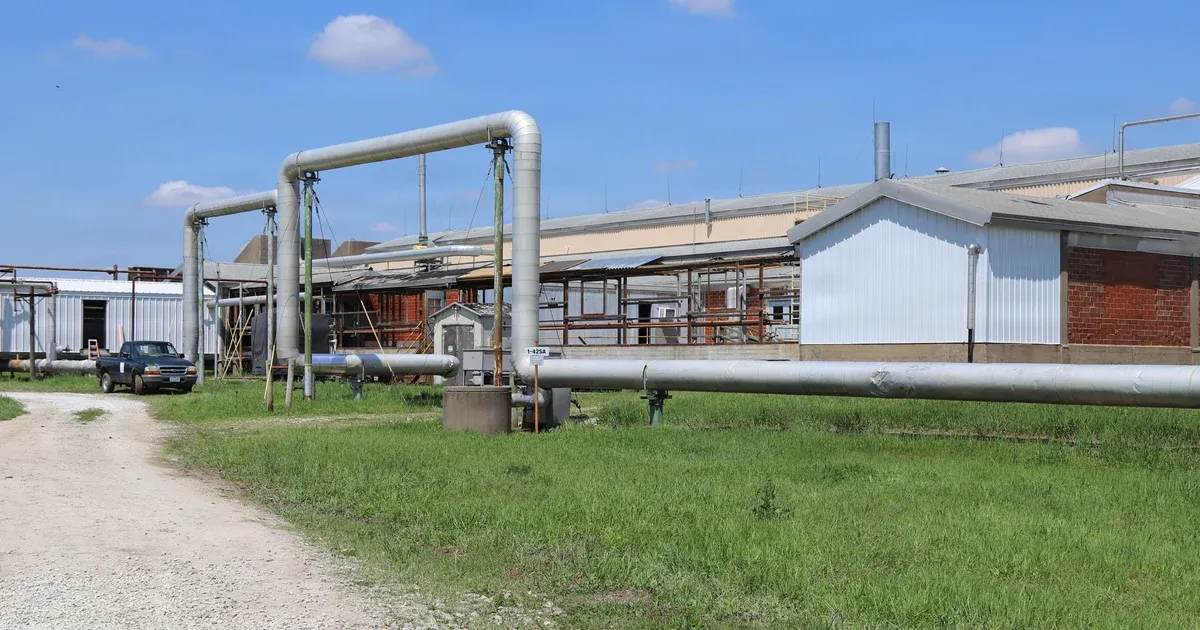
An exterior view of structures and industrial piping at the Iowa Army Ammunition Plant in Middletown, Iowa.
The U.S. Army has postponed a controversial controlled detonation of deteriorating lead azide explosives at a munitions plant in Middletown, Iowa. The decision follows fierce pushback from elected officials, environmental lawsuits, and anxious residents worried about a toxic lead dust plume spreading across Iowa and Illinois. Military officials insist detonating the unstable material in place is the safest option to prevent accidental explosions.
- LocationIowa Army Ammunition Plant in Middletown, Iowa
- Material68 barrels totaling about 5 tons of deteriorating lead azide
- Original ScheduleFriday, November 20 at noon CT
- New ScheduleMonday, November 23
- Key Decision MakerActing Secretary of the Army Adam Telle
Photos
2 photosWhat happened
The U.S. Army abruptly delayed plans to conduct a controlled explosion of highly sensitive explosives stored at the Iowa Army Ammunition Plant in Middletown, Iowa. The operation, which involves destroying 68 barrels of deteriorating lead azide, was postponed following intense pressure from lawmakers, environmental organizations, and local residents concerned about toxic lead dust spreading across parts of Iowa and Illinois.
The controlled blast was originally scheduled for Friday noon before Acting Secretary of the Army Adam Telle announced it would be pushed to Monday. Telle stated that the delay avoids unfavorable weather conditions while keeping the timeline tight before a forecasted temperature drop that could further destabilize the aging chemicals.
How it unfolded
Earlier this year, a routine check at the military installation revealed that water and ethanol in storage bunkers had partially evaporated, causing the lead azide to recrystallize and become dangerously sensitive to friction and shock. Military officials concluded that transporting or moving the unstable material posed an unacceptable risk of accidental detonation that could harm technicians, leaving in-place detonation as the only viable disposal option.
As word of the impending blast spread, local residents made preparations to seal their homes or temporarily evacuate. Simultaneously, environmental groups including Earthjustice filed a lawsuit in the 8th U.S. Circuit Court of Appeals to block the emergency permit issued by the U.S. Environmental Protection Agency, arguing that the public was given inadequate notice and insufficient safety data.
The people involved
Acting Army Secretary Adam Telle directed the postponement through statements on social media, emphasizing that public safety remains the Army's top priority. Local public affairs specialists such as Justine Barati explained the technical constraints and storage history to the public.
Elected officials including U.S. Senators Tammy Duckworth and Dick Durbin of Illinois sharply criticized the initial planning and communication, demanding greater accountability and community briefings. Meanwhile, local residents like Pam Munce and Garrett Anthony expressed deep anxiety, taking matters into their own hands by planning temporary evacuations or sealing windows against the anticipated dust.
Why it matters
The delayed operation highlights the severe hazards associated with aging military ordnance stored near civilian populations. The planned detonation threatens to release a plume of toxic lead dust over agricultural land, playgrounds, and residential areas in eastern Iowa and northwest Illinois.
Because lead is a toxic heavy metal that does not degrade naturally, any surface deposition risks long-term soil and water contamination. Public health experts have warned that even low-level lead exposure poses serious neurological risks to young children and pregnant women.
The background
The Iowa Army Ammunition Plant, located in the small community of Middletown, has a long history of military production and is listed on the federal Superfund program for hazardous waste cleanup. Lead azide has been utilized as a sensitive primary explosive in military ammunition since World War I.
For more than two decades, the barrels in question were stored safely in earthen-covered containers while submerged in a stabilizing bath of ethanol and water. However, the unexpected evaporation discovered during recent inspections disrupted this containment strategy, creating an urgent disposal crisis.
Response and aftermath
In response to widespread public concern, a bipartisan coalition of lawmakers from Iowa and Illinois urged the Pentagon and the EPA to halt the operation and evaluate alternative safety measures. Public advisory maps warned residents within the projected impact zone to stay indoors with windows closed during the blast.
The Army has defended its mitigation strategy, noting that the explosive barrels are surrounded by concrete, buried under soil, and buffered by two-story sand walls, alongside soil-wetting and air-monitoring protocols designed to capture the majority of the lead dust on military property.
What happens next
The controlled detonation is currently rescheduled for Monday, November 23, pending weather conditions and ongoing legal challenges. Because wind patterns will differ from the original Friday schedule, the resulting dust plume may travel in a different direction, potentially impacting new communities.
Federal and state regulators will evaluate real-time meteorological data to ensure wind speeds and atmospheric stability comply with the strict parameters outlined in the EPA emergency permit before any explosive action is taken.
What we still don't know
It remains unclear how the courts will rule on the emergency lawsuit filed by environmental organizations seeking to invalidate the EPA permit. Furthermore, the exact quantity of lead dust that will escape containment and the definitive localized exposure levels cannot be known until post-detonation environmental sampling and cleanup measures are completed.
Want more on this story? Our research assistant searches the latest reports across the web and explains what it finds, so you get the fuller picture in one place.