
Amtrak Train Derails in Louisiana After Striking Bulldozer-Carrying Truck
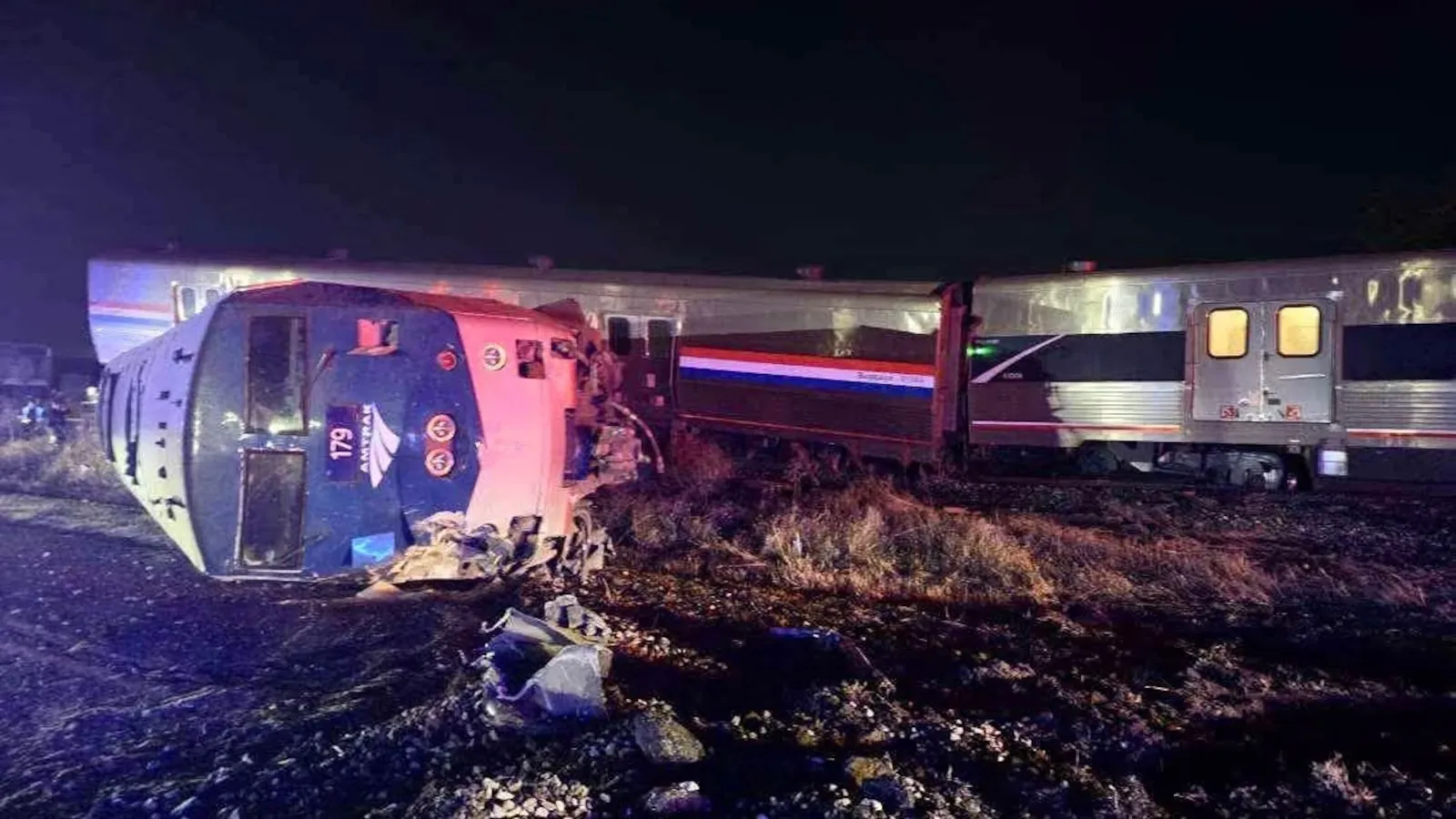
The lead locomotive of the Amtrak train derailed and sitting upright in a field next to the tracks following the collision.
An Amtrak passenger train carrying 95 customers partially derailed in Louisiana on Sunday evening after colliding with an 18-wheeler truck hauling a bulldozer. Emergency responders confirmed that five individuals suffered minor injuries, while all passenger cars stayed upright. Passengers were safely evacuated from the scene and provided with alternative transport.
- WhenSunday at approximately 6:15 p.m. local time
- WhereEast of Lafayette, Louisiana
- WhoAmtrak passengers, Lafayette Fire and Police departments
- CasualtiesFive minor injuries
- StatusScene cleared, passengers provided alternate bus transportation
Photos
3 photosWhat happened
An Amtrak passenger train collided with a heavy semi-truck on Sunday evening in Louisiana, resulting in a partial derailment of the rail service. The crash occurred east of Lafayette when the train struck an 18-wheeler that was hauling a bulldozer across a railroad intersection.
The impact forced the train's lead locomotive and two baggage cars off the tracks, sending one rail car into a nearby field. Despite the severity of the collision, all passenger carriages remained upright, preventing a far more catastrophic outcome for the nearly one hundred people on board.
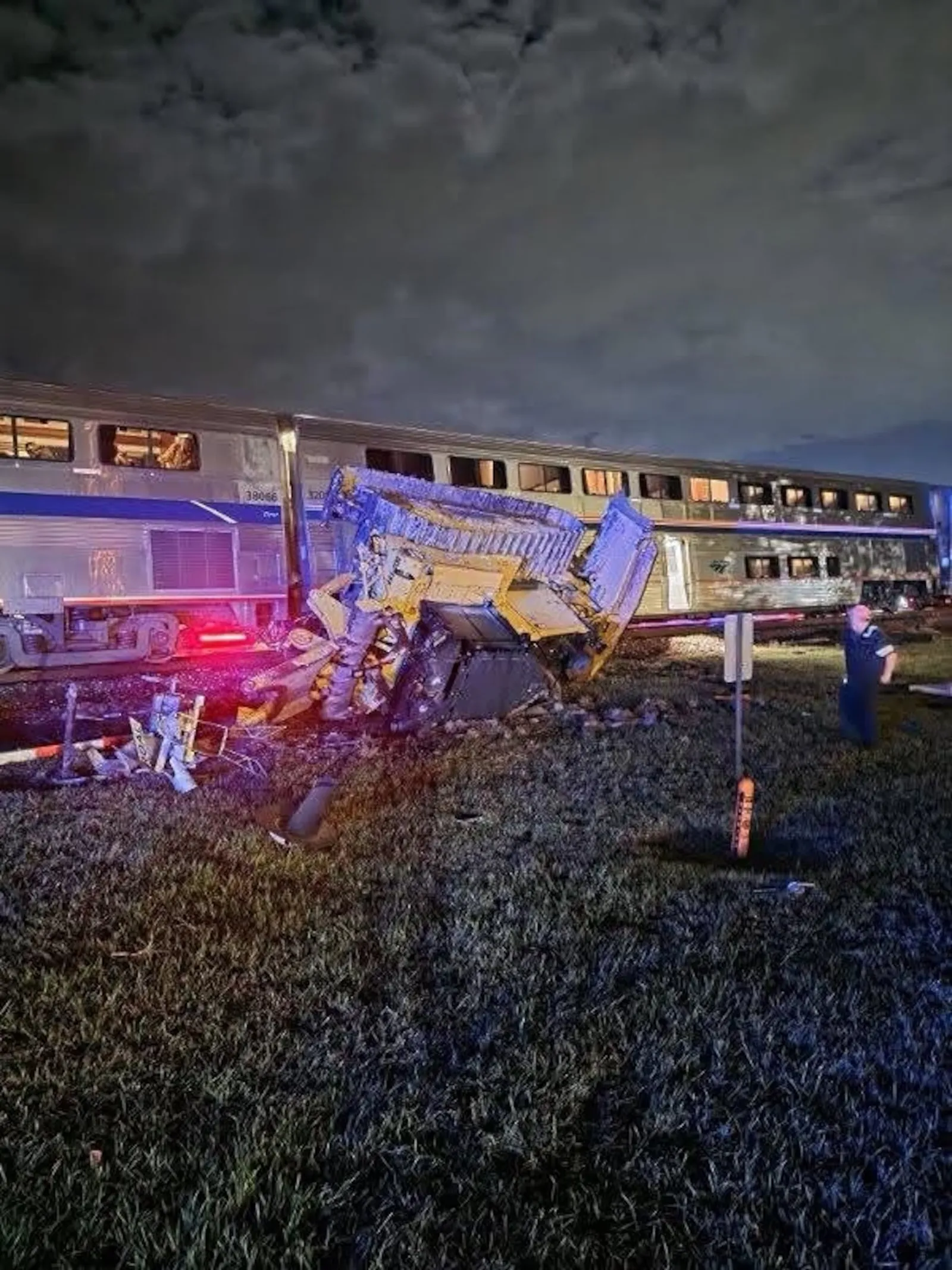
The heavily damaged bulldozer, torn apart from the impact, resting on its side next to the railroad tracks.
How it unfolded
The incident took place at approximately 6:15 p.m. local time on Sunday. As the train approached the railroad crossing, it impacted the heavy flatbed truck carrying the bulldozer, tearing apart major pieces of the industrial machinery and sending the truck onto its side next to the tracks.
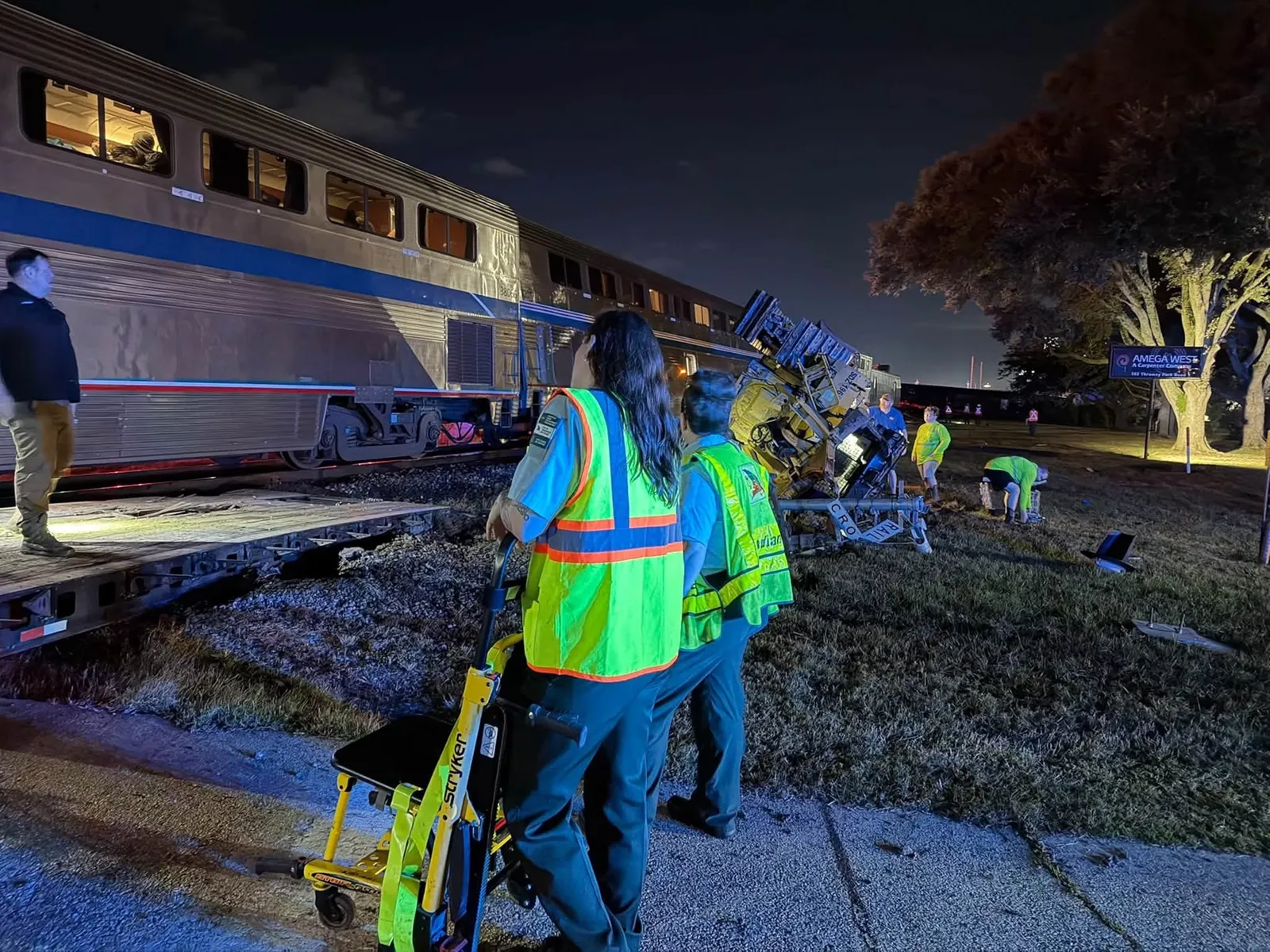
Emergency services quickly flooded the scene. Hazmat and rescue personnel evaluated the area to ensure it was safe for first responders to approach before assisting passengers with exiting the train alongside their luggage.
What the reports confirm
Official statements from Amtrak, the Lafayette Fire Department, and the Lafayette Police Department uniformly confirm that 95 customers were on board the train during the Sunday evening crash. Authorities from both emergency services and city leadership confirmed that exactly five people sustained minor injuries, with a small number being transported to a local hospital for evaluation.
While reports agree on the core sequence of events—the train hitting the truck, the derailment of the lead locomotive and two baggage cars, and the upright status of the passenger cars—specific details vary slightly. Local police noted that the truck was crossing an intersection at the time of the impact, and municipal leaders confirmed that alternate bus transportation was arranged to help stranded customers reach their final destinations.
The people involved
A total of 95 passengers were traveling aboard the Amtrak train when the crash occurred. First responders included units from the Lafayette Fire Department and the Lafayette Police Department, with Sgt. Ashley Wood providing updates on behalf of law enforcement and Mayor-President Monique Blanco Boulet commenting on passenger safety and injuries.
Emergency personnel, including hazmat and rescue teams, worked directly with the passengers to evacuate them securely once the wreckage and surrounding environment were deemed safe.
Why it matters
Railway crossings involving heavy commercial transport vehicles present severe safety hazards across national transportation networks. When accidents involve industrial equipment such as bulldozers being hauled on flatbed trucks, the structural integrity of locomotives and passenger cars is severely tested.
Although injuries were fortunately limited to five minor cases in this instance, such collisions disrupt critical passenger rail corridors, strand travelers far from their destinations, and necessitate immediate multi-agency emergency responses to secure hazardous materials and clear blocked tracks.
The background
Amtrak, formally known as the National Railroad Passenger Corporation, operates intercity passenger train service across the United States. Rail crossings where public roads intersect with train tracks are frequent sites of transit accidents, particularly when large commercial vehicles or heavy machinery are involved in transport across rural and suburban intersections.
Lafayette is situated in southern Louisiana, where regional rail lines intersect with major roadways utilized by industrial and construction transport vehicles.
Response and aftermath
Emergency response teams, including fire and rescue units, secured the crash site to prevent secondary hazards from fuel leaks or unstable wreckage. Firefighters established a secure evacuation corridor, assisting travelers off the compromised train cars.
Local authorities ensured that uninjured passengers were transferred to buses so they could continue their journeys. Meanwhile, municipal officials and emergency spokespeople coordinated public updates regarding the status of the injured.
What happens next
Transportation authorities and rail investigators will examine the circumstances surrounding the truck's presence on the railroad crossing at the time of the train's approach. Crews will be required to clear the derailed locomotive, baggage cars, and the heavily damaged bulldozer from the right-of-way.
Repairs to the damaged tracks will need to be completed before normal rail schedules can resume along the affected route.
What we still don't know
Available reports do not specify whether the truck driver or any train crew members were among those injured. The exact reasons why the 18-wheeler was stationary or moving slowly across the tracks when the train arrived have not yet been established.
Furthermore, official estimates regarding the financial cost of the damage or a definitive timeline for reopening the blocked rail line have not been released.
Want more on this story? Our research assistant searches the latest reports across the web and explains what it finds, so you get the fuller picture in one place.