
A Landmark Verdict at the World Court Tests the Boundaries of State Accountability
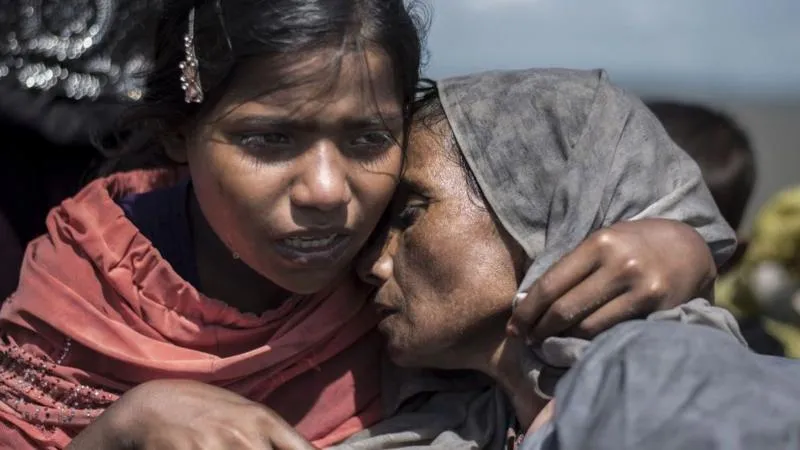
Rohingya women embrace and express deep emotional distress.
The International Court of Justice delivers its verdict on Thursday in a historic genocide case brought by The Gambia against Myanmar over the brutal 2017 military campaign against the Rohingya Muslim minority. If found guilty, Myanmar would become the first state in history condemned for genocide by an international tribunal. While the ruling carries no enforcement penalties or right of appeal, it represents a crucial moment of formal acknowledgment for over a million displaced refugees.
- WhenThursday (verdict reading)
- WhereInternational Court of Justice, The Hague
- WhoThe Gambia and Myanmar
- StatusAwaiting final court verdict
Photos
8 photosWhat happened
The International Court of Justice prepares to issue its verdict in a legal proceeding that could establish an unprecedented precedent in international law. No sovereign state has ever been formally found guilty of committing genocide since the Genocide Convention was established in 1948 following the Nazi Holocaust. The case centers on the violent events of August and September 2017 in Myanmar's Rakhine State, which resulted in the mass expulsion of hundreds of thousands of Rohingya into neighboring Bangladesh.
Journalists and human rights organizations have extensively documented widespread accounts of killings, torture, mass rape, and the systematic burning of Rohingya villages by Burmese security forces. While Myanmar authorities have consistently maintained that these actions constituted lawful military clearance operations directed against insurgent terrorist threats, investigators and legal teams argue that the state's actions formed part of a long-standing pattern aimed at destroying the minority population.
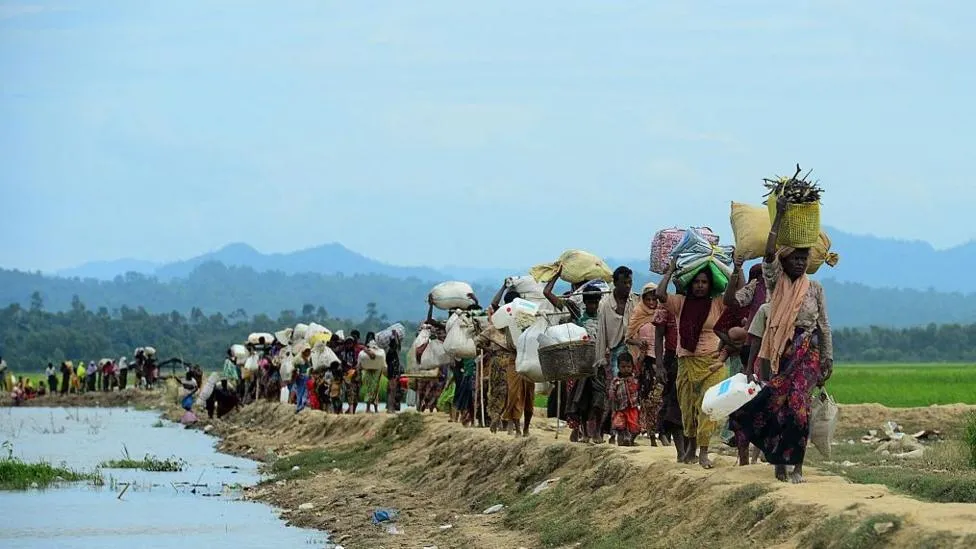
Rohingya refugees carrying belongings on a journey.
How it unfolded
Because Myanmar was not a signatory to the International Criminal Court, victims and international advocates lacked a traditional judicial venue to pursue accountability for crimes committed in Rakhine State. In November 2019, The Gambia stepped forward with backing from the Organisation of Islamic Co-operation to file a complaint at the International Court of Justice, asserting that all signatories to the Genocide Convention possess a legal interest in enforcing its prohibitions.
Myanmar strongly contested The Gambia's legal standing to bring the suit, but court judges ultimately ruled that the African nation was fully eligible to proceed. During the initial stages of the legal defense at The Hague, Aung San Suu Kyi personally led her country's delegation, arguing that while potential war crimes might have occurred, the military operations lacked genocidal intent. Following her removal in the 2021 military coup, control of the defense was transferred to legal teams appointed by the ruling military junta.
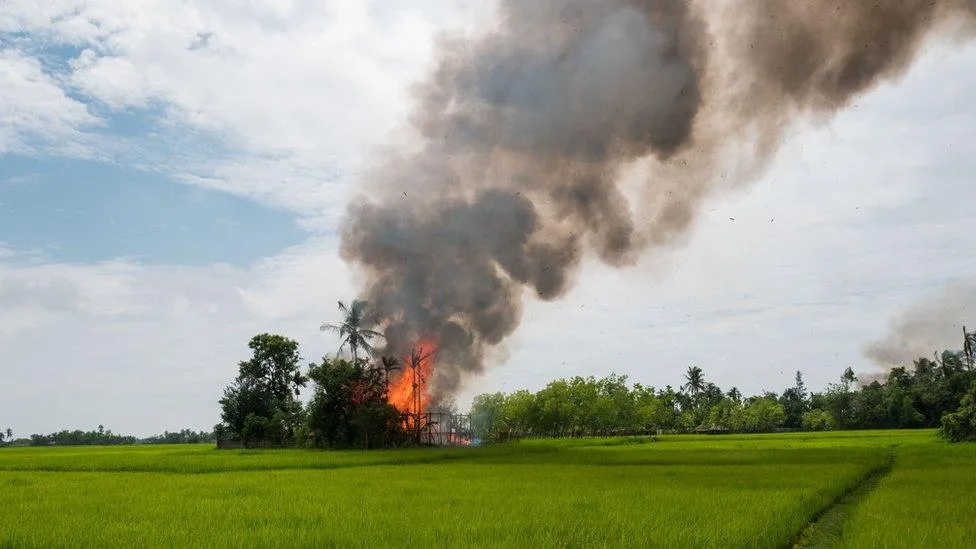
Smoke billows from a burning structure in a rural landscape.
The people involved
The legal action is spearheaded by Arsalan Suleman, the lead lawyer representing The Gambia, who argues that decades of institutionalized discrimination—including the 1982 citizenship law and severe restrictions on education, travel, and healthcare—demonstrate a clear intent to destroy the Rohingya. On the opposing side, the defense has shifted from civilian leadership under Nobel laureate Aung San Suu Kyi to representatives answering to General Min Aung Hlaing, who commanded the 2017 military operations and currently leads the government in Myanmar.
For the displaced Rohingya diaspora, the proceedings carry profound personal significance. Figures like Mohammed Nowkim, who fled the Rakhine town of Buthidaung in 2017 and now resides in Canada, view the trial as a long-overdue moment of formal recognition for decades of suffering, displacement, and official denial by the state.
Why it matters
A ruling in favor of The Gambia would place Myanmar alongside historical atrocities recognized under international law, tarnishing the international standing of the military regime currently governing the country. For the more than one million Rohingya refugees currently confined to impoverished camps in Bangladesh—where international funding has steadily declined and employment remains barred—a definitive genocide ruling offers a vital moral validation of their plight.
Beyond individual recognition, activists hope the judgment will galvanize renewed international diplomatic efforts to secure safe repatriation conditions. However, the practical impact remains constrained, as verdicts delivered by the International Court of Justice carry no formal enforcement mechanisms, financial penalties, or rights of appeal.
The background
The International Court of Justice was established in 1945 primarily to resolve legal disputes between sovereign states rather than to prosecute individual criminal culpability. Proving state-level genocide requires meeting an exceptionally high legal threshold, as courts typically demand evidence showing that destruction of a group was the only reasonable inference from the defendants' actions.
Previous landmark cases, such as Bosnia-Herzegovina's genocide lawsuit against Serbia filed in 1993, demonstrate the immense difficulty of proving state intent. In that instance, the court concluded that while specific atrocities like the 1995 Srebrenica massacre constituted genocide, the evidence fell short of proving that the state of Serbia itself harbored genocidal intent, though it was held responsible for failing to prevent the slaughter.
What happens next
Following the delivery of the verdict, the International Court of Justice will issue its final judgment without any option for appeal. Because the court possesses no independent police force or enforcement powers, compliance relies entirely on the international community and diplomatic pressure. While Western nations may distance themselves further from the military regime, Myanmar's leadership is expected to focus primarily on repairing relations with neighboring Asian states unlikely to alter their diplomatic posture based on the court's findings.
Meanwhile, the physical reality in Rakhine State presents severe obstacles to any future repatriation efforts. The region is currently engulfed in intense civil conflict between the Myanmar military and the insurgent Arakan Army, which has gained control over most of the territory with the backing of an indigenous population deeply hostile to the return of the Rohingya.
What we still don't know
It remains entirely unclear how the judges will rule on the specific question of whether Myanmar's state apparatus possessed the precise legal intent required to substantiate a charge of genocide. Furthermore, it is not yet known whether a historic guilty verdict will generate any tangible international consensus or coordinated policy framework capable of overcoming current regional conflicts and facilitating the safe return of displaced refugees to their homes.
Want more on this story? Our research assistant searches the latest reports across the web and explains what it finds, so you get the fuller picture in one place.