
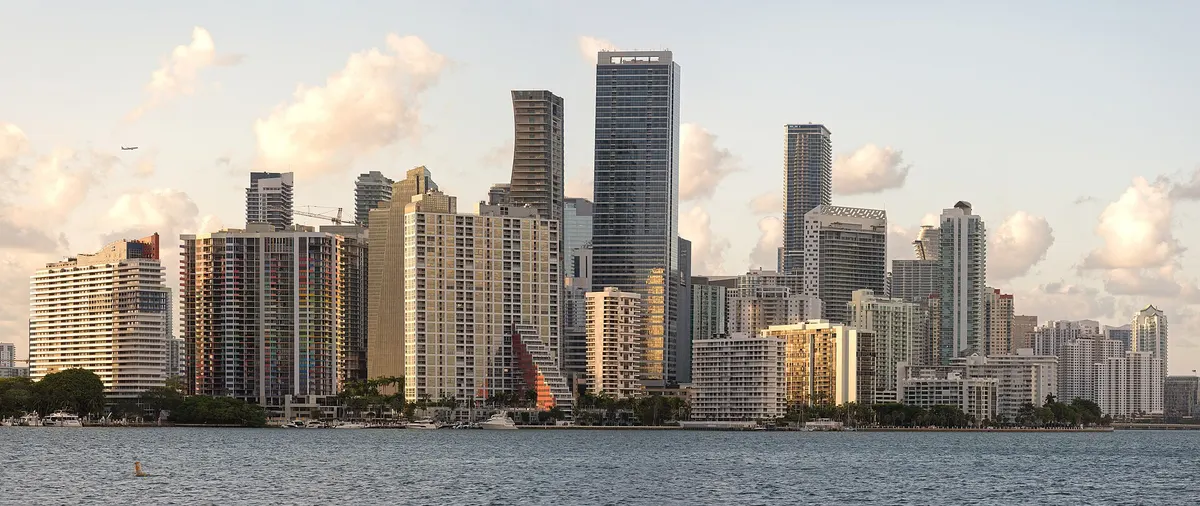
Grand Theft Auto VI has arrived after thirteen years of anticipation, bringing with it a virtual open world that has captivated players and experts alike. Beyond the expected action and crime narrative, the game's setting—a fictionalized version of Florida featuring Vice City and the surrounding swamplands—is being celebrated for its uncanny realism. Former residents and cultural commentators note that the game captures not just the major landmarks, but the specific banal beauty of the region.
Virtual city experts and academics explain that this high level of immersion stems from meticulous attention to environmental design and geography. Rather than building a complete one-to-one replica, the developers successfully captured recognizable snapshots of South Florida life that trick the human brain into feeling genuinely present in the location.
What happened
Before development began on Grand Theft Auto VI, developers from the UK-based studio Rockstar Games traveled directly to Florida to conduct field research. According to producer Rob Nelson, the team's starting point was the physical setting itself, visiting the Everglades, the Keys, and local cities to absorb the atmosphere. That on-the-ground approach manifests in the finished game through a staggering array of specific local details.
Players encounter functional public transit systems like buses and trains, sprawling suburban strip malls, flat roads, and weather-worn ranch houses alongside Vice City's neon-lit blocks. The game incorporates unique Florida eccentricities such as manatee-shaped mailboxes, sneaky tolls on palm-lined expressways, and encounters with alligators near bodies of water. Even minor regional quirks are represented, like hole-in-the-wall Cuban cafes serving cafecito, erratic local motorists prone to road rage, and coastal highways leading down toward the Keys.
Virtual city expert Emma Fraser, an assistant professor at UC Berkeley who studies urban ruins, notes that the game creates a discombobulating sense of place. While players intellectually know the environment is artificial, the correct lighting, coastlines, and major arterial roads convince the brain that it is experiencing a real location. The game's open world also features wildlife interactions in vast wilderness areas far from urban centers, alongside granular interactive details accessed smoothly through the hardware's controller interface.
Why it matters
Unlike many massively successful modern open-world games that rely on fantastical or fictional settings like Elden Ring or The Witcher, the Grand Theft Auto series trades in real-world familiarity. Fraser points out that this grounded approach gives the franchise a unique universal appeal because players already intuitively understand how a human city functions.
For real-world expatriates and current residents of South Florida, the game acts almost as an interactive memory box. Comedians and players have shared astonishment on social media over how accurately the title captures the specific visual textures of home, ranging from awkward median turns to tacky roadside businesses. By focusing heavily on the banal beauty south of downtown Miami rather than just glamorous tourist strips, the game elevates the emotional resonance of virtual spaces.
The background
Rockstar Games is a prominent video game developer internationally known for creating the blockbuster Grand Theft Auto franchise, which has spent decades pushing the boundaries of open-world computer and video game design. The series previously visited a fictionalized version of Florida in 2002's Grand Theft Auto: Vice City, but technological advancements over the subsequent decades have allowed for an exponentially deeper and more expansive virtual state.
Academic interest in virtual urban spaces has historically been sparse, but researchers like Fraser have increasingly turned their attention to video games as sophisticated digital representations of human geography, mapping, and civic navigation.
What happens next
As millions of players dive into the sprawling open world of Grand Theft Auto VI, public discussion continues to focus on how the game sets a new technological benchmark for digital environments. Specific long-term impacts on game design standards across the industry remain to be seen, as do any upcoming updates from Rockstar Games regarding further expansion content or platform-specific performance patches.
Key takeaways
- Grand Theft Auto VI features a fictionalized rendition of Florida that relies on granular, real-world detail to create an unprecedented sense of place.
- Developers from Rockstar Games conducted physical field research across the Everglades, the Keys, and local cities before development began.
- Urban experts note that the game's implied expansiveness tricks the human brain into feeling genuinely present in the digital environment.
- Ex-Floridians and current residents have praised the title for accurately capturing the banal beauty, strip mall sprawl, and local eccentricities of South Florida.