
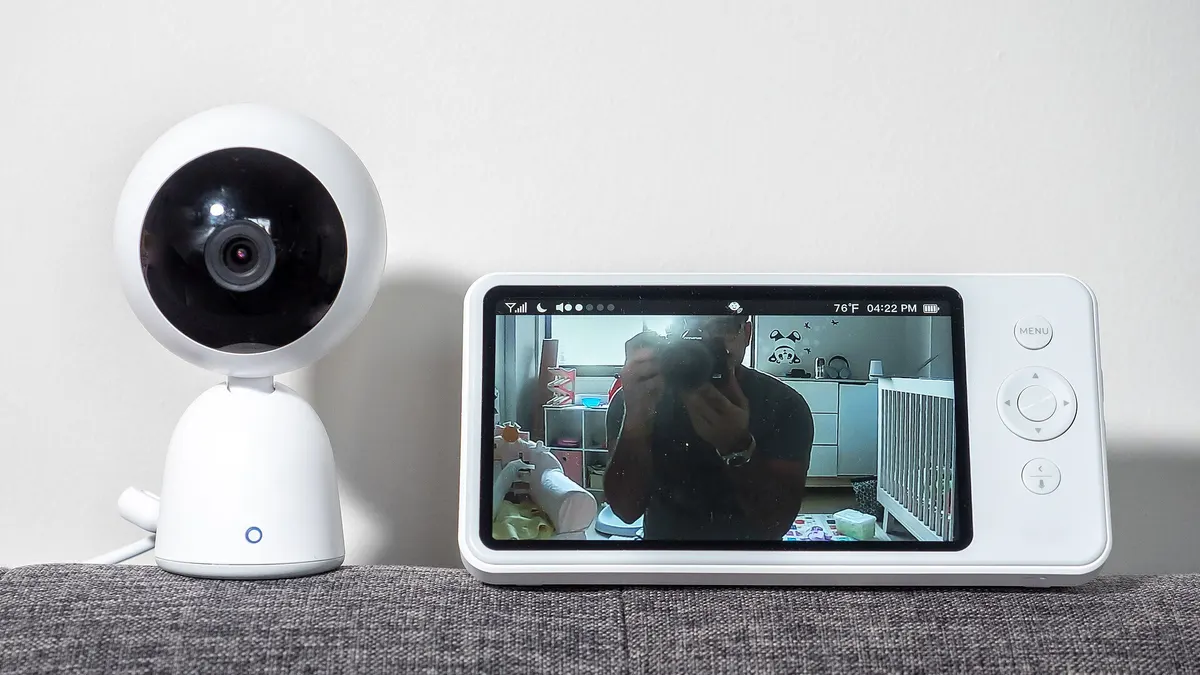
Moving a baby into their own room is a major milestone that often brings anxiety for parents. To manage this transition, a technology journalist and new mother spent time putting 17 different baby monitors through a rigorous testing process.
The review combined professional gadget-testing experience with real-world parenting, incorporating guidance from safe-sleep and privacy experts. The resulting analysis highlights which devices excel at the basics and how to choose the right features.
What happened
The tester selected 17 different baby monitor models covering a range of prices and features, mostly focusing on video options. To evaluate setup speed, a stopwatch app was used to time how long each unit took to get running. Image quality was tested by positioning cameras to view a cot filled with teddy bears, comparing video streams for clarity, colour consistency, and night vision using blackout curtains. Sound quality was tested by playing a podcast through a wireless speaker hidden among the bears.
For non-wifi models, range was tested by taking parent units on slow walks down the street until connection was lost. Battery life was evaluated by fully charging devices overnight, leaving screens on continuously, and checking power levels at hourly intervals. The monitors were also put through real-world conditions during actual naps and overnight sleeps. Models ranged from simple audio units to sophisticated video devices with apps, wearables, and sleep-tracking AI.
Why it matters
Parents face a confusing array of baby monitors promising everything from basic audio to advanced breathing tracking and AI sleep analysis. Choosing the right device directly impacts a parent's peace of mind, household security, and financial investment. Understanding the difference between useful functions and unnecessary gimmicks helps consumers avoid wasting money on devices that do not deliver reliable performance or adequate privacy.
The background
Baby monitors typically consist of a baby unit placed near the infant and a parent unit that receives audio or video. Modern video monitors often feature wifi connectivity, allowing parents to view live feeds through smartphone applications instead of dedicated parent screens. To ensure robust testing, the journalist consulted Jenny Ward, chief executive of the Lullaby Trust, regarding safe sleep, and Alexis Hancock, director of engineering at the Electronic Frontier Foundation, regarding privacy and security.
What happens next
Consumers navigating the crowded market can use these real-world findings to determine which features matter most. Future updates on specific models, including detailed performance notes on devices like the Momcozy monitor, will guide buyers seeking a balance of price, range, and reliability.
- A technology journalist and new mother tested 17 different baby monitor models to evaluate their real-world performance.
- Testing included measuring setup time, image clarity, night vision, sound quality, signal range, and battery life.
- The evaluation incorporated expert advice from the Lullaby Trust and the Electronic Frontier Foundation to ensure safe sleep and privacy standards were addressed.