
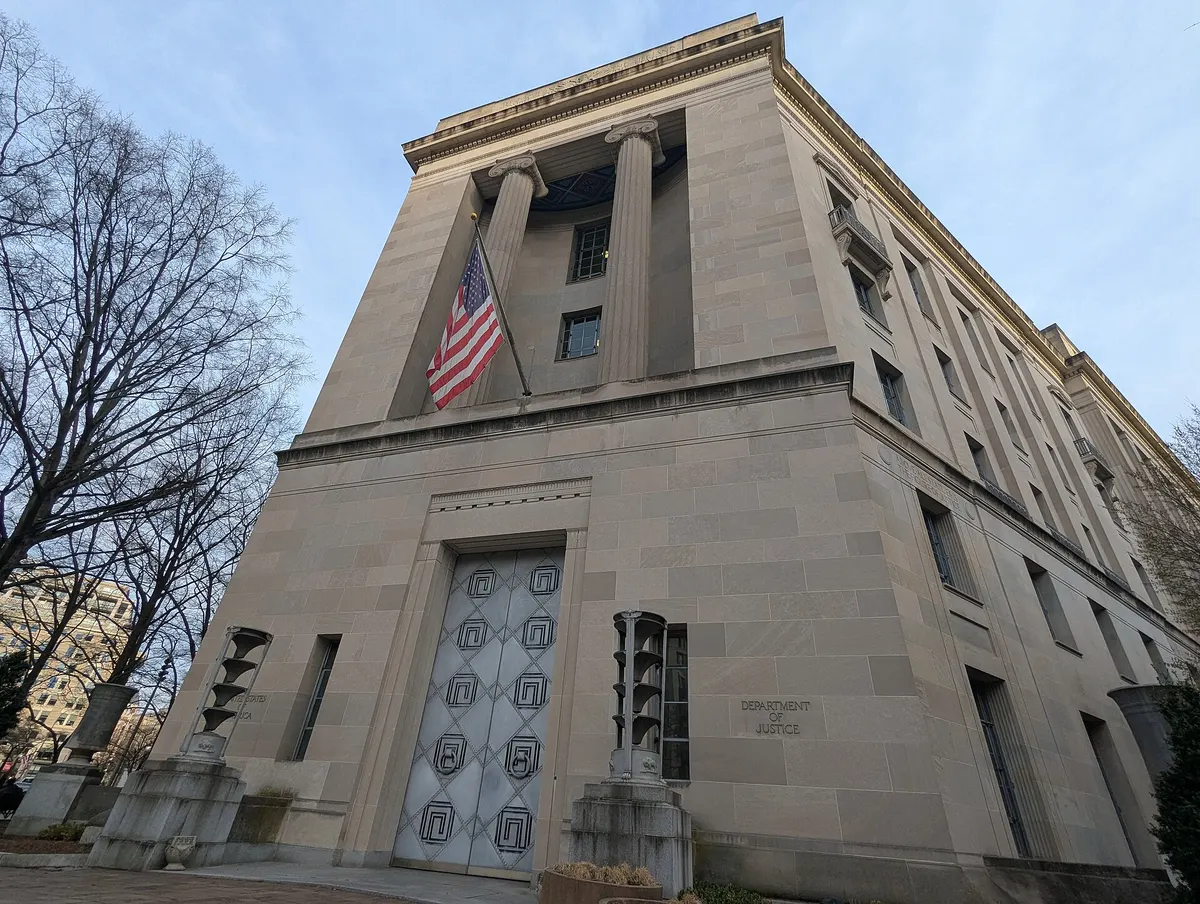
The United States Department of Justice has announced what it describes as the largest crackdown on scammers and fraudsters in its history. The sweeping operation has led to more than 800 defendants being charged across 85 federal districts.
Alongside these federal charges, the initiative has resulted in the recovery of over $8 billion in intended victim losses. Officials say the ongoing effort targets complex criminal networks rather than just low-level actors.
What happened
The Department of Justice announced the milestone following an executive order issued by President Donald Trump in March, which mandated a government-wide push against predatory schemes. The legal actions have spawned over 400 distinct cases, utilizing extraditions, guilty pleas, and prison sentences.
A central component of the enforcement effort is Operation Blackout, an interagency project spearheaded by the FBI to dismantle centralized scam facilities operating internationally. FBI Director Kash Patel detailed that agents worked alongside foreign partners to take down 29 centralized compounds located across Asia, Africa, and the Middle East.
Through these raids, law enforcement confiscated nearly $17 billion in illicit funds and seized more than 14,000 electronic devices. Furthermore, the FBI brought federal charges against 50 specific scam actors, while foreign partner jurisdictions arrested or detained more than 320 criminals.
Officials emphasized that these international compounds frequently rely on forced labor. Operation Blackout successfully freed more than 2,200 human trafficking victims who were being held and forced to run online scams.
Why it matters
Online fraud and digital hacking represent an immense financial and personal toll on American citizens and businesses. Gallup data cited in the reports estimates that Americans lost a staggering $68 billion to scams in 2025 alone, meaning the $17 billion seized by the FBI accounts for only a fraction of total illicit proceeds.
Beyond financial losses, the operations expose the severe human cost of transnational cybercrime networks. Trafficked workers are routinely subjected to captivity while being compelled to execute digital thefts on a global scale.
The background
Global digital fraud relies heavily on sophisticated phishing tactics, physical intrusions, and automated tools. Recent incidents include a Chinese crime ring stealing more than $5 million in gift cards from Staples, and a separate phishing service utilizing artificial intelligence tools that generated nearly $2 billion in losses.
The threat landscape continues to evolve rapidly. Financial institutions are currently scrambling to restrict autonomous artificial intelligence agents from accessing customer accounts and attempting unauthorized transactions, forcing major banks like Morgan Stanley, Bank of America, JPMorgan, and Wells Fargo to update their terms of service.
What happens next
The ongoing cat-and-mouse game between government agencies and international criminal enterprises will continue as new technologies emerge. The reports indicate that law enforcement agencies still have a vast amount of work ahead to counter escalating cyber threats and the expanding capabilities of artificial intelligence scams.
Key takeaways
- The U.S. Department of Justice charged over 800 defendants and recovered more than $8 billion in intended victim losses in a historic fraud crackdown.
- Operation Blackout dismantled 29 centralized scam compounds across Asia, Africa, and the Middle East through joint international efforts.
- Federal authorities seized nearly $17 billion in illicit funds, confiscated over 14,000 devices, and freed more than 2,200 human trafficking victims.