
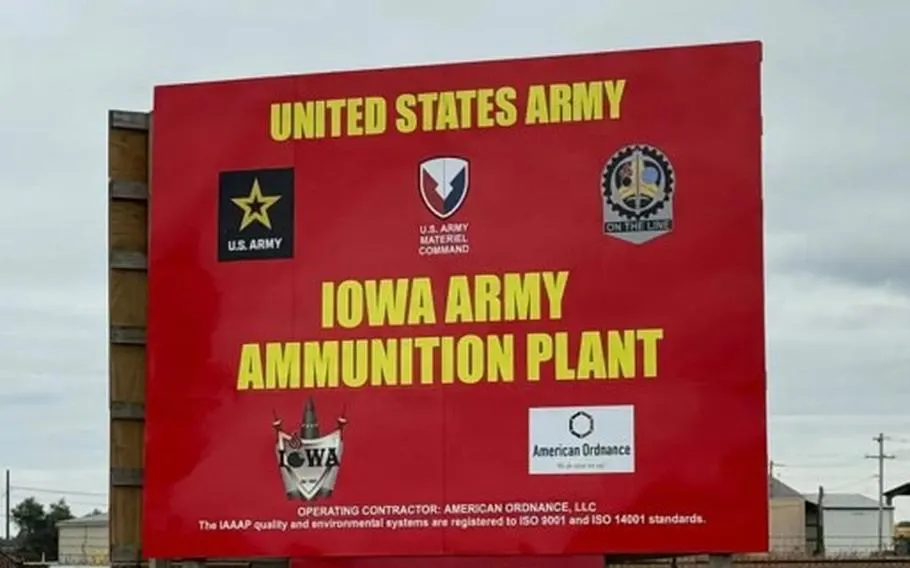
The US military has hailed the detonation of nearly five tonnes of toxic explosives in Middletown, Iowa, as a major success, declaring environmental and health risks to be as close to zero as humanly possible. The operation, which involved a volatile chemical compound stored for two decades, prompted intense local anxiety, legal battles, and emergency preparations before going ahead.
President Donald Trump stated that mitigation efforts far exceeded expectations. While local residents experienced days of anxious waiting and preparation, initial monitoring showed promising environmental safety readings in the surrounding area following the blast.
What happened
The operation took place shortly after 09:00 local time on Wednesday, sending smoke rising into the sky above Middletown, Iowa. The target of the controlled detonation was nearly five tonnes of lead azide, a highly volatile and toxic chemical compound that had been stored at the location for about 20 years. The material had degraded through a process known as recrystallisation, making it dangerously sensitive to accidental detonation from friction or routine movement.
Plans for the explosion faced numerous delays and pauses due to public outcry and legal challenges from local residents and politicians concerned about health and environmental risks. However, an appeals court ultimately overturned a lower decision to halt the blast on Monday, ruling that the danger of an unplanned, spontaneous explosion outweighed other concerns.
Officials implemented an optional evacuation zone, a shelter-in-place advisory, and extensive environmental monitoring. According to the US Army, the detonation was deliberately engineered to direct explosive forces downward into the ground and toward unoccupied land rather than upward into the air. EPA Administrator Lee Zeldin stated that air monitors showed zero lead detection following the operation and that the blast caved inward perfectly.
While some residents living close to the site reported feeling or hearing nothing, others monitored live streams from their homes. Local officials, including Middletown Mayor Rodney Johnson, expressed relief and vindication after the operation concluded without immediate incident.
Why it matters
The operation directly impacted the safety and daily lives of residents in and around Middletown, Iowa, who faced potential exposure to toxic lead dust. Lead exposure carries severe health risks, as no level is considered safe, with children and pregnant women facing particularly high vulnerability to harmful effects.
At stake was the immediate safety of the surrounding community against the mounting threat of an accidental, uncontrolled explosion during the winter months. Vice President JD Vance noted that scientists warned the degraded compound could soon detonate on its own under cold weather conditions, making a controlled mitigation the safer of two poor choices.
The background
Lead azide is a sensitive and volatile chemical compound commonly used as a detonator in explosives. Vice President JD Vance stated that the stockpile originated during the Obama administration in 2009, when the material was stored without a definitive long-term plan for its movement or neutralization.
Over two decades, the material degraded, increasing its volatility. According to the Trump administration, officials realized about six months prior to the blast that moving the unstable stockpile safely was impossible, leaving a controlled detonation as the only viable alternative to a spontaneous accident.
What happens next
Federal and state officials have emphasized that monitoring and evaluation efforts are ongoing. Iowa's incoming Governor-elect Rob Sand called for continued transparency and immediate support for any Iowans impacted by the chaotic lead-up to the operation. The Federal Emergency Management Agency (FEMA) announced that additional resources and testing will be deployed in the coming days and weeks to ensure long-term environmental safety.
Key takeaways
- The US military successfully detonated nearly five tonnes of degraded lead azide in Middletown, Iowa, after courts overturned legal challenges to the operation.
- Officials reported that EPA sensor arrays detected zero toxic lead readings in the area immediately following the controlled explosion.
- Vice President JD Vance stated that the volatile stockpile had been stored in 2009 without a plan for safe removal, forcing the choice between a controlled blast or a dangerous spontaneous explosion.
- Incoming Governor-elect Rob Sand called for continued environmental testing and transparency to address community concerns following the chaotic lead-up to the event.