
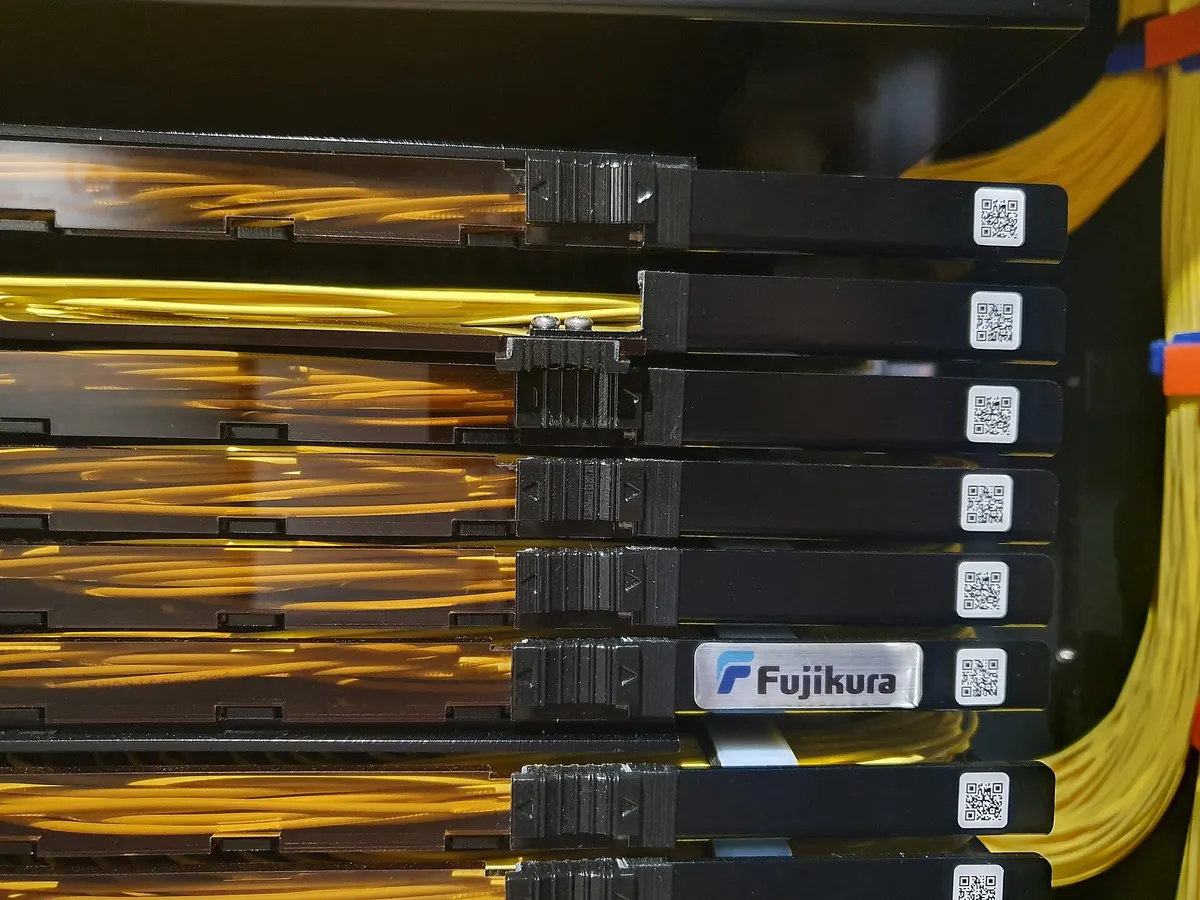
Fiber optic cables form the backbone of modern global internet infrastructure, carrying vast amounts of data across oceans, cities, and into individual homes. While they offer massive speed upgrades over traditional copper telephone lines, they are still bound by the laws of physics and eventually suffer from signal degradation over long distances.
Understanding how fiber optics handle distance reveals why global networks require specialized equipment to keep data moving. While a single glass fiber can span several kilometers, engineers must use optical amplifiers and specific cable types to maintain connections across continents.
What happened
Fiber optic cables transmit data through glass or plastic strands by using a physics principle called total internal reflection. The glass core possesses a high refractive index, meaning light hits the boundary at a shallow angle and reflects back into the core rather than escaping. This allows light to travel long distances without significant energy loss.
This design contrasts sharply with Ethernet cables, which rely on copper wires and electrical currents. Copper suffers from electrical resistance and electromagnetic interference, limiting standard Cat5e cables to a maximum recommended length of just 100 meters, or roughly 300 feet. In comparison, a single uninterrupted glass fiber can typically span several kilometers.
Despite total internal reflection, fiber cables face limitations. Absorption and scattering cause a gradual reduction in signal strength known as attenuation. Over very long runs, this weakens the signal until the receiver can no longer distinguish valid data from background noise. Additionally, fiber comes in two primary configurations: single-mode and multi-mode. Single-mode fiber allows only one beam of light to pass at a time, providing greater stability over long distances. Multi-mode fiber permits multiple light pulses to propagate simultaneously, but suffers from modal dispersion, where different paths cause pulses to arrive at staggered times.
Why it matters
These physical limitations dictate how internet service providers design local and global networks. While multi-mode fiber works well for shorter runs and is cheaper due to wider cores that ease optical alignment, long-distance deployments require single-mode fiber despite its higher equipment costs. For transcontinental communication, engineers rely on optical amplifiers installed directly along the seabed to boost optical signals.
For everyday consumers, signal loss over distance is rarely a concern. Even multi-mode domestic runs can cover hundreds of meters without issue. The most common domestic problem is physical damage caused by bends that are too tight, which can cause light to leak out of the core.
The background
Fiber optic technology has largely replaced legacy copper DSL connections in high-speed internet delivery. The longest fiber optic cable run in the world is the 2Africa cable system, an underwater optical fiber network with landing points across Africa, Europe, and Asia. It surpassed the previous record-holder, the SEA-ME-WE 3 system connecting Europe, North Africa, the Middle East, Asia, and Australia, which was decommissioned in 2024.
What happens next
As global data demands continue to grow, telecommunications providers will continue expanding optical fiber infrastructure. Techniques like multiplexing and ongoing advancements in optical amplifiers will remain crucial for sustaining high-speed connectivity across increasingly complex international networks.
Key takeaways
- Fiber optic cables transmit data using light and total internal reflection, offering massive speed advantages over traditional copper Ethernet wiring.
- Attenuation causes a gradual reduction in signal strength due to light absorption and scattering over distance.
- Single-mode fiber supports longer distances than multi-mode fiber, though it requires more expensive transceiver equipment.
- Transcontinental cable systems rely on specialized optical amplifiers installed along the seabed to boost weakening signals.