
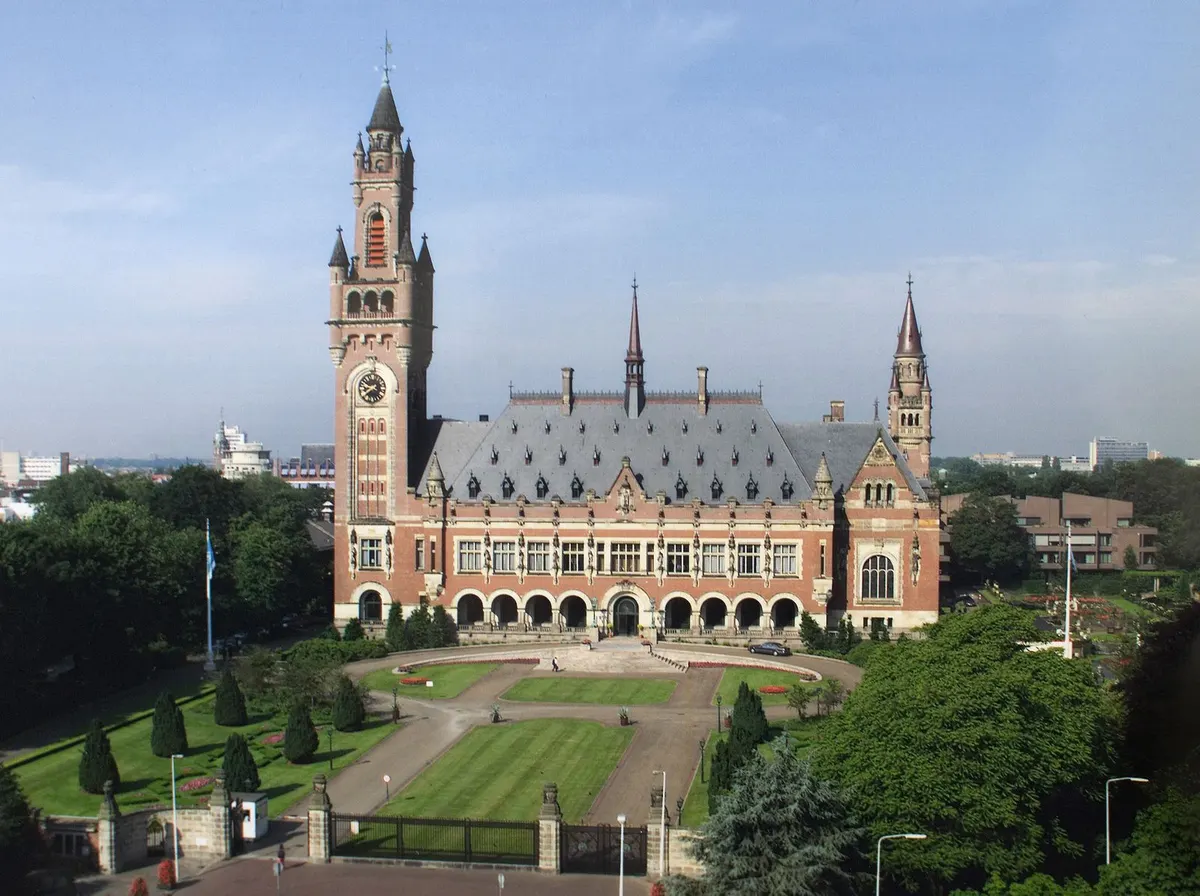
The International Court of Justice (ICJ), the United Nations' highest judicial body, has issued a landmark ruling declaring that Myanmar committed genocide against its Rohingya minority. In a 9-6 decision, the court concluded that the state’s 2017 military campaign was not a legitimate counter-insurgency operation but a deliberate effort to destroy a substantial part of the Rohingya population.
This judgment is the first of its kind in the 80-year history of the ICJ, which had never previously found a state responsible for genocide. The ruling follows a seven-year legal battle initiated by the Gambia, a Muslim-majority nation, on behalf of the persecuted group.
What happened
The 2017 military campaign in Myanmar’s Rakhine state resulted in the deaths of approximately 10,000 Rohingya civilians, according to the court. The military’s "clearance operations" included the systematic burning of villages, mass killings, and widespread sexual violence. The ICJ president, Yuji Iwasawa, stated that the court found evidence of extreme violence against children and the intentional use of sexual violence to impair the population's ability to procreate.
During the proceedings, the court rejected Myanmar’s defense that its actions were merely security measures against insurgents. Instead, judges concluded that the patterns of conduct—including the gunning down of fleeing civilians and the destruction of homes—demonstrated a clear "intent to destroy" the group. Satellite imagery and survivor testimony from refugee camps in Bangladesh, where more than 700,000 Rohingya fled, provided critical evidence for the court’s assessment.
Why it matters
This ruling is a significant moment for international law, as proving genocide is notoriously difficult. Unlike war crimes, genocide requires evidence of specific intent to destroy a national, ethnic, racial, or religious group. By clearing this legal threshold, the ICJ has set a precedent that could influence other high-profile international cases currently under review, including those involving conflicts in Gaza and Ukraine.
For the Rohingya, the verdict provides a formal acknowledgment of their suffering. While the legal victory offers a sense of validation for survivors, the practical impact remains complex. The court has ordered Myanmar to facilitate the safe and dignified return of refugees and to investigate and punish those responsible for the atrocities, though the enforcement of these orders rests with the UN Security Council.
The background
The Rohingya are a predominantly Muslim ethnic minority who have faced systemic discrimination in Buddhist-majority Myanmar for decades. The 2017 crackdown was triggered by attacks from a Rohingya insurgent group, which the military used as a pretext to launch a campaign of violence. The Genocide Convention, a 1948 UN treaty, defines genocide as acts committed with the intent to destroy, in whole or in part, a protected group. Because the Rohingya were stripped of citizenship and faced severe restrictions on reproduction and movement, human rights investigators had long argued that these actions constituted a campaign of total annihilation.
What happens next
The ICJ has ordered Myanmar to ensure the safe, voluntary, and dignified return of refugees and to provide compensation to victims, with specific details to be determined later. Britain has already taken diplomatic steps, announcing the expulsion of Myanmar’s defense attaché and calling for an urgent UN Security Council session to discuss enforcement. It remains unclear how the military-led government in Myanmar will respond to these mandates, as the court relies on international pressure and the UN Security Council to enforce its rulings.
Key takeaways
- The ICJ ruled that Myanmar committed genocide against the Rohingya, marking the first time the court has held a state responsible for this crime.
- The court rejected Myanmar's defense that its 2017 military operations were legitimate counter-terrorism efforts.
- Evidence presented included the intentional destruction of villages, mass killings of approximately 10,000 people, and systematic sexual violence used to prevent reproduction.
- The judgment sets a significant legal precedent for how genocide is defined and proven in future international cases.